By Geradine Ohonba
Health Editor/Columnist


Introduction
Perfumes and fragrances are an integral part of modern personal grooming and self-expression. Whether in the form of sprays, oils, or scented lotions, millions of people use perfumes daily. While the aesthetic and psychological benefits of wearing perfume—such as feeling more confident or attractive—are well-known, there is growing public concern about the potential health risks associated with these products. One alarming question that arises is: Can excessive use of perfumes cause cancer?
In this write-up, we delve into the ingredients commonly found in perfumes, examine the current scientific evidence, and explore whether regular or excessive exposure poses a carcinogenic threat.
Understanding Perfume Composition
Perfumes are complex mixtures of various chemical substances. The typical perfume formulation includes:
-
Fragrance oils: These may be synthetic or derived from natural sources.
-
Solvents: Such as ethanol or isopropyl alcohol, used to dissolve the fragrance compounds.
-
Fixatives: To stabilize the scent and make it last longer.
-
Preservatives: To prolong shelf life.
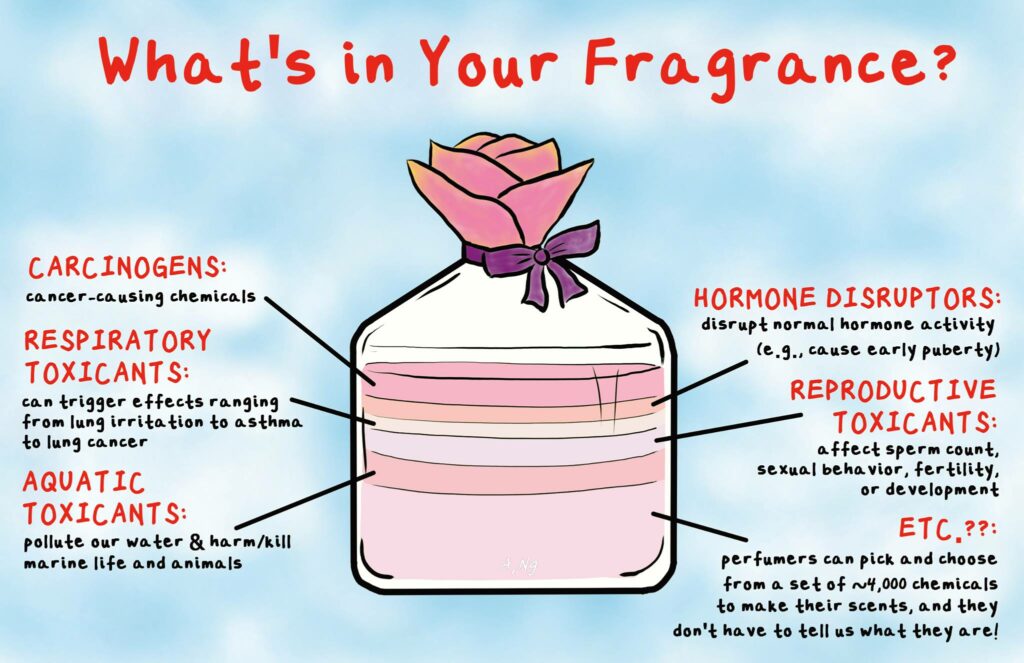
It’s important to note that manufacturers are not legally required to disclose all ingredients used in their fragrance formulations due to trade secret protections. This has led to concern from health advocates and researchers.
Key Chemicals in Perfumes and Potential Carcinogenic Risks
Some of the chemicals found in perfumes have raised red flags among toxicologists and public health experts:
1. Phthalates
-
Purpose: Used to make fragrances last longer on the skin.
-
Concerns: Certain phthalates, such as diethyl phthalate (DEP), have been linked to hormone disruption in animal studies. Some phthalates have been classified as “possibly carcinogenic to humans” by the International Agency for Research on Cancer (IARC).
-
Regulation: Banned or restricted in cosmetics in some countries (e.g., the EU), but still allowed in others.
2. Formaldehyde and Formaldehyde-Releasing Preservatives
-
Purpose: Used as preservatives to prevent microbial growth.
-
Concerns: Formaldehyde is a known human carcinogen, particularly associated with cancers of the nasopharynx and leukemia. Even low-level chronic exposure may be risky.
-
Note: Some perfumes may release formaldehyde through chemical breakdown over time.
3. Benzene Derivatives
-
Purpose: These are aromatic compounds that enhance fragrance.
-
Concerns: Benzene is a well-known carcinogen, particularly linked to blood cancers like leukemia. While not all benzene derivatives are dangerous, their inclusion raises concern, especially if inhaled repeatedly.
4. Synthetic Musks (e.g., polycyclic musks)
-
Purpose: Used to provide a long-lasting scent.
-
Concerns: These can accumulate in human fat tissue and breast milk. Though not proven to be carcinogenic, they may act as endocrine disruptors, which can influence cancer risk over time.
Routes of Exposure and Absorption
Perfumes can enter the body in several ways:
-
Inhalation: The primary route, especially when perfumes are sprayed in enclosed spaces.
-
Dermal absorption: Perfumes applied directly to the skin may be absorbed and enter the bloodstream.
-
Indirect ingestion: Through hand-to-mouth contact after applying perfume.
Repeated or heavy use of perfumes, especially in unventilated spaces, can increase the likelihood of inhaling potentially harmful substances.
Scientific Evidence and Cancer Risk
Currently, no conclusive studies directly link perfume use to cancer in humans. However, concerns are based on:
-
The presence of potentially carcinogenic chemicals.
-
Evidence of bioaccumulation of these chemicals in human tissue.
-
Their known effects in animal studies or occupational exposure scenarios (e.g., workers in fragrance manufacturing industries).
Most of the evidence pointing to a possible cancer risk is indirect or based on animal studies, high-dose exposure scenarios, or chemical risk assessments rather than on population-wide epidemiological studies of perfume users.

Regulatory Oversight and Industry Standards
1. IFRA (International Fragrance Association)
-
Develops voluntary safety standards for fragrance ingredients.
-
Criticized for being industry-led and lacking independent enforcement.
2. FDA and EU Regulation
-
In the U.S., the FDA does not require pre-market safety testing of perfumes.
-
The European Union enforces stricter rules, banning certain known carcinogens from cosmetics and requiring detailed labeling.
Practical Recommendations for Consumers
Given the uncertain but plausible risks, especially with excessive use, here are some safety tips:
-
Use sparingly: A little perfume goes a long way.
-
Avoid inhaling directly: Do not spray perfumes on your face or close to your nose.
-
Choose products with transparent labeling: Look for brands that disclose ingredients and avoid phthalates and formaldehyde.
-
Use natural alternatives: Essential oil-based perfumes may be less harmful, though not entirely risk-free.
-
Ventilate: Use perfume in well-ventilated areas to reduce inhalation exposure.
-
Avoid using on broken or sensitive skin.
Conclusion
While there is no definitive proof that excessive perfume use directly causes cancer, there is growing concern about the long-term effects of chronic exposure to certain chemical ingredients commonly found in perfumes. The presence of known or suspected carcinogens, such as phthalates and formaldehyde, justifies caution—especially for those who use perfumes heavily or daily.
In the absence of strict regulations and full ingredient transparency, consumers are advised to take a precautionary approach. By being informed and selective about the perfumes they use, individuals can enjoy the benefits of fragrance without significantly compromising their health.