

By Princess Joy Aideyan
What is the Difference Between Love and Lust?
They Are Both Four-Letter Words but Different Meanings — And What Do Gen Zs Feel About This?
Love and lust are two fundamental emotions that have captivated human hearts and minds for centuries. Though both words contain just four letters, they represent profoundly different experiences. Understanding the distinction between love and lust is essential for navigating relationships, emotions, and personal growth. Today, this distinction also sparks lively discussions among Generation Z (Gen Z), a generation shaped by digital connectivity, evolving social norms, and a new landscape of romantic interaction.
This comprehensive write-up explores the core differences between love and lust, delves into their psychological and biological underpinnings, examines how these emotions manifest in relationships, and highlights what Gen Z thinks about and experiences regarding love and lust in today’s world.
1. Defining Love and Lust: The Basics
What is Love?
Love is a deep, multifaceted emotion involving affection, attachment, care, and commitment. It goes beyond physical attraction to include emotional intimacy, trust, empathy, and a desire for the other person’s happiness and growth. Love is often long-lasting, evolving through shared experiences, vulnerability, and mutual support.
Key characteristics of love include:
-
Emotional connection and understanding
-
Willingness to sacrifice and compromise
-
Commitment and loyalty
-
Feeling safe, respected, and valued
What is Lust?
Lust is an intense, immediate desire for physical and sexual gratification. It is primarily driven by physical attraction and the urge for intimacy, often without the emotional depth or long-term commitment that characterize love. Lust can be powerful and overwhelming but tends to be more fleeting.
Key characteristics of lust include:
-
Focus on physical appearance and sexual desire
-
Short-term intensity and urgency
-
Limited emotional involvement
-
Often driven by biological and chemical impulses
2. Psychological and Biological Foundations
Biological Drivers of Lust
Lust is fueled by hormones such as testosterone and estrogen, which increase sexual desire and arousal. The brain’s reward system, especially the release of dopamine, creates feelings of pleasure and motivation to seek sexual satisfaction.
This hormonal rush often leads to impulsive behavior and intense cravings, which can overshadow rational thinking.
Biological Foundations of Love
Love involves a broader range of neurochemicals. Oxytocin and vasopressin—often called “bonding hormones”—play significant roles in forming attachment and trust. Dopamine also contributes to the pleasurable feelings during the early stages of romantic attraction, but oxytocin sustains longer-term bonds.
Love activates brain regions associated with reward, social bonding, and emotional regulation, promoting stability and empathy.
Psychological Perspectives
-
Lust can lead to infatuation, excitement, and physical attraction but may result in disappointment if emotional needs are unmet.
-
Love nurtures emotional security, trust, and mutual growth, often requiring patience and understanding.
3. Manifestations in Relationships: How They Differ in Real Life
Lust in Relationships
Lust often marks the initial phase of attraction. It manifests as strong physical desire, infatuation, and excitement about sexual intimacy. People driven by lust tend to focus on appearance and chemistry rather than deep personal knowledge.
Relationships based mainly on lust may be passionate but tend to lack stability and emotional depth. Without emotional investment, lust often fades, leading to relationship breakdowns.
Love in Relationships
Love grows through shared experiences, vulnerability, and ongoing care. It expresses itself in acts of kindness, communication, support, and commitment.
Love sustains relationships through challenges, promoting forgiveness, cooperation, and emotional closeness.
4. The Intersection of Love and Lust: Complementary or Contradictory?
Love and lust are not mutually exclusive; in fact, they often coexist. Lust can ignite initial attraction and physical intimacy, while love builds emotional connection and long-term commitment.
In healthy relationships, both love and lust fuel passion and companionship. Couples who maintain physical desire alongside emotional intimacy tend to have stronger, more satisfying bonds.
However, imbalance can cause problems: relationships driven only by lust may be shallow, while those with love but no physical desire might lack excitement.
5. What Do Gen Zs Think About Love and Lust?
Gen Z: Context and Characteristics
Gen Z, typically born between 1997 and 2012, has grown up in a world dominated by digital technology, social media, and evolving social attitudes towards gender, sexuality, and relationships. These factors shape how Gen Z perceives and experiences love and lust.
Gen Z’s Views on Love
Research and surveys suggest many Gen Zers value emotional connection, authenticity, and mental health in relationships. Many seek partners who provide companionship, support, and understanding over superficial qualities.
Gen Z tends to be more open to discussing feelings and vulnerabilities, emphasizing communication and consent in romantic engagements.
Gen Z’s Views on Lust
While valuing love, Gen Z is also pragmatic about lust and sexual desire. Many recognize lust as a natural part of relationships and personal exploration but often stress the importance of boundaries and respect.
The rise of hookup culture, casual dating apps, and changing norms around sexuality has made lust more visible and normalized. However, many Gen Z individuals express the desire to balance lust with meaningful connections.
Challenges and Opportunities
-
Digital Influence: Social media and dating apps increase exposure to both love and lust but can blur lines between authentic connection and superficial attraction.
-
Mental Health Awareness: Gen Z prioritizes emotional well-being, influencing how they pursue and maintain relationships.
-
Sex Positivity: There is a growing acceptance of diverse sexual identities and preferences, encouraging open conversations about lust and love.
6. Navigating Love and Lust: Tips for Gen Z and Beyond
Self-Awareness and Reflection
Understanding one’s feelings and intentions helps distinguish love from lust. Reflect on whether attraction is purely physical or if there is genuine emotional connection.
Communication
Open, honest conversations with partners about desires, boundaries, and expectations are crucial. Clear communication prevents misunderstandings and fosters trust.
Balance and Boundaries
Striking a healthy balance between physical desire and emotional intimacy enhances relationship satisfaction. Respecting personal boundaries and consent is essential.
Mindful Use of Technology
Using dating apps and social media thoughtfully can help build authentic connections rather than superficial encounters.
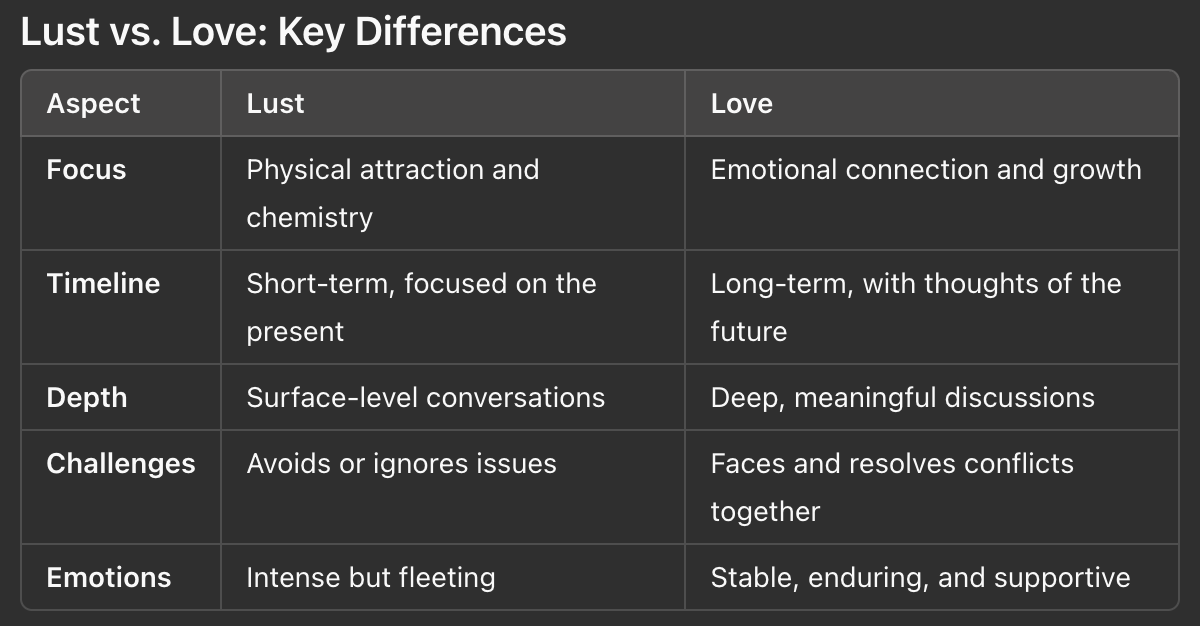
Though love and lust are both four-letter words, their meanings and implications differ significantly. Lust is a powerful, immediate physical desire, while love is a deep, enduring emotional connection. Recognizing these differences helps individuals build healthier, more fulfilling relationships.
Gen Z’s unique cultural context has shaped new attitudes towards love and lust—embracing openness, communication, and balance. As this generation continues to redefine relationships, understanding love and lust remains crucial for emotional well-being and meaningful connections.


