

By Gloria Nosa
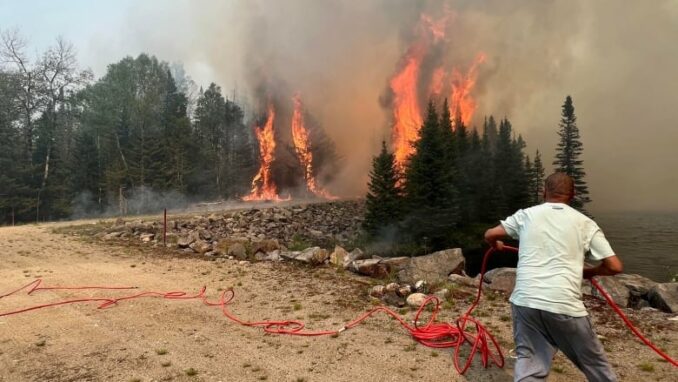
As wildfires continue to scorch vast swathes of forestland across Canada, the Canadian Armed Forces have conducted emergency airlifts to evacuate members of an Indigenous community threatened by the advancing flames.
The evacuation, carried out over the weekend, involved residents of the Garden Hill First Nation in northern Manitoba, one of several Indigenous communities facing imminent danger as wildfires rapidly spread due to high winds and dry conditions. Officials said hundreds of vulnerable individuals — including elders, children, and those with health conditions — were flown out to safer areas, with many now being housed in temporary shelters in Winnipeg and other parts of the province.
“This was a life-and-death situation,” said Chief Charles Knott of Garden Hill. “The smoke was thick, the fire was getting close, and we had no road access. Without the airlift, many of our people could have been trapped.”
The Canadian Armed Forces responded swiftly after the provincial government issued an emergency request for assistance. Military helicopters and cargo planes were deployed to ferry residents out of the remote community, which is inaccessible by road for much of the year.
Canada’s Minister of Emergency Preparedness, Harjit Sajjan, praised the coordination between federal and provincial agencies, noting that the military would remain on standby as the wildfire season intensifies. “These communities are often on the frontlines of climate disaster,” Sajjan said. “We are committed to ensuring that no Canadian — especially our Indigenous populations — is left behind.”
So far, dozens of wildfires are burning across Manitoba, Alberta, and British Columbia, fueled by record-breaking temperatures and low humidity. The country’s wildfire season, which has grown longer and more severe due to climate change, has already displaced thousands and strained emergency resources.
For many Indigenous communities, the impact goes far beyond the physical threat of fire. The loss of land, disruption of cultural practices, and forced displacement all compound long-standing issues of neglect and under-resourcing. “This is not just about evacuations,” said Dr. Lisa Cook, an Indigenous environmental advocate. “It’s about protecting identity, heritage, and rights in the face of worsening climate crises.”
As fire crews continue to battle the blazes and assess damage, officials are urging Canadians to remain vigilant and to support affected communities. Relief efforts are underway, with non-profits, Indigenous organizations, and local governments collaborating to provide food, shelter, and trauma care for the evacuees.
While the immediate danger may have passed for some, leaders warn that this is only the beginning of a difficult summer. For the Garden Hill First Nation and others like it, the evacuation serves as a stark reminder of the need for better emergency planning and climate resilience in Canada’s most vulnerable communities.


