

By Arinze Uzo
Business News Correspondent
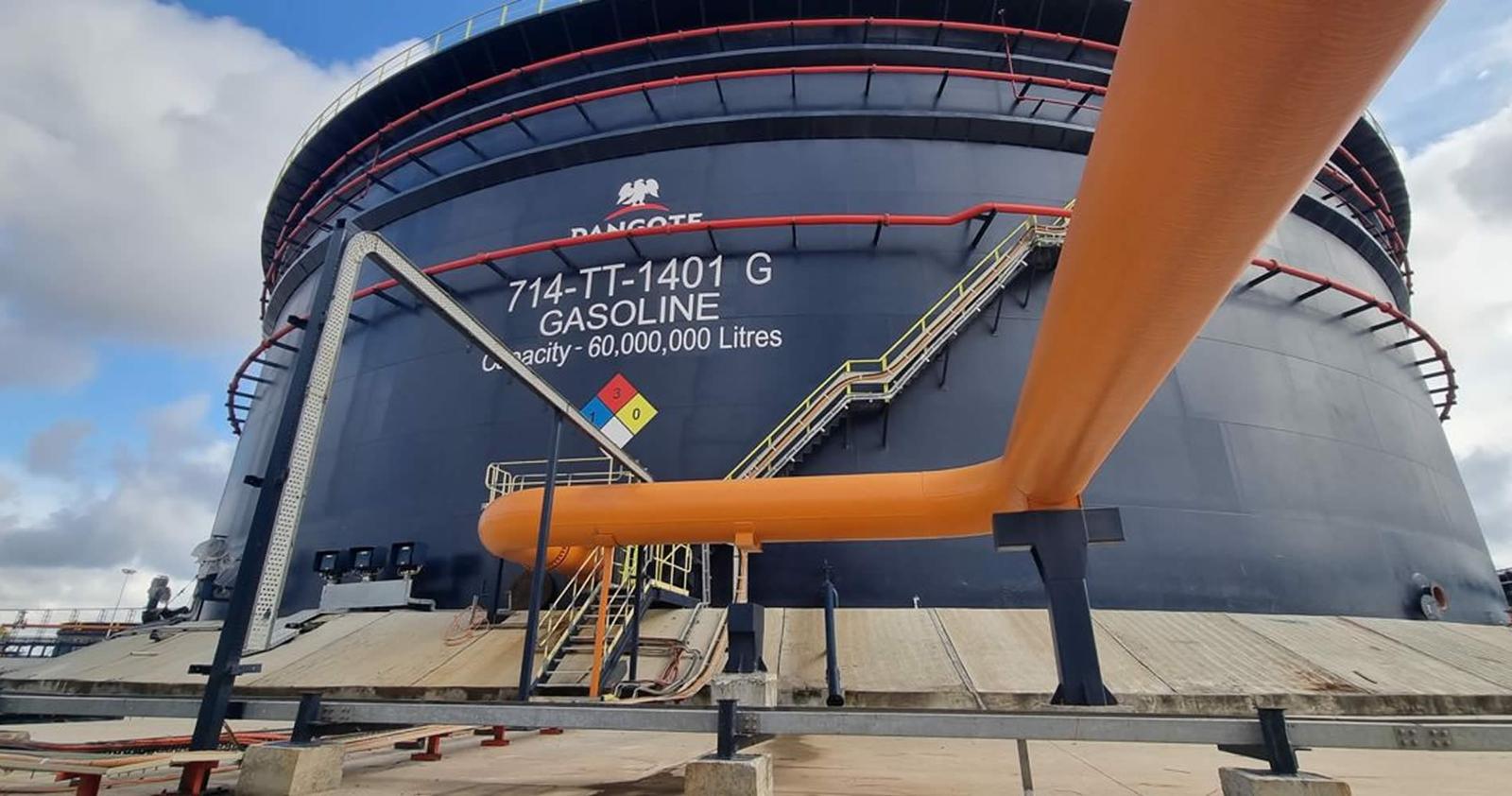
Nigeria Prepares for Landmark Shift in Domestic Fuel Supply Chain
In what promises to be a historic milestone for Nigeria’s energy sector, the Dangote Petroleum Refinery has announced that it will commence the nationwide distribution of petrol and diesel on August 15, 2025. The long-anticipated rollout is expected to ease the chronic fuel scarcity that has plagued the country for years, reduce dependence on imports, and stabilize pump prices for consumers.
The announcement was made by top executives of the Dangote Group during a media briefing in Lagos on Friday. According to the statement, the refinery has now completed all major test runs and received regulatory approvals, paving the way for full-scale commercial operations.
A Turning Point for Nigeria’s Energy Sector
The $20 billion refinery—hailed as Africa’s largest and the world’s largest single-train facility—has a production capacity of 650,000 barrels per day. Since its commissioning by President Bola Ahmed Tinubu in May 2023, the refinery has undergone phased testing and limited supply of aviation fuel and diesel. The August 15 launch will mark the first time it distributes Premium Motor Spirit (PMS) and Automotive Gas Oil (AGO) at national scale.
Aliko Dangote, President of the Dangote Group, described the development as a “game-changer” for Nigeria and a symbol of homegrown industrial might. “We are proud to announce that from August 15, Nigerians will begin to feel the full impact of this refinery in their everyday lives—from the petrol stations to the economy,” Dangote said.
Expected Impact: Reduced Imports and Stable Pricing
Industry experts say the distribution launch is expected to significantly reduce Nigeria’s reliance on imported refined products. For decades, despite being Africa’s top oil producer, Nigeria has imported over 90% of its refined fuel due to ailing or non-functional state refineries. This has made the country vulnerable to price volatility, forex pressures, and supply chain disruptions.
With the Dangote Refinery now poised to supply a large share of the domestic fuel market, analysts believe that prices will stabilize, scarcity will ease, and the government could potentially reduce the burden of fuel subsidies. It is also expected to conserve billions of dollars in foreign exchange annually and improve the balance of payments.
Logistics and Distribution Strategy
According to refinery officials, product loading and distribution will be handled through a robust logistics network, including road tankers, pipelines, and jetties. Initial deliveries will be targeted at high-demand urban centers such as Lagos, Abuja, Port Harcourt, and Kano before expanding nationwide within weeks.
Major oil marketers and independent petroleum distributors have already signed supply agreements with the refinery, while discussions are ongoing with the Nigerian National Petroleum Company Limited (NNPCL) for broader collaboration on fuel supply to remote and underserved areas.
Government and Public Reactions
The Federal Government has welcomed the announcement, with the Ministry of Petroleum Resources noting that the refinery’s activation aligns with the administration’s goal of achieving energy security and self-sufficiency in fuel production. “This is a significant step forward in our national energy strategy. The Dangote Refinery will play a key role in reshaping the downstream sector and improving the lives of ordinary Nigerians,” said Minister of State for Petroleum Resources, Heineken Lokpobiri.
Many Nigerians, weary of fuel scarcity and long queues at filling stations, have reacted with cautious optimism. On social media, citizens expressed hope that the launch would bring an end to the recurring fuel crisis, though some warned of potential sabotage from entrenched interests in the fuel import business.
Looking Ahead
With August 15 now marked on the national calendar, expectations are high. The successful rollout of petrol and diesel by the Dangote Refinery could mark the beginning of a new era for Nigeria’s energy independence and economic resilience. However, experts caution that sustained success will depend on effective regulation, transparent distribution mechanisms, and government support for local refining capacity.
If the refinery delivers as promised, it could go down as one of the most transformative industrial investments in Nigeria’s modern history—and a vital lifeline for a nation in dire need of energy reform.

