

By Arinze Uzo
Business News Correspondent
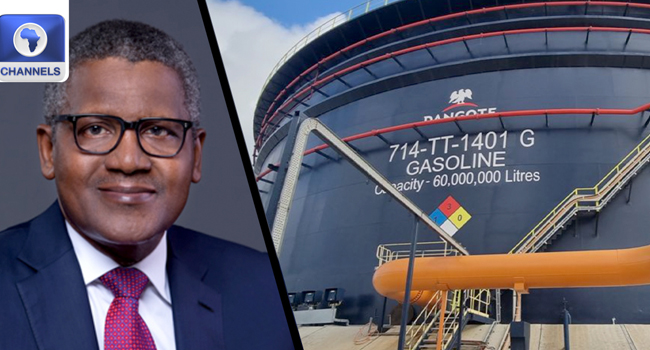
In a move that is sending ripples across Nigeria’s energy sector and offering renewed hope to cash-strapped consumers, the Dangote Petroleum Refinery has announced a significant slash in the ex-depot price of premium motor spirit (PMS) to ₦840 per litre, down from the previous ₦880. The price cut, effective June 30, 2025, is expected to influence retail fuel prices and ease pressure on the broader economy.
A Strategic Price Adjustment Amid Global Trends
According to officials of the Dangote Group, the decision to reduce the petrol price was largely informed by recent declines in global crude oil prices. Brent crude, for instance, fell by 1.54% to $84.86 per barrel in late June, prompting a ripple effect on downstream product pricing. As one of the most ambitious private sector-driven industrial projects in Africa, the Dangote Refinery has quickly moved to pass the cost benefits to Nigerians.
“This is part of our commitment to support the economy and provide affordable energy to Nigerian households and businesses,” a spokesperson for Dangote Industries said. “We will continue to evaluate the global market and adjust our pricing in a way that reflects international trends, ensures sustainability, and promotes national development.”
Distribution Overhaul: CNG-Powered Tanker Fleet
More than just adjusting prices, the refinery is transforming the way petrol reaches the market. In a bold logistical innovation, Dangote has launched a fleet of 4,000 Compressed Natural Gas (CNG)-powered trucks. These tankers are expected to facilitate the direct delivery of petrol to fuel stations, manufacturers, and strategic industrial sectors, cutting out traditional middlemen and eliminating speculative price inflation caused by transportation bottlenecks.
The move is also seen as eco-conscious, as CNG-powered vehicles contribute significantly less pollution compared to diesel counterparts. Additionally, this logistics revamp is part of the company’s wider effort to ensure a nationwide rollout of petrol by August 15, 2025, making Dangote-supplied petrol more accessible from Lagos to Maiduguri.
Reactions from Industry Stakeholders
The announcement has sparked swift reactions across the petroleum industry. The Independent Petroleum Marketers Association of Nigeria (IPMAN) called for an emergency meeting to determine a new uniform pump price for marketers nationwide. Some retail stations have already begun adjusting prices in anticipation of lower ex-depot costs, while others are cautiously waiting for stable supply confirmations.
Other private depot owners, including Nipco, Aiteo, and AIPEC, have also reacted by lowering their own PMS prices, signaling a possible wave of competitive pricing in the downstream sector. Experts view Dangote’s pricing as a new market benchmark, potentially pressuring other players to revise their pricing models in order to remain relevant.
“It’s clear that Dangote is not just selling fuel; it is setting the tone of the market,” remarked an oil industry analyst. “The pricing power it wields through vertical integration—producing, refining, and distributing its own petroleum—is reshaping Nigeria’s fuel economy.”
Economic Implications: Relief for Consumers, Impact on Inflation
At ₦840 per litre, consumers and businesses could experience notable savings, especially in a high-inflation economy where energy costs directly influence the prices of goods and services. With fuel being a key component in transport, logistics, and manufacturing, analysts believe this price reduction could help moderate inflation in the months ahead.
For small business owners and motorists, the news has been met with cautious optimism. “₦40 less may not seem like much, but over time, it adds up—especially when you’re buying 30 litres every other day,” said Musa Ibrahim, a commercial driver in Lagos. “If this becomes consistent, we can breathe easier.”
Concerns Over Market Dominance
Despite the welcome relief, there are growing concerns about the growing dominance of the Dangote Refinery. Some stakeholders warn that while the company’s entry is disrupting long-standing inefficiencies in the oil sector, it may also risk creating a monopolistic environment that could crowd out smaller players and reduce job opportunities in the middle segment of the fuel supply chain.
The federal government has not formally commented on the pricing shift, but regulatory agencies such as the Nigerian Midstream and Downstream Petroleum Regulatory Authority (NMDPRA) are expected to monitor the market to ensure fair play and transparency.
Dangote Refinery’s decision to cut its petrol price to ₦840 is more than just a pricing strategy—it is a reflection of the company’s evolving influence on Nigeria’s energy future. While consumers welcome the relief, industry players are preparing for a paradigm shift in how fuel is priced, distributed, and consumed. As August approaches and nationwide distribution ramps up, all eyes will remain on Dangote as it continues to shape the narrative of Nigeria’s petroleum sector.

