

By Dembele Ojutalu
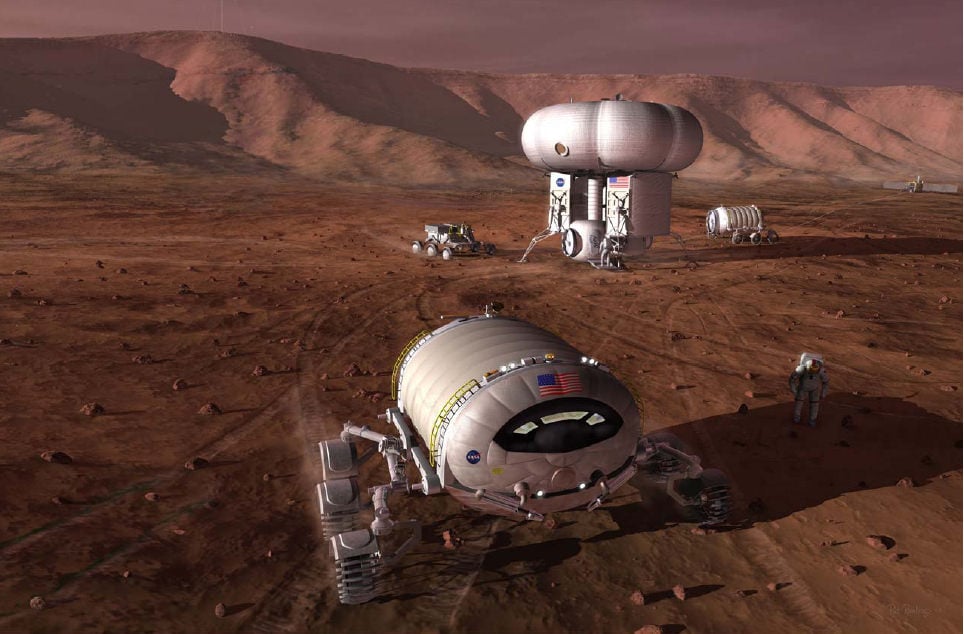
In what is being described as one of the most ambitious space colonization predictions to date, a leading international space agency has projected that humans could be living in massive “space oases” on Mars by 2040. The bold forecast is reigniting excitement about the future of human space exploration and stirring fresh debate over the practicality and ethics of off-world settlements.
According to the agency’s recently released report, ongoing advancements in artificial intelligence, habitat construction, radiation shielding, and sustainable life-support systems are accelerating the timeline for human habitation on the Red Planet. What once seemed like science fiction is now being discussed as an achievable reality within the next 15 years.
Space Oases: The Next Frontier
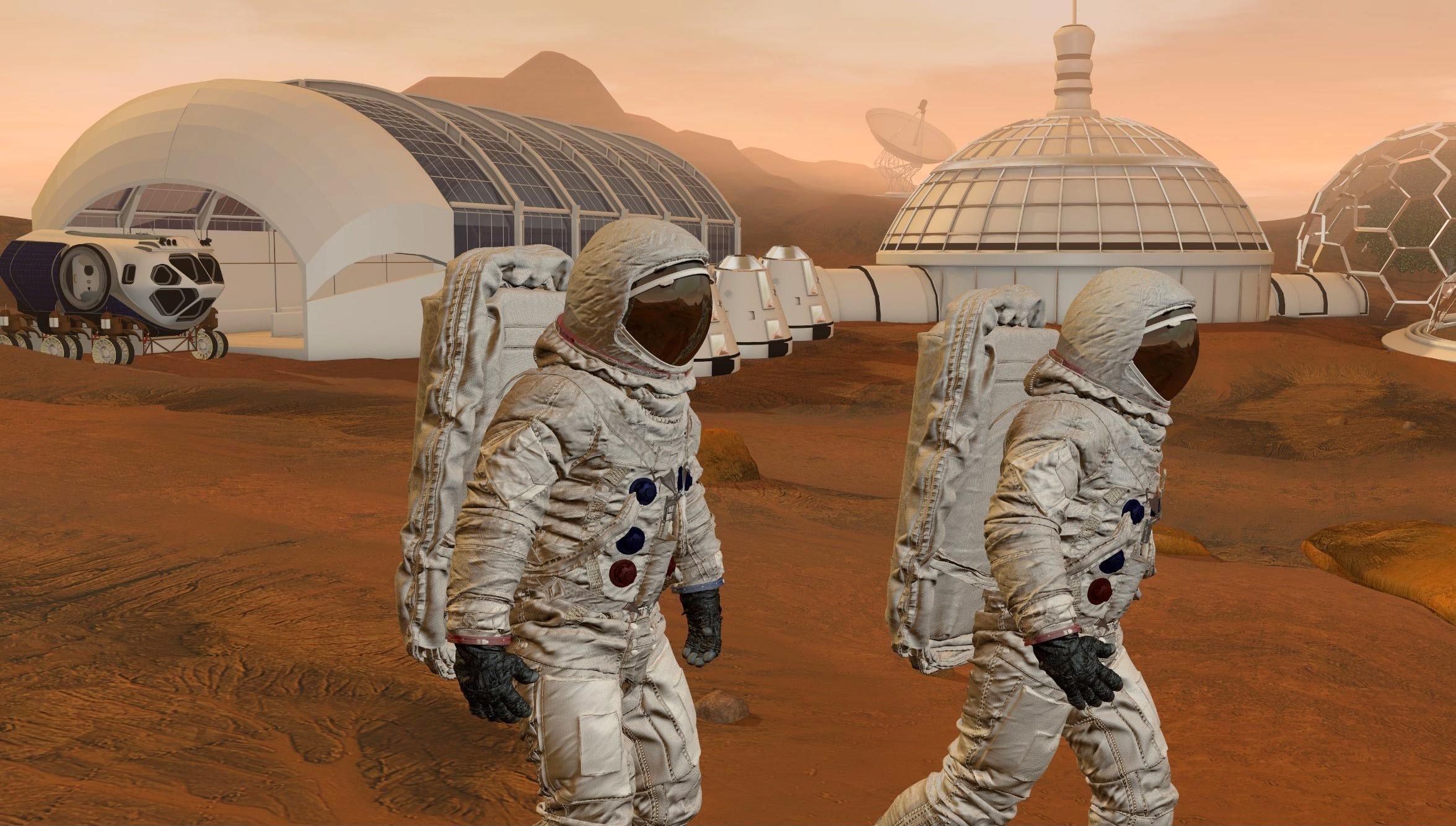
The term “space oases” refers to large, self-sustaining, biodome-like colonies capable of supporting hundreds, possibly thousands, of inhabitants in the harsh Martian environment. These advanced habitats would be powered by solar energy, contain controlled agriculture systems for food production, and offer pressurized living quarters with Earth-like atmospheres.
“The dream is no longer far off,” said Dr. Amelia Kwan, the lead researcher behind the report. “We envision communities on Mars that are not just surviving but thriving—centers for science, innovation, and potentially even tourism in the next few decades.”
Key Technologies Making It Possible
The agency’s optimism is grounded in recent breakthroughs across multiple fields:
-
3D printing using Martian regolith is now seen as a viable method to construct habitats directly on the surface, drastically reducing the cost of transporting materials from Earth.
-
AI-driven robotics are being tested to autonomously build infrastructure before human arrival.
-
Closed-loop life support systems, such as those being developed on the International Space Station (ISS), are showing promise in sustaining human life for long durations without resupply.
-
New research into radiation shielding using underground lava tubes or specially treated polymers is helping to address one of Mars’ most significant risks.

Challenges Ahead
Despite the optimism, the report emphasizes that several critical challenges must still be overcome. These include:
-
Health risks from long-term exposure to low gravity
-
Psychological impacts of isolation and confinement
-
Complex logistics of transporting humans and cargo to Mars
-
The need for international cooperation and sustainable funding
“There’s no denying the obstacles,” said Dr. Kwan. “But if progress continues at this pace, we will see the first human footprints in a Martian oasis in our lifetime.”
Global Interest Growing
Governments, private companies, and space enthusiasts around the world are taking notice. Elon Musk’s SpaceX has long aimed to send humans to Mars within the next decade, while NASA, ESA, China, and the UAE are all actively exploring missions that would lay the groundwork for future colonization.
Some experts argue that beyond the technical and scientific excitement, the push to settle Mars reflects deeper questions about humanity’s long-term survival and the need for a multi-planetary future.
Looking Ahead
If the timeline holds, the world could witness the first permanent Martian colony taking shape by 2040, marking a new era in human history. For now, the countdown continues—and with it, the possibility that the next great human migration won’t be across oceans or continents, but across planets.


