
By John Umeh
The Federal Government of Nigeria has formally appealed to the United States government to reconsider its recently introduced visa restrictions, which are already causing unease among Nigerian travelers, business leaders, and students. In a diplomatic communication made public on Tuesday, Nigerian officials expressed concerns that the new policy could negatively impact bilateral relations, educational exchanges, and commercial partnerships between both countries.
New Visa Rules Trigger Diplomatic Concerns
The new U.S. visa rules, introduced earlier this month, reportedly impose tighter screening procedures, longer processing times, and in some cases, stricter eligibility conditions for Nigerian applicants. While the U.S. has not officially named Nigeria among a list of countries affected by travel bans or visa suspensions, the new policy has led to a noticeable increase in visa rejections and delays for Nigerians seeking entry for tourism, business, or education.
The Nigerian government, through the Ministry of Foreign Affairs, has responded swiftly. In a strongly-worded but diplomatic statement, the ministry urged U.S. officials to reconsider the scope and implementation of the new restrictions, citing Nigeria’s long-standing partnership with the United States in areas of security, trade, education, and regional stability.
“We believe that policies which potentially isolate a strategic partner like Nigeria may inadvertently undermine the spirit of cooperation and mutual respect that has defined our relations for decades,” said a senior official within the Ministry.
A Call for Mutual Respect and Reciprocity
The Nigerian government emphasized that the country continues to support efforts to combat illegal immigration, visa fraud, and international crime. However, it also highlighted the need for fairness and due process in visa adjudication.
“While we respect the sovereign right of the United States to regulate its immigration policies, we expect such policies to be applied transparently and equitably,” the statement added.
The government also pointed to Nigeria’s growing youth population, many of whom seek educational and professional opportunities in the U.S., noting that overly restrictive policies could limit access to such prospects and fuel anti-American sentiment.
Impact on Nigerians
In the wake of the new restrictions, many Nigerians have taken to social media to express frustration over increased visa denials and prolonged waiting times at U.S. embassies in Lagos and Abuja. Students who had secured admission to American universities reported fears of missing resumption dates due to delays. Business travelers also noted that missed meetings and canceled trips were beginning to cost them financially.
“Some of us already have valid reasons to visit—school letters, conference invites, financial proof—and we’re still being denied,” said Aisha Aluko, a postgraduate student admitted to a U.S. university for the Fall 2025 semester. “It’s heartbreaking.”
Travel agencies and visa consultants have also reported a surge in inquiries from applicants seeking clarification on the new rules and alternatives, including applying to other countries such as Canada, the U.K., or the UAE.
U.S. Embassy Responds
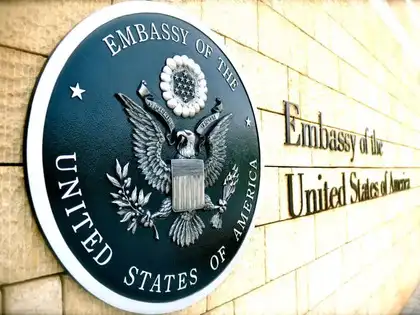
While there has been no official reversal or amendment of the new visa rules, the U.S. Embassy in Nigeria issued a brief clarification, noting that visa decisions are made on a case-by-case basis and in line with U.S. immigration law. The embassy encouraged applicants to provide complete and truthful documentation and reiterated its commitment to supporting legitimate travel.
“We remain committed to facilitating lawful travel to the United States,” the embassy stated. “We value our relationship with Nigeria and continue to welcome Nigerians who meet the requirements under U.S. immigration laws.”
Looking Ahead
The Federal Government has hinted at possible diplomatic engagements in the coming weeks, including meetings between Nigerian and U.S. diplomatic representatives in Abuja and Washington, D.C. Stakeholders from both the public and private sectors are hopeful that the matter can be resolved quickly to avoid further disruption to Nigeria–U.S. relations.
As global migration policies continue to evolve in response to security and demographic changes, Nigeria’s appeal to the United States reflects a broader call for balanced, fair, and collaborative immigration strategies—ones that recognize the mutual benefits of people-to-people connections, academic exchanges, and international cooperation.