

By Deji Osas
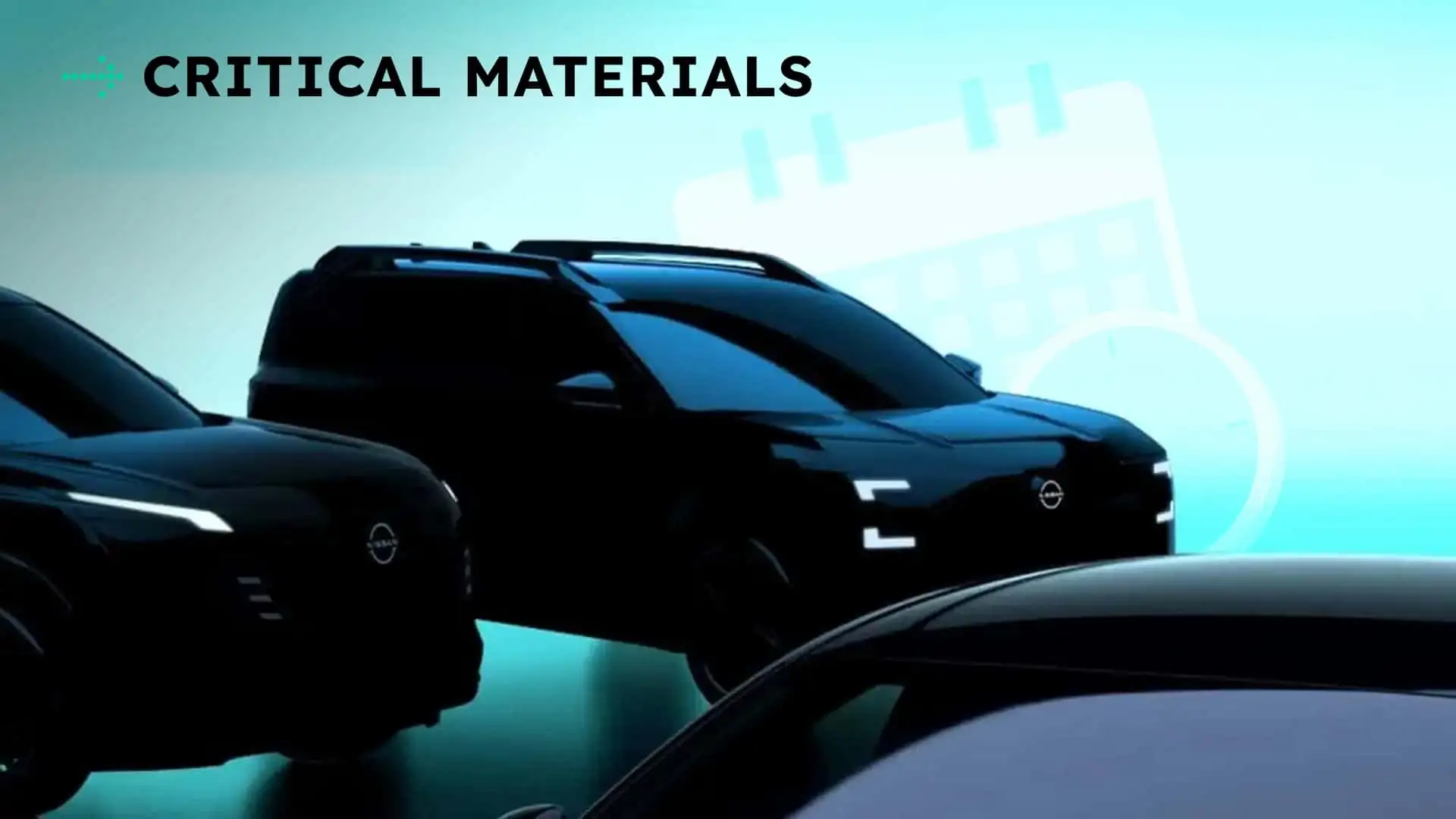
Nissan’s EV Strategy Stumbles Again Amid Industry Pressure
Tokyo, Japan – July 11, 2025
Nissan, once hailed as a pioneer in the electric vehicle (EV) space, is again facing turbulence in its transition to an all-electric future. Despite early successes with the launch of the Nissan Leaf over a decade ago, the Japanese automaker has found itself lagging behind global competitors in the rapidly evolving EV market. Recent developments have cast further doubt on the company’s ability to regain its footing amid rising industry expectations and shifting consumer demands.
Early Lead, Now a Lost Opportunity
Nissan was one of the first major automakers to bet heavily on EVs. Its Leaf, launched in 2010, was the world’s first mass-market electric car and once held the title of best-selling EV globally. For years, Nissan enjoyed a clear head start while competitors were still conceptualizing electric models. However, the automaker’s failure to build upon that momentum has allowed rivals such as Tesla, BYD, Hyundai, and Volkswagen to surge ahead in both innovation and market share.
While Nissan focused on incremental improvements to the Leaf and internal restructuring following the ouster of former chairman Carlos Ghosn, others doubled down on aggressive battery development, EV model diversification, and strategic partnerships. Today, the Leaf is considered outdated by modern EV standards, lacking the range, speed, and tech sophistication of newer offerings in its segment.
Recent Setbacks and Strategic Confusion
Nissan’s latest stumble came in June 2025, when it announced a delay in the launch of its highly anticipated Ariya EV update, citing software integration challenges and ongoing supply chain issues. The Ariya, Nissan’s flagship EV crossover, was supposed to mark a new era for the company with enhanced autonomous features and a 600+ km range. However, repeated delays have frustrated both dealers and consumers.
The company also confirmed it would revise downward its 2025 EV sales targets, acknowledging that it would fall far short of the originally projected 1 million units globally. This is a stark contrast to the strong growth seen by rivals: Tesla recently reported 3.4 million EVs delivered in the first half of 2025 alone, while China’s BYD and Germany’s Volkswagen Group continue to gain ground across Europe, Asia, and North America.
Adding to Nissan’s woes, a planned battery joint venture with a Southeast Asian partner collapsed last month due to regulatory disagreements and rising costs, leaving a significant gap in Nissan’s long-term battery supply strategy.
Market Pressures and Missed Opportunities
The global EV market has entered a phase of intense competition, fueled by rising demand, regulatory mandates for zero-emission vehicles, and generous government incentives across Europe, China, and parts of North America. Automakers are under pressure to rapidly scale production, lower EV prices, and deliver cutting-edge technologies including solid-state batteries, autonomous driving features, and over-the-air software updates.
Nissan, however, seems to be struggling on multiple fronts:
-
Product Pipeline: Its EV lineup remains thin, with only the Leaf and Ariya in mass circulation.
-
Battery Innovation: While Toyota and Honda are making strides in solid-state battery research, Nissan appears to be trailing with limited updates on its in-house efforts.
-
Software Ecosystem: The absence of a robust, integrated vehicle software system has also placed Nissan behind rivals who are already rolling out in-car AI, seamless cloud connectivity, and personalized driver settings.
Industry analysts believe that Nissan’s lack of bold investment, coupled with frequent leadership changes and a conservative corporate culture, has contributed to its waning influence in the EV space.
“Nissan had the first-mover advantage, but it failed to capitalize on it. Innovation slowed just as competitors went into overdrive,” said Hiroshi Tanaka, a Tokyo-based automotive analyst. “Now they’re playing catch-up, and the market is not waiting.”
Leadership’s Response and New Promises
In an attempt to allay investor concerns, Nissan CEO Makoto Uchida recently outlined a new “EV Acceleration 2.0” roadmap, promising 10 new EV models by 2028 and $12 billion in electrification investments over the next three years. The company also vowed to transition entirely to electric-only sales in key markets like Europe and Japan by 2035.
But many observers question whether these commitments are too little, too late.
“Words are easy; execution is everything,” said Emily Zhang, a mobility strategist with EVWatch Global. “Nissan needs a disruptive product—not just press releases. If they don’t deliver something revolutionary soon, they risk being irrelevant in the EV race.”
Consumer Sentiment and Brand Perception
Consumers, once loyal to the Leaf for its affordability and environmental appeal, are increasingly turning to fresher options. Brands like Hyundai’s IONIQ 5, Kia’s EV6, and Tesla’s Model 3 and Y now dominate in markets that the Leaf once led. Even in Japan, domestic competition is rising with Toyota’s bZ series and Honda’s Prologue EV gaining popularity.
Nissan’s resale value for the Leaf has also dipped due to concerns over battery degradation and outdated tech features—issues the company has been slow to address transparently.
Meanwhile, its brand perception, especially among younger consumers, is no longer synonymous with innovation. “Cool factor” matters in today’s EV market, and Nissan has largely lost that image to more aggressive and tech-savvy competitors.
What Lies Ahead?
Despite the challenges, Nissan is not out of the game. It still commands a strong manufacturing base, a loyal customer base in key regions, and decades of engineering expertise. The key question remains whether it can transform its potential into performance.
Analysts say Nissan must:
-
Accelerate EV model rollouts across SUV, sedan, and compact segments.
-
Invest heavily in battery research and localize supply chains.
-
Form new strategic alliances or revive existing ones with tech and battery firms.
-
Drastically improve vehicle software and user interface capabilities.
-
Rebrand itself for a new, digitally native generation.
The competition will not pause. Tesla is planning a $25,000 mass-market EV. BYD is entering new global markets monthly. Legacy automakers like Ford, GM, and Mercedes-Benz are investing billions into full electrification.
Nissan’s stumble in the EV race is not just a corporate setback—it’s a case study in how early innovation, if not followed by sustained bold action, can fade into missed opportunity. The pressure is on Nissan to reclaim its place in the new auto era before it’s permanently left behind.
If Nissan fails to adapt swiftly, the once-pioneering automaker may be remembered not for the car that started the EV revolution, but for how it watched that revolution pass it by.

