

By John Umeh
Government News Editor
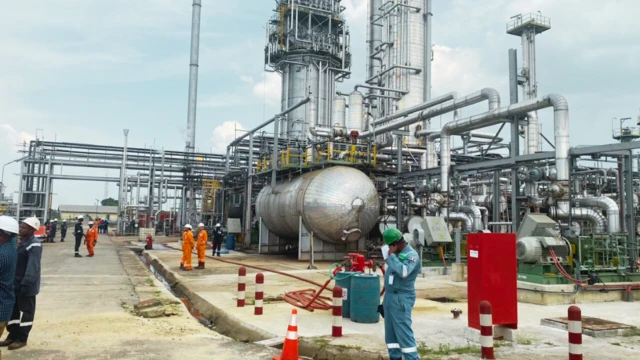
The Nigerian National Petroleum Company Limited (NNPC Ltd) is reportedly considering selling off its refineries as part of a broader strategy to enhance operational efficiency and attract private sector investment. This revelation came from NNPC’s Group Chief Executive Officer, Mele Kyari, who confirmed during a recent energy summit in Abuja that the state oil company is actively reviewing its asset portfolio, with refinery divestment on the table.
According to Kyari, the move is aligned with NNPC’s transition into a fully commercial entity following the enactment of the Petroleum Industry Act (PIA). Under this new framework, NNPC is expected to operate like a profit-driven business, shedding unproductive assets and fostering public-private partnerships. “We are not afraid of selling our assets, especially those that are not yielding value,” Kyari said, hinting that the company would prioritize efficiency and performance in all its business units.
Nigeria currently has four state-owned refineries located in Port Harcourt, Warri, and Kaduna. For years, these facilities have been plagued by mismanagement, underperformance, and prolonged shutdowns, despite billions of naira in maintenance spending. As of 2024, none of the refineries are producing at full capacity, forcing the country to rely heavily on imported refined petroleum products—an irony for one of Africa’s largest crude oil producers.
The planned rehabilitation of the Port Harcourt refinery, which is currently undergoing refurbishment through a $1.5 billion contract awarded to Tecnimont, is part of efforts to revive local refining capacity. However, even with the rehabilitation works ongoing, Kyari noted that NNPC cannot rule out selling the refineries either wholly or in part if that ensures better results and accountability.
“We are open to partnerships, including divestment, joint ventures, and management contracts. Our goal is simple—end the waste, improve delivery, and restore confidence in Nigeria’s energy infrastructure,” Kyari emphasized.
Industry analysts have welcomed the potential divestiture as a positive step toward unlocking private capital and bringing expertise into the refining sector. “The government has no business running refineries,” one expert noted. “What NNPC is proposing could lead to increased competition, more jobs, and even a drop in fuel prices if implemented transparently.”
However, critics warn that any sale must be handled with caution. Past privatization efforts in Nigeria have been marred by allegations of favoritism, undervaluation, and lack of transparency. Stakeholders are urging NNPC to publish clear guidelines, engage widely with labour unions and host communities, and ensure that divestments do not lead to job losses or monopoly control.
Meanwhile, the recent launch of the 650,000 barrels-per-day Dangote Refinery has added urgency to the conversation. As the private refinery ramps up production, observers believe that the future of state-run refineries will depend largely on how competitive they can be in the open market.
As Nigeria grapples with fuel subsidy removal, foreign exchange challenges, and economic pressures, the NNPC’s openness to refinery sales marks a critical turning point. Whether through full sales, partial privatization, or management concessions, one thing is clear: the status quo is no longer sustainable.
The coming months will reveal whether NNPC follows through on these reforms—or if the refinery sale talk becomes another unfulfilled promise in Nigeria’s long quest for energy self-sufficiency.

