
By John Umeh
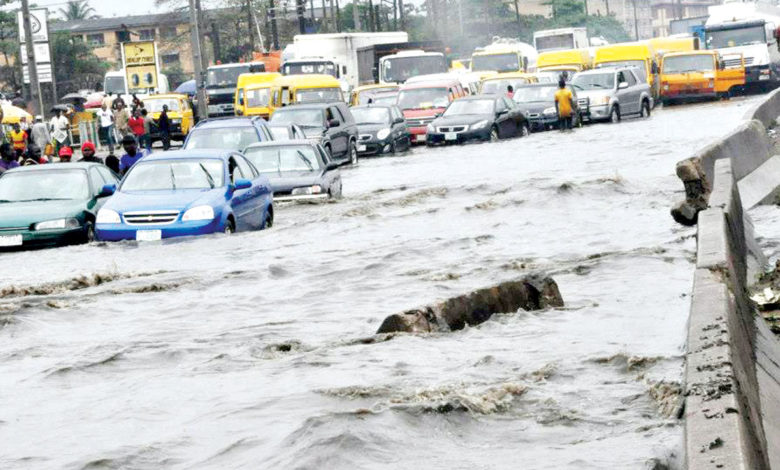
The Federal Government has issued a nationwide alert warning of imminent flooding expected to affect 19 states over the next five days. The warning, issued through the Nigeria Hydrological Services Agency (NIHSA) and the National Emergency Management Agency (NEMA), comes as heavy rainfall continues to batter several regions, heightening fears of widespread disruption and displacement.
According to official reports, the warning is based on data from the Nigeria Meteorological Agency (NiMet), which forecasts intense rainfall capable of triggering flash floods, overflowing rivers, and urban flooding, particularly in low-lying and poorly drained areas.
The 19 states identified to be at risk include: Lagos, Ogun, Rivers, Delta, Edo, Cross River, Akwa Ibom, Bayelsa, Imo, Anambra, Abia, Enugu, Kogi, Benue, Taraba, Niger, Kwara, Plateau, and the Federal Capital Territory (FCT).
In a joint statement, NEMA and NIHSA urged residents in flood-prone areas to remain vigilant, take precautionary measures, and avoid actions that could obstruct natural waterways. They also called on state governments to activate emergency response plans, clear blocked drainage systems, and prepare temporary shelters for possible evacuees.
“Flooding is a recurring natural hazard in Nigeria, but its impact can be significantly reduced through early action and preparedness,” the agencies said.
Local authorities and emergency teams have been directed to be on high alert and to work with community leaders to disseminate accurate information. Farmers, motorists, and urban dwellers are also advised to avoid risky zones and monitor weather updates closely.
The government’s warning comes as several parts of Nigeria have already recorded fatalities and property damage due to early-season floods. With climate change intensifying weather extremes, experts warn that flooding may become more frequent and severe unless infrastructure and environmental management are urgently improved.
Citizens are encouraged to call emergency hotlines in case of flooding, avoid crossing fast-moving water, and relocate to higher ground if necessary.
As the rains intensify, the next five days will be critical for millions across the affected states — a test of preparedness, awareness, and resilience in the face of nature’s growing unpredictability.