

By John Umeh
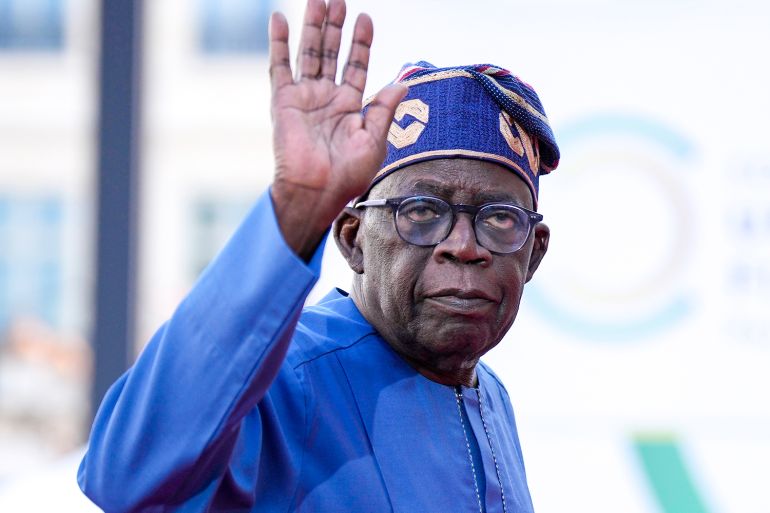
The Man Behind the Moniker
In Nigeria’s political dictionary, some names are titles, some are nicknames — and some are brands. Jagaban belongs in the last category.
The name, earned by Bola Ahmed Tinubu, has transcended political sloganeering to become a synonym for strategy, survival, and silent influence. While the word itself means “Leader of Warriors” in the Borgu Kingdom, its meaning in the Nigerian political lexicon is far more layered: the man who never blinks, even when the game changes mid-play.
Tinubu’s rise from Lagos State Governor (1999–2007) to the political godfather of the ruling All Progressives Congress (APC) and eventually the Presidency in 2023 is a masterclass in political navigation. He has survived military rule, democratic transitions, political betrayals, media storms, and public skepticism — often not by brute force, but by leveraging perception as his sharpest weapon.
In political corridors, they say Tinubu doesn’t just play the game — he designs the board, writes the rules, and chooses the referees. That’s the Jagaban lens: the ability to see not just what is, but what could be — and to make others see it too.
The Architecture of Influence
Tinubu’s influence is rarely accidental. It’s built on a three-tier strategy: networking, positioning, and reward systems.
Networking: His network spans political parties, business moguls, traditional rulers, grassroots mobilizers, and even past rivals. In Lagos, it’s almost impossible to rise politically without at least brushing against the Jagaban orbit. His alliances often extend beyond ideological loyalty — they’re anchored in mutual benefit.
Positioning: Tinubu is never just in the room; he ensures the room exists because he built it. From grooming protégés like Babatunde Fashola, Akinwunmi Ambode, and Babajide Sanwo-Olu, to influencing ministerial and legislative appointments, his fingerprints are often found in political blueprints across Nigeria.
Reward Systems: Loyalty is rewarded visibly and generously. Political allies find themselves in key government or party positions, with resources and visibility to cement their own bases. But betrayal is remembered — sometimes for years — until the right moment to remind the offender arrives.
This ability to move both in daylight and shadows has created a paradox: to some, Tinubu is the architect of modern Lagos and a political genius; to others, he is the embodiment of over-concentrated power. Both perceptions fuel his legend.
Legacy: Builder or Power Hoarder?
No conversation about Tinubu can escape the legacy debate. His admirers point to Lagos as a model of urban transformation, tax reform, and sustained infrastructural growth — all seeded during his governorship. They credit him with transforming the state’s revenue base and creating a template other states have since studied.
Critics, however, view his legacy through a different lens: they argue that Lagos is run less like a public state and more like a political fiefdom, where loyalty often outweighs merit in leadership succession. They accuse him of consolidating power to maintain relevance, even after leaving office, turning governance into a chain of political patronage.
The truth, as seen through the Jagaban lens, is less binary. Tinubu has mastered the delicate balance between governance and politics — delivering enough tangible development to justify his hold on influence, while ensuring that influence never slips entirely from his grip.
The Politics of Perception
What makes Tinubu truly formidable is not just what he does, but how people perceive what he does. He understands the optics of timing, the drama of silence, and the power of narrative.
In 2015, when the APC took power from the PDP for the first time in Nigeria’s history, Tinubu’s visible role was surprisingly muted — yet political insiders knew he was one of the architects of that victory. In 2023, despite age, health rumors, and political fatigue, he positioned himself not as a retiring elder statesman but as the man whose time had come.
He thrives in being underestimated. When detractors predict his political death, he emerges with a fresh alliance or a new move that rewrites the conversation. For Tinubu, perception is a chessboard — and every public opinion poll, media headline, and social media trend is just another piece to maneuver.
The Test Ahead
The Jagaban lens has always focused on the long game, but the presidency is its ultimate test. In a country where public patience is thin and political loyalty is fluid, Tinubu’s survival will depend on whether he can shift from kingmaker to national leader without diluting the aura that made him untouchable in the first place.
Nigeria’s political circle watches closely: Can the Jagaban lens, which has thrived in the calculated chaos of power brokering, adapt to the relentless transparency demands of governance? Can the strategist who once pulled the strings survive when every move is now under the blinding lights of public scrutiny?
Whatever the outcome, one thing is certain — as long as the Jagaban lens exists, Nigeria’s political theatre will never lack intrigue. In the end, Tinubu’s legacy will not be written only by the laws he passes or the roads he builds, but by whether the narrative he spent decades crafting survives the ultimate judgement of history.


