

Business News Correspondent
Bosun Ayetiwa
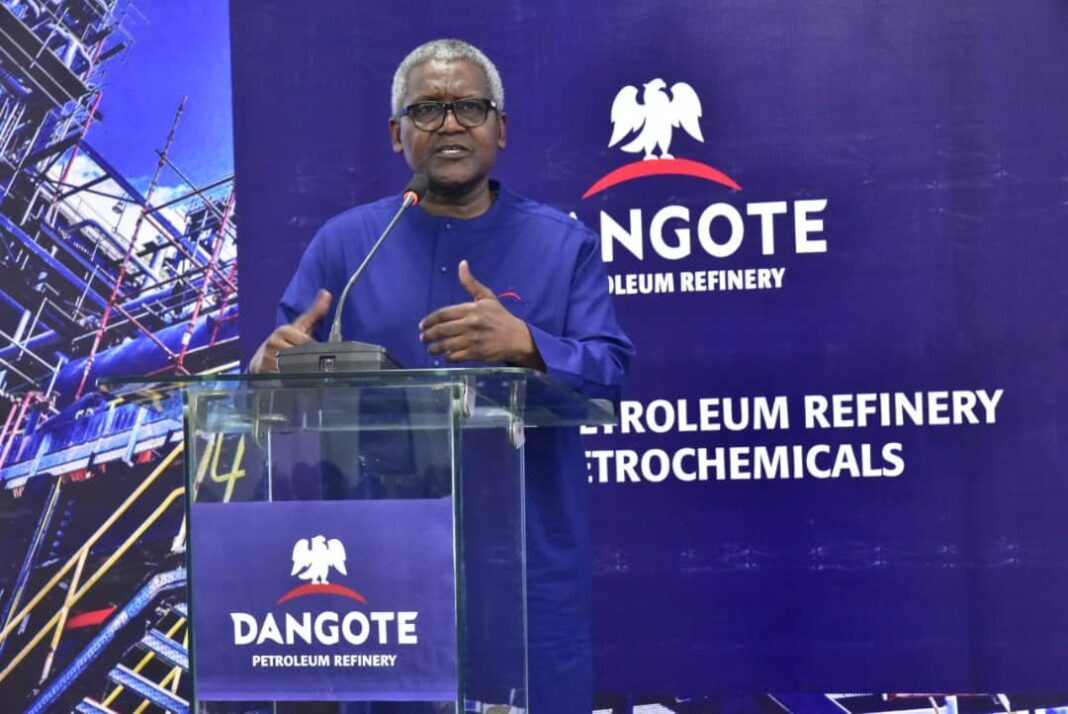
The Dangote Refinery has recorded another historic milestone with the successful export of its first gasoline cargo to the United States, signaling Nigeria’s growing influence in the global energy market.
According to international trade tracking platform Argus, the vessel Gemini Pearl lifted about 300,000 barrels of gasoline from Dangote’s terminal on August 26, with its destination likely to be New York or New Jersey. Although the Dangote Group has yet to officially confirm the shipment, industry insiders suggest that global trading firm Vitol may have chartered the vessel.
This marks the first time a Nigerian-produced gasoline cargo is heading to the U.S. market. Prior to this, Dangote Refinery had already expanded its reach eastward, exporting three LR2 cargoes in June and July—two to the Middle East Gulf and one to Singapore.
Analysts say the latest move was driven by arbitrage opportunities, with gasoline prices on the U.S. Atlantic Coast climbing while local inventories continue to decline. By seizing this opening, Dangote Refinery is not only strengthening its commercial relevance but also positioning Nigeria as a strategic player in international fuel supply.
Despite this progress, sources noted that the refinery is still exporting low-sulphur straight-run fuel oil, indicating that its Residual Fluid Catalytic Cracking (RFCC) unit is running at around 45–50 percent capacity. The unit was briefly shut down in August for maintenance but has since resumed operations, though some technical challenges, including high metal content in feedstock, remain.
Meanwhile, Aliko Dangote, the founder of the refinery and Africa’s richest man, recently reflected on his journey to success, dismissing suggestions that his empire was built on inherited wealth. In an interview resurfaced from Bloomberg, Dangote explained that while his family name carried affluence—his late great-grandfather was among West Africa’s wealthiest in the 1940s—he deliberately chose not to depend on that legacy.
“One thing that I’m very, very proud of is that I did not inherit any money from my father. I built everything from scratch to where I am,” he said. Dangote revealed that whatever assets he did inherit were handed over to charity, underscoring his determination to build his fortune independently.
He recalled starting small, trading in cement in Lagos, a business decision he linked to Nigeria’s need for infrastructure development. That low-key beginning, he said, became the springboard for what is today one of the continent’s most powerful industrial empires.
With the refinery’s entry into the U.S. gasoline market, energy experts say Dangote is rewriting Africa’s participation in global oil trade. It is not just about fuel exports, they argue, but about proving that African-led initiatives can compete and thrive at the highest levels of international commerce.

