

By John Umeh
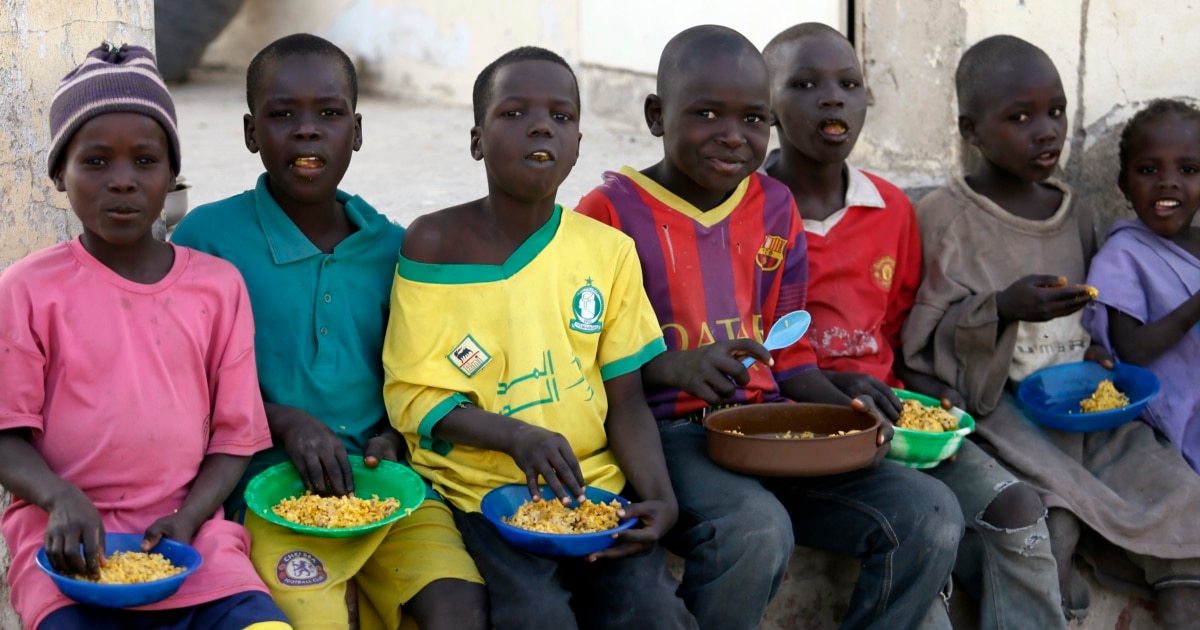
The United States government has announced a new humanitarian package worth $32.5 million to help Nigeria address a deepening hunger crisis, particularly in conflict-affected regions.
The U.S. Mission to Nigeria, in a statement released on Wednesday, said the funding would provide emergency food assistance and nutritional support to vulnerable communities across the country’s north-east and north-west. The support comes at a critical time when millions of Nigerians face severe food insecurity, worsened by prolonged conflicts, economic instability, and global funding shortfalls.
Breaking a Pause in Aid
The fresh U.S. contribution is notable given the sharp cuts to international aid in recent years. Under former President Donald Trump, most aid programs through the U.S. Agency for International Development (USAID) were suspended, leaving agencies such as the World Food Programme (WFP) struggling to maintain operations.
In July, WFP’s Regional Director for West Africa, Margot van der Velden, described northern Nigeria as being on the brink of “an unprecedented hunger crisis.” She warned that more than 1.3 million people were at risk of starvation and that about 150 nutrition clinics in Borno State alone faced closure due to dwindling resources.
The WFP also announced the suspension of food assistance in several crisis-hit countries across West and Central Africa, citing U.S. and global aid cuts that had left its warehouses nearly empty.
How the Funds Will Be Used
According to the U.S. Mission, the newly approved $32.5 million will be channeled into direct food distribution and nutritional supplements for families in dire need.
The assistance package will target 764,205 beneficiaries in Nigeria’s north-east and north-west. Among these, the mission said, were 41,569 pregnant and breastfeeding women and girls, as well as 43,235 children, who will receive specialized nutrition through electronic food vouchers and top-ups.
Humanitarian partners note that such targeted interventions are vital for preventing child malnutrition and maternal health complications in displaced and vulnerable communities.
Security Woes Deepening the Crisis
Food insecurity in Nigeria is tightly linked to the country’s persistent insecurity. In the north-east, more than a decade of insurgency led by Boko Haram and Islamic State West Africa Province (ISWAP) has devastated farming and trade, claiming the lives of an estimated 35,000 civilians and displacing over two million people, according to United Nations figures.
Meanwhile, in the north-west and north-central regions, banditry, armed attacks, and farmer-herder clashes have intensified in recent months. In June alone, an attack in north-central Nigeria left 150 people dead, further highlighting the fragile security situation.
These conflicts have disrupted agricultural activities, displaced entire communities, and created dangerous conditions for humanitarian workers attempting to deliver aid.
Implications for Nigeria
Analysts say the U.S. aid comes as a much-needed relief but also underscores the scale of Nigeria’s humanitarian challenge. With food stocks in many affected areas projected to run out by September, millions of people could have been left without emergency assistance if additional funding had not been secured.
The Nigerian government has been under pressure to strengthen domestic responses to food insecurity. However, rising inflation, currency devaluation, and limited fiscal space have made it difficult for authorities to meet the needs of displaced populations without external support.
This latest injection of funds is expected to sustain life-saving interventions for several months, but aid officials warn that long-term solutions must focus on restoring security, rebuilding livelihoods, and strengthening agricultural resilience.
A Lifeline, but Not Enough
While the $32.5 million donation is a significant gesture, humanitarian experts caution that it represents only a fraction of what is needed to prevent a full-blown food emergency in Nigeria. The WFP and other aid agencies continue to appeal for broader international contributions to meet the urgent needs of millions at risk.
Without more sustained funding, they warn, the cycle of hunger and displacement will persist, leaving communities in the region perpetually dependent on emergency relief.
The U.S. decision to re-engage with Nigeria through this aid package signals a renewed commitment to addressing the country’s worsening humanitarian situation. For the hundreds of thousands of families in the north-east and north-west, it represents a vital lifeline against hunger.
Yet the broader challenge remains: unless insecurity is addressed and long-term development initiatives are scaled up, Nigeria’s hunger crisis will remain one of the most pressing humanitarian issues in West Africa.

