

By John Umeh
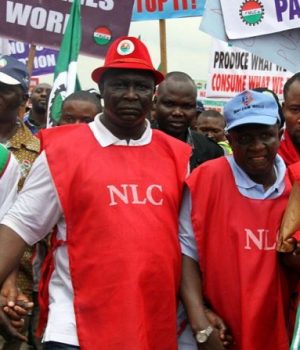
Nigeria’s organised labour has warned that the ₦70,000 minimum wage is no longer realistic, urging the Federal Government to begin immediate discussions on an upward review.
Speaking on behalf of the Nigeria Labour Congress (NLC), Acting General Secretary Benson Upah described the current wage as “grossly inadequate” given Nigeria’s rising inflation, volatile exchange rates, and soaring costs of food, housing, transport, and healthcare.
“The truth is that ₦70,000 cannot sustain the average worker under today’s economic realities. Families are under immense pressure, and if nothing is done, the survival crisis will only deepen,” Upah said.
He stressed that while labour remains committed to dialogue, workers may resort to industrial action if government continues to stall.
Call for a Living Wage
Labour leaders argue that the current pay structure does not reflect the economic situation. Shehu Mohammed, President of the Association of Senior Civil Servants of Nigeria (ASCSN), said the demand for a “living wage” had always been on the table.
“Our original submission during negotiations was ₦250,000, which we consider a reasonable benchmark. Even ₦70,000 barely covers electricity bills, let alone feeding a family for two weeks,” he noted.
Mohammed added that wage increases alone will not solve workers’ struggles unless they are matched with policies to reduce living costs, including affordable housing, subsidised healthcare, and public transportation.
Ogun Workers Push for ₦104,000 Minimum
In Ogun State, labour unions are preparing to demand a new minimum wage of ₦104,000, following the example of Imo State where Governor Hope Uzodimma recently approved the same wage for workers.
Comrade Hameed Benco, NLC Chairman in Ogun, said that with the sharp rise in federal allocations to states, Governor Dapo Abiodun’s administration has no excuse not to implement the new benchmark.
Similarly, Akeem Lasisi, Chairman of the Trade Union Congress (TUC) in Ogun, revealed that plans were underway to formally table the ₦104,000 demand before the state government.
“If Imo can do it, Ogun can do it. The resources are available, and workers deserve to live decently from their earnings,” Lasisi stated.
The Bigger Picture
Experts warn that the minimum wage debate is quickly becoming a test of government’s political will and economic management. While inflation hovers in double digits and the cost of essentials keeps climbing, workers say the current ₦70,000 wage leaves them trapped in poverty.
Labour unions are now mobilising across states to push for an upward review, signaling possible nationwide agitation if the Federal Government fails to act swiftly.
For many Nigerian workers, the message is clear: ₦70,000 is no longer enough to survive.

