

By John Umeh
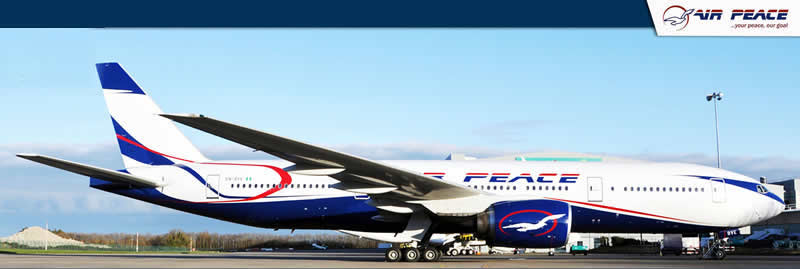
On Sunday, July 13, 2025, an Air Peace aircraft carrying passengers safely touched down at the Port Harcourt International Airport, though not without incident. The plane overshot the recommended touchdown zone, veered dangerously, and stopped well into the clearway. Thankfully, no lives were lost, and passengers disembarked without harm. But while the runway incursion itself raised red flags about aviation safety in Nigeria, the real storm came days later when the Nigerian Safety Investigation Bureau (NSIB) released a preliminary report alleging that a co-pilot, David Bernard, and a cabin crew member, Maduneme Victory, had tested positive for alcohol and cannabis.
The report, which suggested human performance failures linked to substance use, quickly spiraled into a scandal—casting shadows on the airline, the crew, and even the oversight credibility of Nigeria’s aviation regulators. But the indicted crew members did not take the accusations lying down. They publicly rejected the NSIB’s findings, describing them as defamatory, flawed, and a calculated attempt to tarnish their reputations and the airline’s image.
The NSIB Report: Findings That Sparked Outrage
In its preliminary account, the NSIB noted that the Air Peace aircraft had landed 2,264 metres down the runway instead of the prescribed touchdown zone, before finally halting 209 metres into the clearway. While the technical explanation raised questions about crew decision-making, the bombshell lay in the toxicology results.
According to the Bureau, blood and urine samples taken from the flight crew shortly after the incident revealed traces of alcohol in both the captain and first officer, as well as tetrahydrocannabinol (THC)—the active compound in cannabis—in one of the cabin crew members.
The NSIB’s spokesperson, Mrs. Bimbo Oladeji, explained that the toxicological tests were conducted at the Rivers State Hospital Management laboratory in Port Harcourt. The results, she said, were being examined under “human performance and safety management” considerations. To the agency, the findings were consistent with concerns about crew alertness and judgment during the incident.
But for Bernard and Victory, the accusations not only smeared their professional integrity but also threatened their livelihoods in an industry where even the faintest stain of misconduct could end careers overnight.
Crew Members Push Back: “We Don’t Drink. We Don’t Smoke.”
Appearing on national television, co-pilot David Bernard was emphatic in rejecting the claims. He pointed to procedural flaws in the testing process, insisting that the hospital used was neither aviation-certified nor equipped with the standard technology for immediate, transparent alcohol checks.
“In 2025, breathalysers are the standard for alcohol testing in aviation. You blow into it, and the results are available instantly. Instead, they collected our blood and urine, disappeared with them, and returned ten days later with results. How does that make sense?” he asked.
Bernard went further, describing himself as someone who neither drinks nor smokes, and who is fully aware of Air Peace’s stringent random drug and alcohol tests. “You can be tested at any time when reporting for duty. None of us would dare risk our jobs by indulging in alcohol or drugs before flights.”
Cabin crew member, Maduneme Victory, also spoke out, describing the NSIB’s report as “an orchestrated attempt to malign” her and the airline. She recounted how she was shocked when the Nigerian Civil Aviation Authority (NCAA) later handed her a letter stating she tested positive for cannabis.
“I went immediately for a reconfirmatory test at a licensed aerospace clinic, and the results were negative. The NSIB’s claim is false. If marijuana was truly in my system, would they not have grounded me instantly for the safety of passengers? Instead, they waited for months before coming up with this story. That is suspicious,” Victory said.
She threatened legal action against the Bureau, calling the report “defamation of character with real consequences,” stressing that her reputation and future employability were now at risk.
Air Peace and NCAA Respond: Confusion in the System
Air Peace, the airline at the centre of the controversy, stood firmly behind its staff. The company revealed that Bernard had already been cleared by the NCAA and returned to active flight duty. The airline also highlighted its internal safety protocols, including random crew drug and alcohol tests that are stricter than international aviation requirements.
“If he were involved in drug or alcohol use, the NCAA would never have allowed him back into the cockpit. The captain has been grounded since the incident—not because of toxicology results, but for procedural errors during the landing,” Air Peace explained in a statement.
Yet, the contradiction between NSIB’s findings and the NCAA’s clearance created confusion. Why was the Bureau’s report not officially communicated to the airline or regulator in real-time? Why were the toxicology results delayed and contested? The conflicting accounts suggested weak coordination between Nigerian aviation agencies, raising doubts about regulatory synergy and accountability.
The Director-General of NSIB, Captain Alex Badeh, downplayed the backlash, insisting that the toxicology tests were legitimate and conducted by a state-recognised hospital. He dismissed the smear-campaign claims as typical defensive reactions. But his words did little to calm public unease.
Safety and Trust: Passengers and Experts Voice Concern
Beyond the back-and-forth between crew, airline, and regulators, the incident has unsettled passengers and exposed cracks in Nigeria’s aviation safety system.
Some frequent flyers admitted that the allegations have shaken their trust. “I’m afraid for my life right now. If pilots are being accused of drinking on duty, how are we supposed to feel safe?” one passenger, Aderoju Aina, lamented.
Another passenger, Maria, confessed she had cancelled her flight plans after the news broke, opting for a road journey instead. “The authorities must get to the root of this. We cannot just sweep it under the carpet,” she said.
Industry experts, meanwhile, have placed blame squarely on the NCAA, accusing it of lax enforcement and reactive regulation. Retired Group Captain John Ojikutu expressed worry that safety recommendations often go unimplemented. He noted that Nigeria’s aviation industry risks repeating past tragedies if regulators fail to act decisively.
A System Under Scrutiny
The Port Harcourt runway incident may have ended without casualties, but the aftermath has cast a harsh light on Nigeria’s aviation sector. On one side, the NSIB insists its toxicology results are credible. On the other, the indicted crew and Air Peace allege procedural failures, poor communication, and even deliberate sabotage.
Amid the blame game, passengers remain fearful, while experts warn of systemic weaknesses in aviation oversight. Until transparency, consistency, and accountability are restored among the NSIB, NCAA, and airlines, public trust will remain shaky.
For Bernard and Victory, the fight is personal—a battle to protect careers built on discipline and professionalism. For Nigeria, however, the stakes are far greater: the safety of its skies and the credibility of its aviation system in the eyes of the world.

