

By Society Assistant Editor
Ninolowo Gbamboye
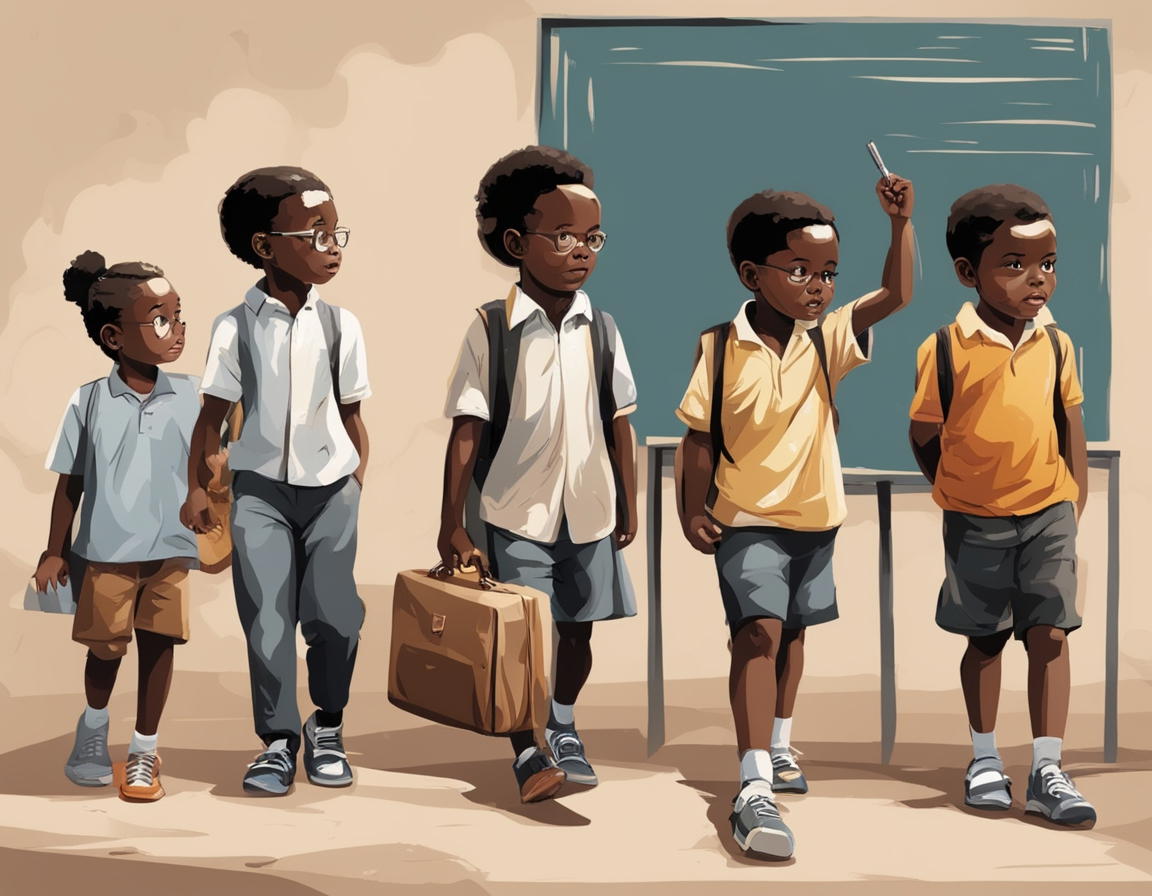

Today marks the official resumption of schools across Nigeria for the 2025/2026 academic session. But unlike the excitement and joy that usually follow children carrying new bags, uniforms, and books, this year’s “back to school” period is filled with tears, anxiety, and despair for many parents.
The Nigerian economy, battered by persistent inflation and rising living costs, has turned education—once a source of pride—into a heavy burden. For millions of parents, school resumption is no longer a season of celebration but one of deep worry, depression, and desperate decision-making.
A Crushing Reality for Parents
Take the case of Mrs. Chinyere Okafor, a Lagos mother of four. For years, she and her husband struggled to keep their children in a mid-tier private school. But this September, they were handed a new bill: tuition raised from ₦350,000 per child per term to ₦570,000. “When I opened the bill, I cried,” she confessed. “My salary and my husband’s combined cannot even cover half of it. We are now thinking of moving them to a public school.”
Her story reflects that of thousands of parents. According to a recent Lagos Parent Survey, about 35 per cent of families are considering or have already moved their children from private schools to public ones due to rising costs. The survey noted that while many parents once viewed public schools as inferior, desperation is forcing them to embrace them simply because they are cheaper.
The numbers tell the story more vividly. In 2020, the average tuition for mid-tier private schools was around ₦40,000 per term. Today, in 2025, that figure has climbed to ₦120,000—a 200 per cent increase in five years. Elite schools, especially in Lagos, Abuja, and Port Harcourt, now demand between ₦2.5 million and ₦3.5 million per term, excluding levies for extracurriculars, uniforms, and feeding.
In places like Ikeja, Lekki, and Ikoyi, some schools that once charged ₦2 million now require ₦3 million per term. At Greenfield Academy in Yaba, fees jumped from ₦350,000 to ₦570,000. At Springlight School in Oregun, parents now pay ₦450,000 instead of ₦225,000. Even mid-range schools in Ilupeju and Maryland have raised fees by 80–100 per cent within a single year.
For already struggling households, these figures are devastating.
The Depression Parents Don’t Talk About
Beyond financial pressure, there is an emotional and psychological dimension that rarely gets attention: the quiet depression parents are sinking into.
Many parents now suffer sleepless nights, headaches, and even hypertension triggered by the thought of school resumption. The National Bureau of Statistics (NBS) put Nigeria’s inflation rate at 24.5 per cent in early 2025, with food inflation exceeding 20 per cent. Families are already battling soaring food, rent, and transport costs—school fees become the last straw that breaks many backs.
According to Dr. Ibrahim Musa, a psychologist based in Abuja, there has been a sharp rise in cases of parental depression around school resumption periods. “We see mothers especially who come in with anxiety attacks, crying over how they will pay school fees. Some fathers confess to feeling like failures when they cannot meet these demands,” he explained.
This emotional toll is further complicated by the pressure parents feel to maintain a certain social image. In middle-class neighborhoods, pulling a child out of a private school is seen as “falling behind.” Yet, the reality is forcing more parents to make that choice, no matter the stigma.
Schools Also Cry Out
Private schools, however, insist they are also victims of the same economic storm. Mr. Daniel Olayemi, president of the Association of Independent School Owners, said schools are facing unbearable operational costs. “Electricity bills have tripled, textbooks are imported at higher rates, and teacher salaries must be adjusted to survive inflation. Increasing fees is never our first choice, but it is a matter of survival.”
Some schools have introduced flexible payment systems, allowing parents to pay in installments. Others offer small scholarships or sibling discounts. Yet, even with these measures, the weight remains too heavy for many families.
When Education Becomes a Luxury
Nigeria’s average household income hovers around ₦2.5 million yearly. Yet, even mid-tier private schooling can consume up to 40 per cent of this income—far above the World Bank’s recommended affordability level. Boarding and feeding add more weight, with charges ranging from ₦300,000 to ₦2 million yearly, depending on the school.
By contrast, public schools remain significantly cheaper, with tuition ranging from ₦5,000 to ₦25,000 per term. But they come with their own limitations: overcrowded classrooms, limited facilities, and underpaid teachers.
Still, parents are making the switch in large numbers, especially as some state governments invest more in improving the standard of public schools.
The Call for Palliatives
School owners and parents are now jointly calling on the government to step in. They argue that education must not be left entirely at the mercy of inflation. Special palliatives such as subsidised learning materials, tax relief for schools, and low-interest loans for school operators could help reduce costs.
“If government can subsidise fuel and give palliatives for food, why not education?” asked Mrs. Ifeoma Ajayi, a parent in Surulere. “We are raising the future of this country. If children cannot go to school, then what hope is left?”
A Bleak but Unavoidable Choice
The new school year has opened with a sobering reality: for many families, education is no longer an accessible right but a crushing financial burden. Parents now juggle between dignity and survival, prestige and reality, dreams and despair.
As children wear their uniforms and file into classrooms today, behind their smiles are mothers and fathers whose hearts are breaking under the weight of bills. Unless urgent action is taken, Nigeria risks raising a generation of children caught between interrupted schooling and parents who are too depressed to dream.

