

By John Umeh
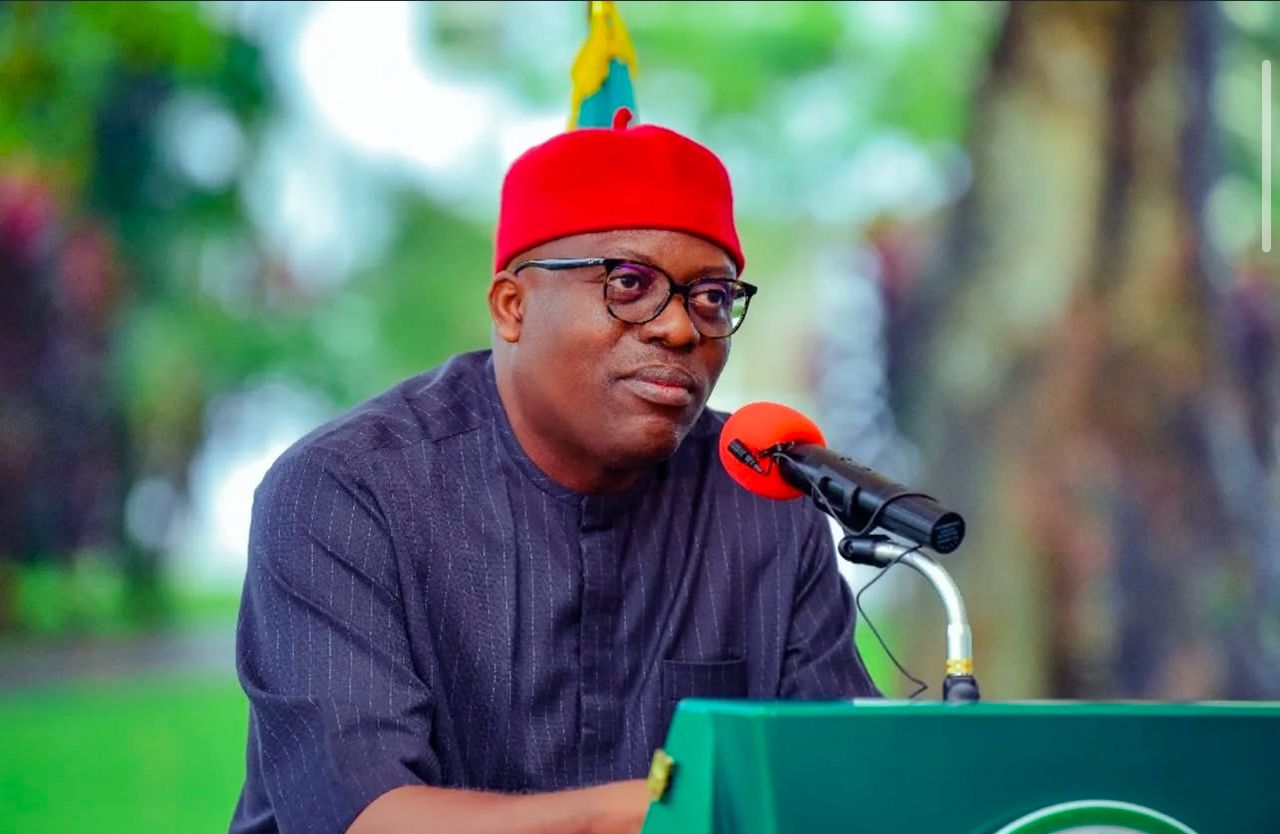
The much-anticipated return of Rivers State Governor, Siminalayi Fubara, to office after six months of emergency rule ended in disappointment on Thursday, September 18, 2025, as his absence left supporters confused and restless. Thousands of Rivers residents who gathered at the Government House, Port Harcourt, from the early hours of the day went home in silence after it became clear that the governor would not resume duties as expected.
President Bola Ahmed Tinubu had announced on Wednesday the termination of the emergency administration imposed on March 18, which saw retired naval chief, Vice Admiral Ibok-Ete Ibas, serve as sole administrator. The directive reinstated Fubara, his deputy Ngozi Odu, and the state legislature led by Speaker Martin Amaewhule.
While the announcement sparked spontaneous celebrations across Port Harcourt and beyond, the governor’s no-show created fresh uncertainty in a state already polarized by deep political rivalries and violent confrontations.
Supporters Left in the Dark
From dawn, convoys of buses and tricycles ferried enthusiastic supporters to the Government House gate. They came adorned in party colors, uniforms, and T-shirts emblazoned with Fubara’s image, chanting solidarity songs and waving banners. Women’s groups marched in procession, while music bands provided nonstop tunes in anticipation of what many hoped would be a triumphant return.
But as the hours dragged on with no sign of the governor, the atmosphere shifted. By mid-afternoon, the once-festive crowd began to disperse, leaving long faces and unanswered questions.
Among those spotted at the venue were Fubara’s allies — former commissioners Evans Bipi, Solomon Eke, and Chisom Gbala, as well as dismissed local government chairmen Chijioke Ihunwo, Ezebunwo Ichemati, and Promise Reginald. Lawmakers from the pro-Fubara bloc, including Victor Oko-Jumbo and Sokari Goodboy, were also present.
Speaking to journalists, Solomon Eke described the gathering as evidence of the people’s love for the governor:
“Nobody planned this. It was organic. The people simply came out to show they stand with their leader.”
However, Fubara’s aides later clarified that he was in Abuja for consultations and would return on Friday, fueling speculations about behind-the-scenes negotiations delaying his resumption.
Lingering Political Tensions
The Rivers crisis traces back to a bitter fallout between Fubara and his predecessor, Nyesom Wike, now Minister of the Federal Capital Territory. Their battle for control over the state’s political structure split the House of Assembly and triggered impeachment attempts, violent protests, and arson, including the destruction of the Assembly complex.
Tinubu’s intervention and subsequent emergency rule brought a fragile calm, but the root disputes remain unresolved. Sources revealed that talks are ongoing in Abuja over the composition of Fubara’s new cabinet, with Wike allegedly demanding control of key appointments, including the Secretary to the State Government and several commissioner slots.
Wike, however, publicly dismissed the allegations on Channels Television, saying:
“I cannot impose anything on the governor. I have no candidate and I will not interfere. Governance is his responsibility.”
Still, his comments have done little to quell suspicions among Fubara’s loyalists, who believe the former governor continues to wield influence from Abuja.
Assembly and Elders Weigh In
On the legislative front, the Rivers State House of Assembly wasted no time in setting its agenda. At its first sitting since the lifting of emergency rule, Speaker Amaewhule called on Fubara to immediately forward a list of commissioner nominees for screening and to present a supplementary budget to guide governance for the rest of the year.
Meanwhile, Rivers elders under the aegis of the Rivers Elders and Leaders Forum, led by former Governor Rufus Ada-George, urged reconciliation and forgiveness. In a statement signed by ex-Deputy Governor Gabriel Toby, they appealed to both camps to put the state’s interests above personal ambition:
“This is a moment for peace, sober reflection, and unity. The return of democratic governance must mark not just a political settlement but a fresh start rooted in accountability and service.”
The elders warned against renewed hostilities, stressing that Rivers’ future depends on healing divisions and addressing issues such as insecurity, unemployment, and environmental degradation.
Looking Ahead
Outgoing sole administrator Vice Admiral Ibas, in his farewell broadcast, expressed pride in stabilizing the state, conducting local government elections, and reconstituting statutory boards. Yet, his midnight appointment of a new Head of Service, Dr. Iringe Brown, has already sparked controversy, with critics accusing him of favoring loyalists over due process.
Rights activist Charles Jaja faulted the move, saying:
“It is now left for Governor Fubara to demonstrate integrity by reviewing this midnight decision.”
As Rivers awaits Fubara’s official return, the atmosphere remains tense. The delay has fueled speculation over unresolved power struggles, while his supporters remain hopeful that his re-entry will mark the beginning of reconciliation and stability.
For now, however, the state stands at a crossroads — torn between jubilation over the end of emergency rule and lingering doubts over whether peace can truly return to Nigeria’s oil-rich heartland.

