By John Umeh
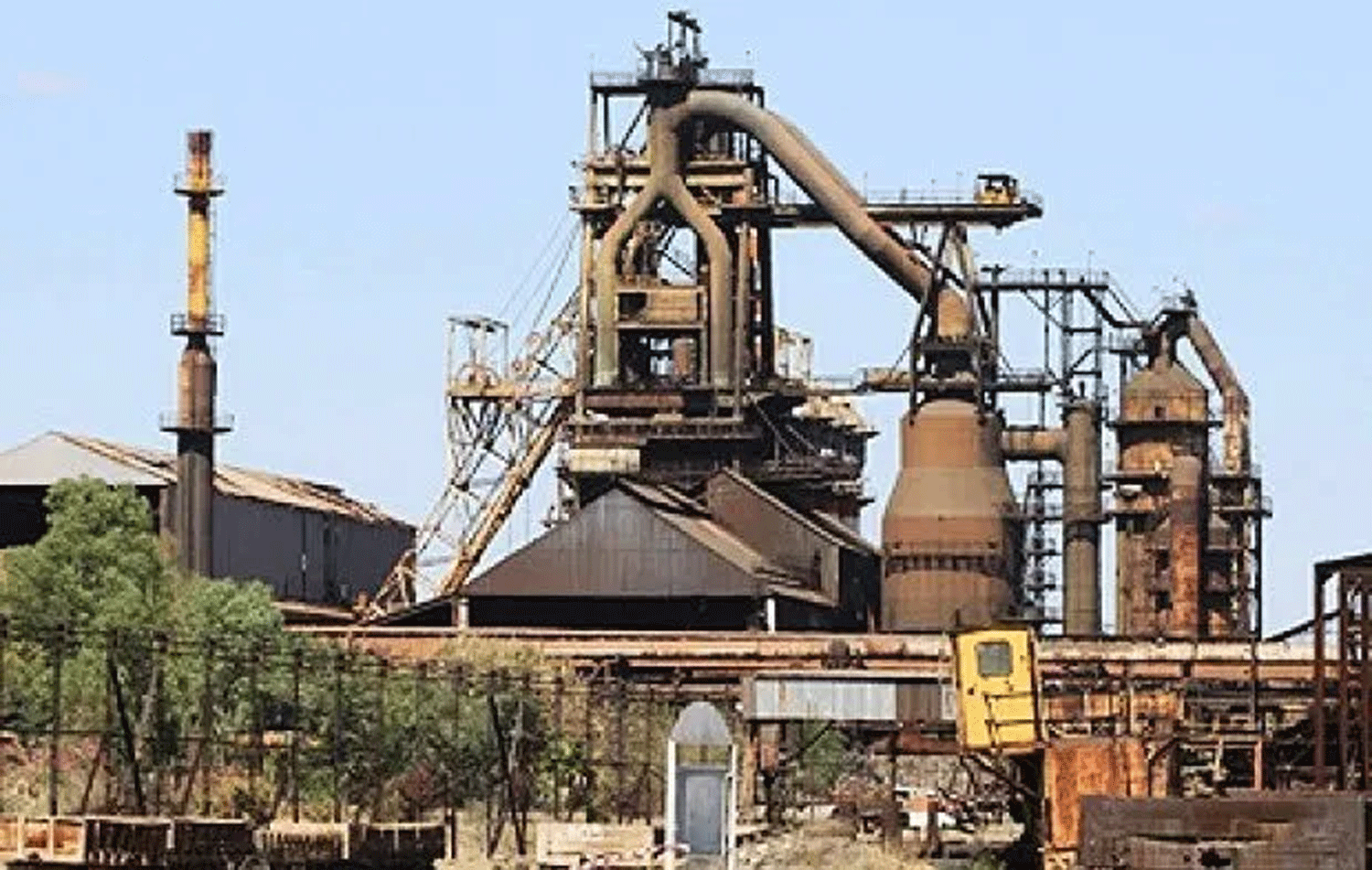
The future of Nigeria’s most ambitious industrial project, the Ajaokuta Steel Company Limited (ASCL), is once again the subject of national debate as the Federal Government maintains that the plant is in “good condition” while Africa’s richest man, Aliko Dangote, offers a more sobering assessment.
The Ministry of Steel Development, in a recent statement signed by its Head of Press and Public Relations, Salamatu Jibaniya, dismissed widespread reports suggesting that the plant has deteriorated beyond repair. According to the government, an ongoing technical and financial audit confirms that the steel complex is still structurally sound, though modernization is urgently needed.
“The Federal Government remains committed to the resuscitation of ASCL. Our decisions will be guided by data, transparency, and national interest. The 2018 audit showed the plant in robust condition, requiring mainly replacement of deteriorated parts and automation of outdated systems,” the ministry stated.
But Dangote, whose influence in Nigeria’s industrial sector is unparalleled, struck a different tone. Speaking at a recent forum, he argued that the challenges facing Ajaokuta are more complex than the government admits, warning that the revival may require far deeper reforms and resources than previously budgeted.
FG’s Case for Optimism
First conceived in 1979, the Ajaokuta Steel project was envisioned as the foundation of Nigeria’s industrial independence, meant to supply the raw materials for construction, automobile manufacturing, defense, and energy sectors. Decades later, however, the facility has become a symbol of unfulfilled promises, bogged down by political interference, stalled contracts, and legal disputes.
Despite this history, the Ministry insists that the situation is not hopeless. Officials argue that while some parts of the plant have suffered wear and tear, the “heart” of the infrastructure remains intact. The ongoing audit is expected to recommend a phased rehabilitation process that will focus first on critical production lines before expanding to full-scale operations.
The ministry further stressed that reviving Ajaokuta would drastically reduce Nigeria’s dependence on imported steel, conserve foreign exchange, and create thousands of jobs. “Steel is the backbone of industrial growth, and no country achieves lasting development without it,” the statement emphasized.
Dangote’s Sobering Perspective
Dangote, whose conglomerate has successfully launched mega projects including the Dangote Refinery, offered a counterpoint that has added weight to the debate. According to him, Nigeria must be realistic about Ajaokuta’s prospects.
He noted that global steel production has advanced significantly in terms of technology, efficiency, and cost-effectiveness. Without substantial modernization and strategic partnerships, Dangote warned, Ajaokuta risks being obsolete before it even begins full operations.
“Steel today is not what it was in the 1980s. The industry has evolved, and we must approach Ajaokuta with a fresh strategy, not just patchwork fixes,” Dangote reportedly said.
His comments highlight a broader concern among private sector experts who argue that Nigeria must rethink its approach to reviving the steel giant. Instead of pouring resources into a model conceived four decades ago, some suggest attracting new investors, restructuring ownership, and introducing state-of-the-art technology.
Between Promise and Skepticism
The contrasting views between the FG and Dangote reflect the broader dilemma surrounding Ajaokuta. For many Nigerians, the plant represents hope for industrial independence, job creation, and economic growth. Yet, for skeptics, it has become a bottomless pit of wasted funds and political rhetoric.
Analysts say the current audit will be crucial in bridging these positions. If the government can present clear, data-backed findings and a workable financing plan, it may rebuild public confidence. However, if optimism is not matched with decisive action, Dangote’s warning may prove prophetic.
Communities in Kogi State, where the plant is located, remain cautiously hopeful. For decades, they have watched successive governments promise Ajaokuta’s revival, only to see the facility remain idle. “We are tired of promises,” said a resident. “What we want is action, not politics.”
The Road Ahead
As Nigeria grapples with economic pressures, the stakes for Ajaokuta’s future are high. A successful revival could transform the nation into a steel powerhouse in West Africa. Failure, however, could reinforce its reputation as the country’s most expensive white elephant.
The Federal Government insists the story is not over. Dangote’s caution, however, serves as a reminder that optimism alone cannot build steel. Only political will, transparent management, and credible technical partnerships can determine whether Ajaokuta becomes the engine of Nigeria’s industrial revolution or remains a relic of missed opportunities.