

By John Umeh
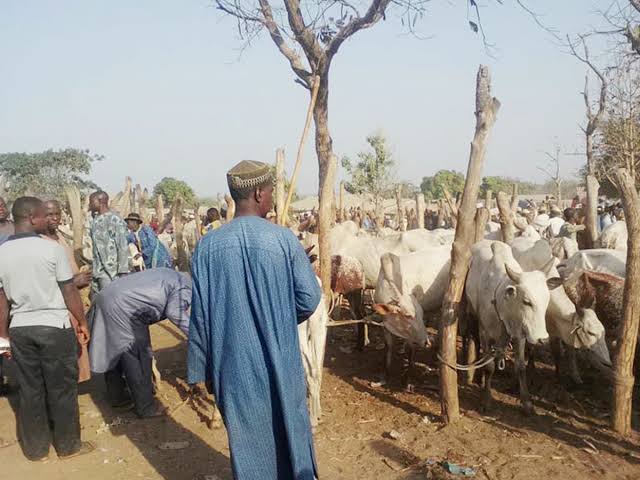
The worsening security challenges in parts of Kwara South Senatorial District have forced local government authorities to take a bold but controversial step: the indefinite closure of all Kara (cattle) markets. The decision, announced on Friday, September 19, 2025, is part of a coordinated strategy to curb banditry, safeguard communities, and prevent further loss of lives and property.
The announcement was made jointly by the Forum of Seven Local Government Chairmen in the district after consultations with security agencies and traditional rulers. According to the leaders, the closure is temporary but necessary, as recent attacks on traders and commuters have created an atmosphere of fear and instability across the region.
“This collective decision is a proactive step taken to address emerging security concerns and ensure the safety of residents, traders, and commuters within the district,” the statement read.
Why the Markets Were Closed
For months, residents of Kwara South have grappled with frequent bandit incursions, targeting highways, marketplaces, and remote villages. Kara markets, which attract thousands of traders and buyers from neighboring states, have become hotspots for insecurity. Reports suggest that criminals often use these markets to monitor movements, extort traders, or launch surprise attacks on unsuspecting communities.
The chairmen explained that while military operations and hybrid security outfits have recorded successes against the criminals, clean-up operations are still ongoing. Shutting down cattle markets, they said, is part of a “containment strategy” to prevent further infiltration while security forces consolidate their gains.
Additionally, all produce markets in the district have been ordered to close by 6:00 p.m. on market days. This restriction, according to officials, is to reduce night-time movements that often provide cover for bandits.
Economic and Social Fallout
The decision has sparked mixed reactions among residents. For many traders, especially cattle dealers and butchers, the closure represents a major economic setback. Kara markets are not only centers of livestock trade but also sources of livelihood for transporters, food vendors, artisans, and other small-scale operators.
Some community members expressed fears that shutting down markets could worsen poverty levels, particularly in rural areas where alternative income sources are scarce. However, others welcomed the move, insisting that safety must come before profit.
“What use is money if we cannot live to spend it?” asked a farmer in Omu-Aran. “It is painful, but the government must do what is necessary to keep us safe.”
The chairmen acknowledged these concerns but emphasized that the decision was not made lightly. They stressed that human lives outweigh economic inconvenience, adding that once the security situation improves, the markets will be reopened under stricter monitoring.
A Call for Cooperation
Authorities have appealed for maximum cooperation from residents and traders, warning that defiance of the directive could undermine security efforts. They assured the public that the state government, working alongside security agencies, is determined to restore peace.
The Forum also called on community leaders, transport unions, and trade associations to support security operatives with timely intelligence and refrain from shielding criminals.
According to the chairmen, this is not a permanent closure but a temporary sacrifice for long-term stability. “We remain committed to creating a secure and peaceful environment where commerce can thrive again without fear,” they said.
Broader Implications
The indefinite closure of cattle markets in Kwara South mirrors similar actions in other parts of northern Nigeria where banditry has disrupted economic and social life. Analysts say the decision reflects the increasing difficulty of balancing security with commerce in regions under threat.
For now, the move underscores the government’s determination to prioritize lives over livelihoods. But questions remain: How long can these markets remain closed before economic pressures mount? And will the security gains from this measure be enough to justify the hardship it imposes?
Until the answers emerge, Kwara South’s Kara markets will remain eerily silent—waiting for the day when peace returns, and trade can flourish again.

