By Society Assistant Editor
Ninolowo Gbamboye

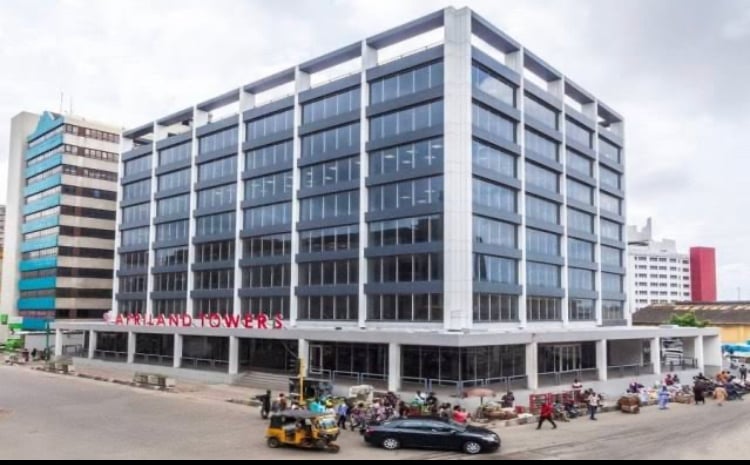
Fresh details have emerged following the tragic fire outbreak at Afriland Tower on Lagos Island, which claimed the lives of 10 people. Contrary to initial assumptions, emergency officials have now confirmed that it was not the flames but toxic smoke from a burning lithium battery inverter system that caused most of the fatalities.
The incident, which occurred on Tuesday, September 16, saw thick black smoke engulf the multi-storey office building. Videos from the scene showed desperate workers leaping from upper floors while others were rescued with ladders by passersby.
Among the casualties were staff members of the Federal Inland Revenue Service (FIRS) and United Capital, a financial and investment services firm headquartered in the tower. They reportedly died at different hospitals where they were rushed after suffering severe complications linked to inhalation of poisonous fumes.
Rescue workers disclosed that the fire originated in the inverter room, where lithium batteries powering the alternative power supply ignited. The smoke spread rapidly through the building, including stairways and emergency exits, leaving occupants trapped with little chance of escape.
“The danger wasn’t the fire itself; it was the hazardous smoke. Within a minute of exposure, people were collapsing. The lithium battery fumes displaced oxygen in the building, forcing occupants to gasp for breath,” one emergency responder explained.
Officials also confirmed that no bodies were recovered from the building itself, as the 10 confirmed victims succumbed later in hospitals. Survivors who received immediate treatment reportedly recovered, but those with severe inhalation injuries could not be saved.
The tragedy has once again raised safety concerns about the use of lithium battery inverters in high-rise buildings, with experts stressing the need for stronger safety protocols, regular inspections, and well-equipped evacuation systems to prevent similar disasters in the future.