

By John Umeh
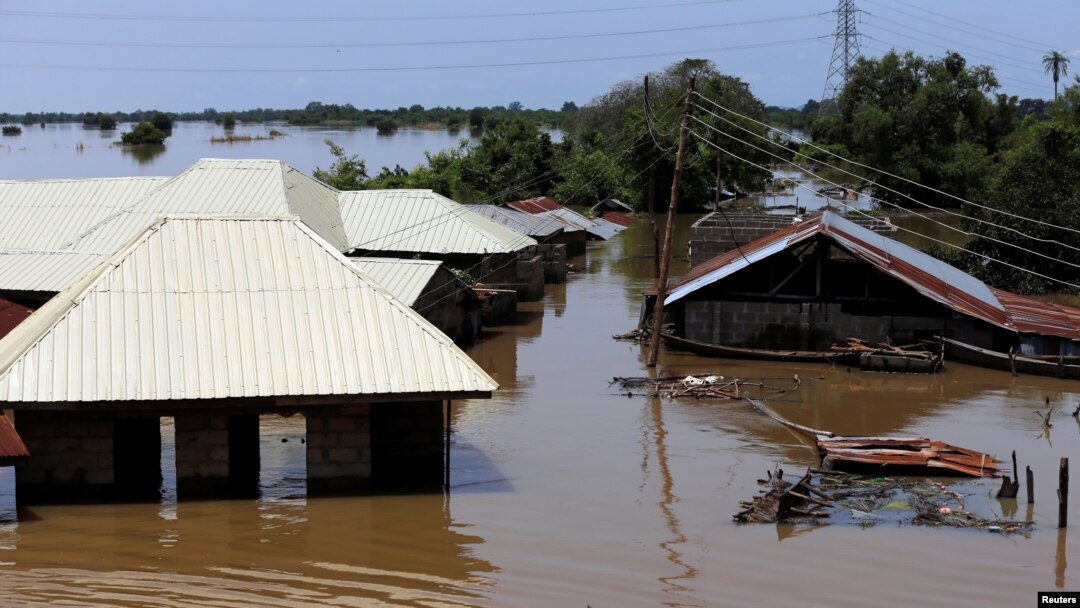
Nigeria is reeling under the weight of another devastating flood disaster that has left at least 232 people dead, displaced more than 121,000, and destroyed farmlands and homes across the country. Figures released by the National Emergency Management Agency (NEMA) as of September 20 reveal the growing scale of destruction and highlight the urgent need for stronger disaster response measures.
The disaster has touched nearly every corner of the nation. Niger State alone recorded 163 deaths, while Adamawa confirmed 59 lives lost. Taraba, Yobe, Borno, Gombe, and Jigawa each reported fatalities. In addition to the death toll, more than 115 people remain missing, while at least 681 others are battling injuries of varying degrees.
Beyond the human cost, the floods have left behind widespread devastation: over 42,000 houses destroyed and 48,000 hectares of farmland ruined. Lagos, Adamawa, and Akwa Ibom rank among the most severely affected states, with tens of thousands of residents displaced and livelihoods lost. In Adamawa, more than 23,000 people were forced from their homes, while Lagos reported nearly 4,000 displaced and thousands of houses submerged.
Emergency officials warn that food, shelter, healthcare, and clean water are the most pressing needs for victims. Yet relief efforts are being slowed by limited resources, inaccessible communities, and security risks in volatile regions.
States are scrambling to mount responses. In Kaduna, recent torrential rains displaced nearly 1,000 people and destroyed hundreds of homes in Zaria and Kaduna metropolis. Governor Uba Sani has pledged to strengthen disaster preparedness and invest in long-term mitigation. Bauchi says it has already spent about N500 million in interventions for flood victims, while Jigawa points to over N4 billion invested in flood prevention, including river dredging and embankments, which have helped reduce the scale of damage.
Gombe and Sokoto are also struggling to cope. In Gombe, nearly 1,000 households have been displaced and 15 lives lost. A recent canoe accident, linked to flooding in Funakaye, killed five people. In Sokoto, more than 5,300 households were displaced after torrential rains destroyed thousands of homes across 61 communities.
Experts warn that unless Nigeria confronts the deeper issues of climate change, poor drainage systems, and weak urban planning, the floods will only grow deadlier each year. For the families mourning loved ones and those living in makeshift shelters, the disaster is more than statistics — it is a harsh reminder of their vulnerability in the face of recurring environmental crises.

