

By Society Assistant Editor
Ninolowo Gbamboye
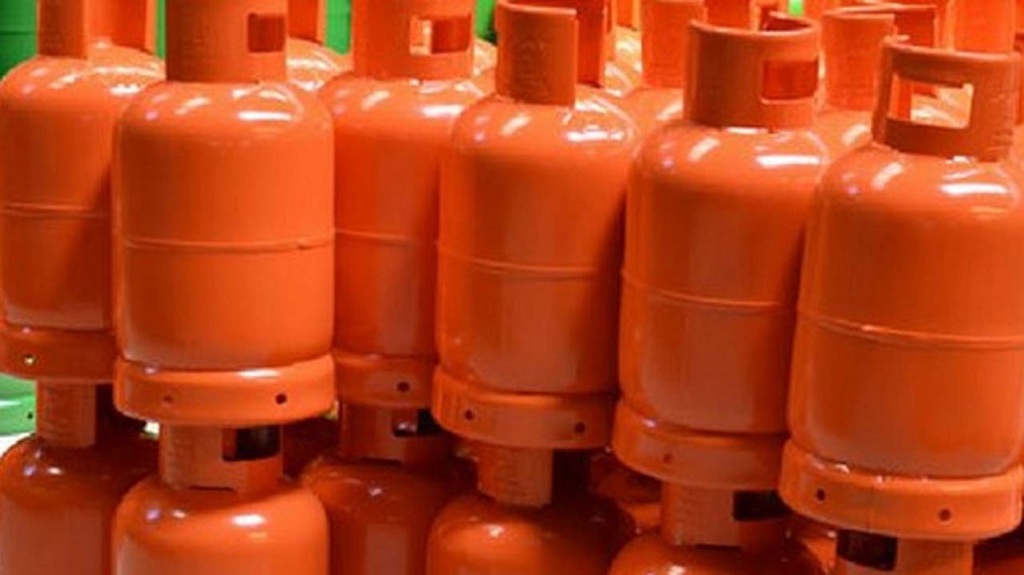
Households in parts of Lagos and Ogun States are grappling with severe shortages and soaring prices of cooking gas, with a kilogram now selling for between ₦1,800 and ₦3,500 depending on the location. This is despite recent National Bureau of Statistics (NBS) data showing that the average cost of refilling a 5kg cylinder of Liquefied Petroleum Gas (LPG) dropped from ₦8,243.79 in July to ₦6,404.02 in August 2025.
A market survey by The Guardian revealed that at retail points in areas like Ijeshatedo, consumers pay as high as ₦3,000–₦3,500 per kilogram amid long queues, while filling stations offer slightly lower prices around ₦2,500 but often with hundreds of customers waiting. Some residents say the scarcity has become so unbearable that many households are turning to charcoal and electric cookers as alternatives.
In Ogun State, residents of Atan reported buying gas between ₦2,000 and ₦2,500 per kilogram under stressful conditions, while in Igando, Lagos, prices range from ₦1,800 to ₦2,000 depending on the outlet. “The product is not only expensive but also increasingly scarce,” a resident complained.
According to Olatunbosun Oladapo, President of the Nigerian Association of Liquefied Petroleum Gas Marketers (NALPGAM), the spike in prices and shortages stem from a temporary supply disruption caused by the PENGASSAN strike and maintenance activities at the Dangote Refinery. He said vessel berthing at Lagos terminals was interrupted during the strike, while the Port Harcourt axis continued to receive large volumes from NLNG, sparing the South-South region from the worst of the scarcity. Oladapo assured that normalcy should return soon as Dangote and other suppliers resume full-scale loading.
Energy law expert Dr. Ayodele Oni noted that Nigeria’s domestic LPG market suffers from recurring shortages and price spikes despite rising upstream production. He explained that much of the locally produced LPG is still exported, limiting supply for domestic bottling and retail.
The current scarcity highlights the fragile nature of Nigeria’s cooking gas supply chain and the urgent need for improved local distribution to meet rising household demand.

