By Geraldine Ohonba
For decades, the humble pillow has been sold as a symbol of comfort — soft, fluffy, and essential for a good night’s rest. But recent medical discoveries from Japan suggest that what we rest our heads on each night may not be helping us at all. In fact, it could be slowly dismantling the health of our necks, shoulders, and upper backs.
At the Tokyo Spine Institute, Dr. Hiroshi Tanaka and his team have been researching the biomechanics of sleep for over twenty years. What they found shocked them — and is now reshaping the conversation about sleep health across the world.
The Hidden Strain in Every Night’s Sleep
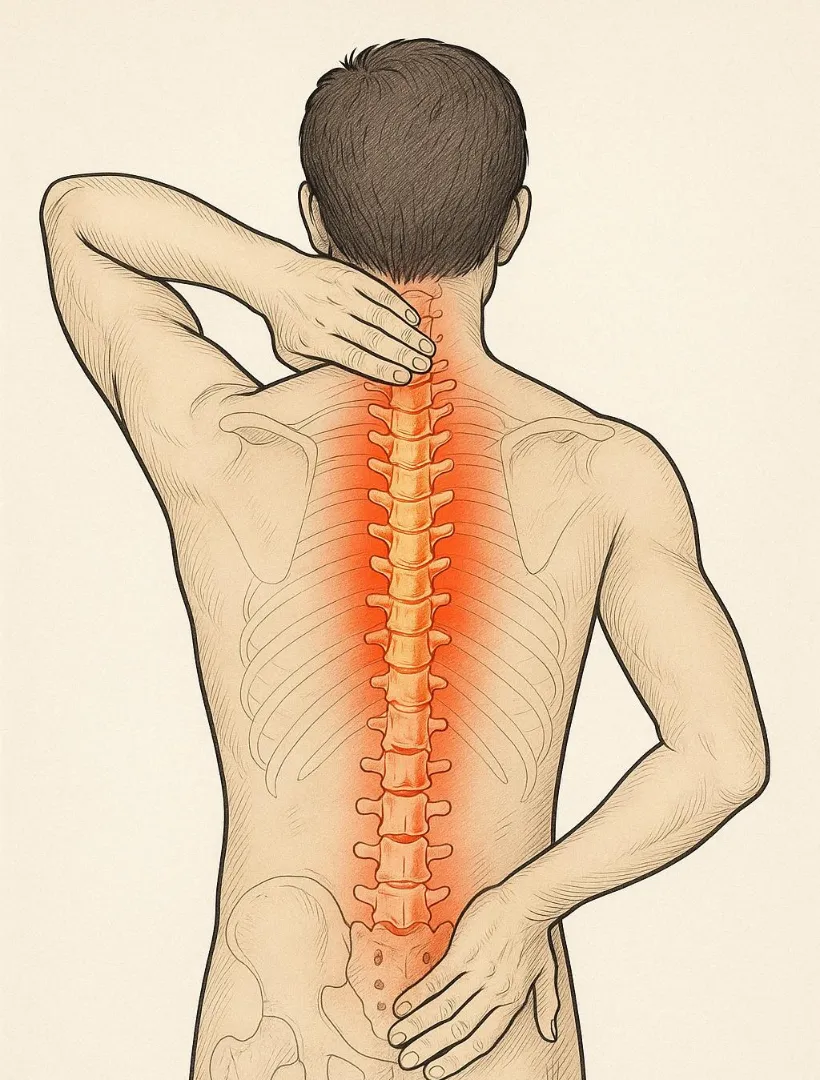
In Dr. Tanaka’s sleep lab, muscle sensors revealed something most sleepers never think about: while we rest, our trapezius muscle — the broad band of tissue that connects the neck to the shoulders — doesn’t actually relax. On traditional pillows, this muscle remains in a state of subtle but relentless contraction.
“Imagine clenching your fist for eight hours straight,” Dr. Tanaka explains. “That’s what the neck is doing every night. Over time, the damage is unavoidable.”
This constant tension explains why so many people wake up with stiff necks, lingering headaches, or the sense that sleep didn’t truly refresh them. Worse, according to Tanaka’s research, the effects ripple outward in what he calls a chain reaction of pain.
The Domino Effect of Bad Alignment
What begins in the neck rarely stays there. The study showed that as the neck muscles lock up, the strain spills into the shoulders, then into the upper back, gradually creating a network of fatigue and discomfort.
Thermal imaging revealed something even more disturbing: blood flow to these tense muscles is partially restricted during sleep. Without enough circulation, tissue healing slows dramatically. The result is a vicious cycle where muscles grow weaker, pain deepens, and recovery becomes harder with age.
By the time people begin searching for treatment — chiropractor visits, massage therapy, or medication — the real culprit has already been overlooked: the pillow under their head.
When Pillows Trigger More Than Just Pain
One of the most alarming findings in Tanaka’s 25-year investigation was the link between poor sleep posture and neurological disturbances. Patients who slept with improper neck support were significantly more likely to develop recurring migraines, dizziness, blurred vision, and even sensitivity to light.
“These aren’t just headaches,” Tanaka warns. “They are neurological alarms. The neck alignment is interfering with blood supply and nerve communication.”
This means that a seemingly harmless object — a standard pillow — can set the stage for far more serious health issues over time.
The Economic Burden of Ignoring Sleep Posture
Pain doesn’t just erode health; it drains finances too. Patients struggling with chronic neck and back pain often spend thousands of dollars annually on short-term relief. Chiropractic adjustments, pain medications, and physical therapy sessions add up to a lifetime cost exceeding €150,000 for many people.
And yet, because the underlying cause remains unaddressed, the cycle of suffering continues night after night. “It’s like mopping the floor while the faucet is still running,” Tanaka says.
Searching for a Better Way
Faced with these findings, Tanaka and a group of sleep engineers began rethinking pillow design from the ground up. Their work combined insights from traditional Japanese reflexology with modern ergonomics, resulting in prototypes that supported natural spinal curvature rather than forcing the body into awkward positions.
Instead of relying on thickness and fluff, these designs targeted three key needs:
-
Keeping the neck’s natural curve intact
-
Aligning the spine regardless of sleep position
-
Releasing trapped tension points in the upper body
Early trials showed dramatic improvements. Within days, participants reported fewer morning headaches, reduced muscle stiffness, and deeper sleep cycles. Over weeks, measurable decreases in muscle tension confirmed what patients were feeling: the body was finally being allowed to rest, not just sleep.
A Wake-Up Call for the World
Dr. Tanaka’s work is both revolutionary and unsettling. It challenges one of the most basic assumptions of modern comfort — that pillows are inherently good for us. His research suggests that unless designed with careful attention to biomechanics, the objects we rely on for rest may be quietly undermining our health.
“Every night,” Tanaka concludes, “the body tries to heal itself. But if the foundation of your sleep is wrong, that healing is interrupted. The pillow becomes the enemy instead of the ally.”
The message is clear: improving sleep health may not require new medications or expensive therapies. It may start with something as deceptively simple as rethinking the very object we lay our head on each night.