Society Editor
By Tolu Adesuwa Igiehon
#FreeNnamdiKanu Protest!
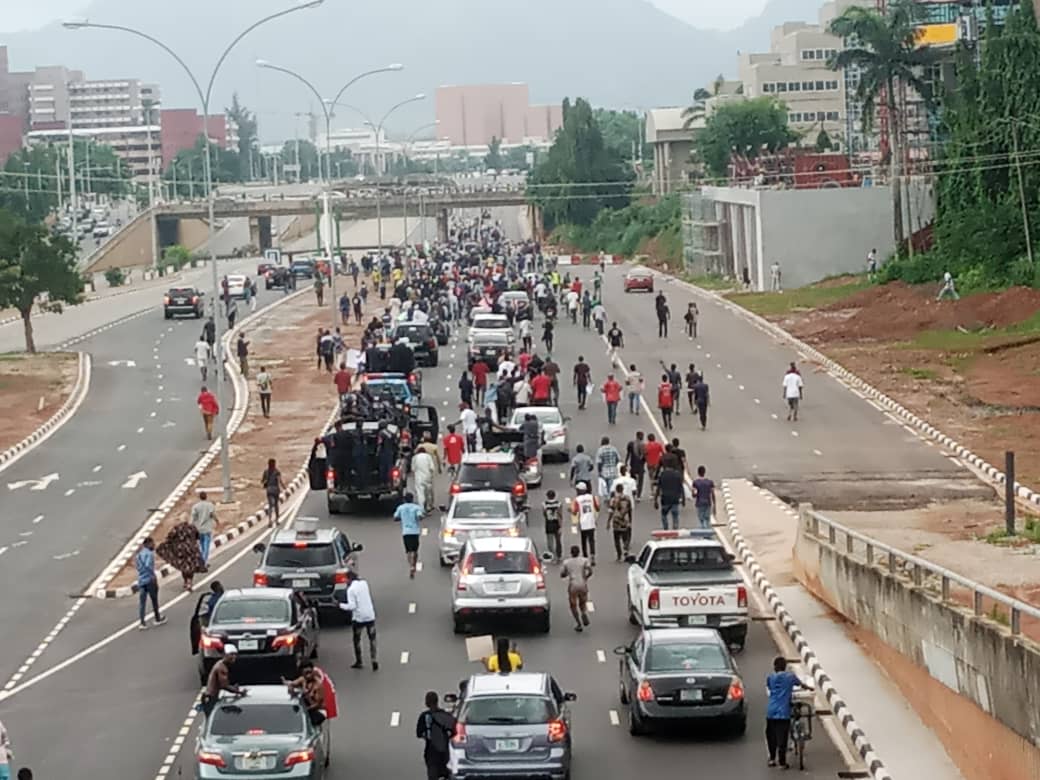
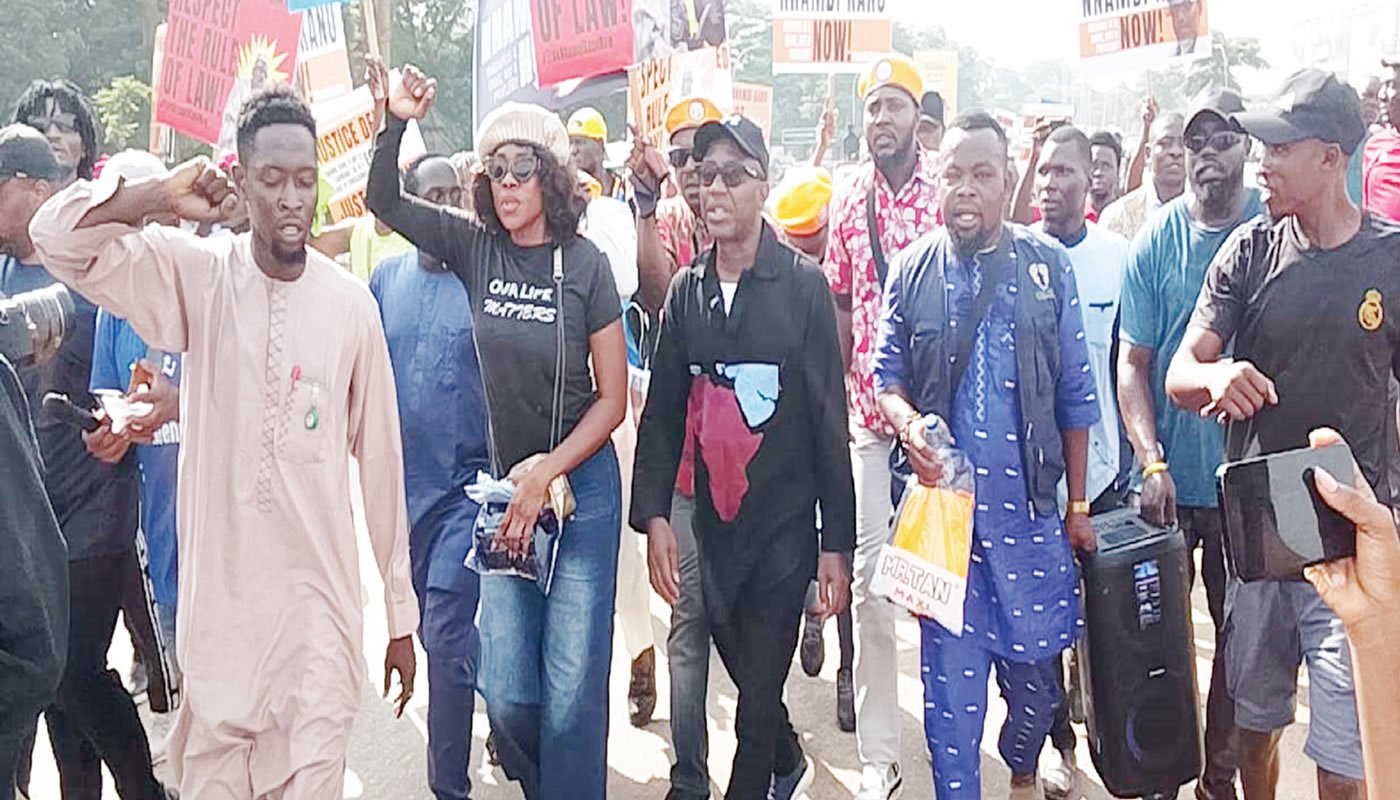
A wave of coordinated protests swept across Nigeria’s Federal Capital Territory and the South-East region on Monday, as demonstrators demanded the immediate release of Nnamdi Kanu, the detained leader of the Indigenous People of Biafra (IPOB). The demonstrations brought major cities to a halt, paralyzed economic activity, and sparked heightened security operations nationwide.
Thousands of protesters, waving Biafran flags and chanting “Free Nnamdi Kanu Now,” flooded the streets of Abuja, Enugu, Aba, Onitsha, and Owerri in what activists described as a “peaceful uprising for justice.” The movement, largely mobilized through social media and championed by rights activist Omoyele Sowore, disrupted traffic, grounded businesses, and prompted heavy security deployments around critical infrastructure.
In Abuja, tensions escalated as protesters attempted to march toward the Three Arms Zone, which houses the Aso Rock Presidential Villa, the National Assembly, and the Supreme Court. The police, backed by soldiers and operatives of the Department of State Services (DSS), barricaded all routes leading to the area. Tear gas was fired to disperse the demonstrators after they breached the first security cordon near the Federal Secretariat.
Eyewitnesses reported scenes of chaos as tear gas clouds filled the air, forcing protesters to scatter. Some regrouped around the Unity Fountain, singing solidarity songs and displaying placards reading, “Obey Court Orders, Free Kanu Now.”
Security sources confirmed that the government had obtained a court order over the weekend restricting any protest near the presidential complex and surrounding institutions. “We are acting under a lawful order to prevent any threat to national security,” said Force Public Relations Officer, Benjamin Hundeyin. “We used only minimal force — no live ammunition was fired.”
Despite assurances from the police that no fatalities occurred, rights groups accused the government of suppressing peaceful assembly and ignoring judicial directives that have repeatedly ordered Kanu’s release.
Southern States Paralyzed
While Abuja witnessed tense confrontations, cities across the South-East — including Aba, Enugu, and Onitsha — experienced a near-total shutdown. Major markets, schools, transport hubs, and government offices were closed as residents observed what became a spontaneous sit-at-home protest.
In Aba, traders abandoned their shops, and streets were deserted as protesters blocked key junctions, waving banners that read “Justice for Kanu” and “Freedom Is Not a Crime.” Eyewitnesses described the city as “a ghost town,” with even public transport suspended out of fear of clashes.
In Enugu, church groups, youth organizations, and civil rights movements joined the demonstrations. “We are not here to fight the government,” said Chijioke Okafor, a youth leader. “We are here because justice delayed is justice denied. Nnamdi Kanu’s detention has dragged on for too long.”
Owerri and Onitsha also experienced similar lockdowns. Markets such as Onitsha Main Market, Ochanja, and Nkwo Nnewi were sealed. A trader, Jude Uzor, told reporters, “Even though IPOB canceled Monday sit-at-homes long ago, today was different. People stayed home willingly. It’s our way of joining the call for Kanu’s freedom.”
The Anambra State Police Command said it had reinforced patrols across the state and deployed officers to flashpoints to ensure there was no breakdown of order. Commissioner of Police Ikioye Orutugu assured that the state remained calm despite tension in the region.
Civil Groups and Leaders React
Igbo socio-political groups renewed their appeal to the Federal Government to resolve the Kanu issue through dialogue rather than confrontation. Speaking from Umuahia, James Uchegbuo, leader of the Igbo Vanguard Group, said, “We must choose reconciliation over repression. Releasing Kanu is not a sign of weakness but an act of justice and unity.”
Similarly, Moses Onyegbule, President of the Igbo Ekene Global Development Union, urged President Bola Tinubu to show statesmanship. “This is a chance for national healing,” he said. “The South-East needs peace, and peace can only come through fairness.”
The Nigeria Security and Civil Defence Corps (NSCDC) described the protests as “unauthorized and disruptive.” Its spokesperson, Afolabi Babawale, confirmed that demonstrators gathered at the Corps’ headquarters in Abuja early in the day but were dispersed without incident. “We respect the right to protest,” Babawale said, “but it must be done lawfully. National assets must not be endangered.”
Nationwide Impact and Political Implications
Observers noted that the renewed protests mark one of the largest mass mobilizations since Kanu’s re-arrest in 2021. His continued detention, despite multiple court rulings ordering his release, has deepened resentment in the South-East and fueled distrust toward the federal government.
The situation also poses a delicate political challenge for President Bola Tinubu, who is under pressure from both security advisers and regional leaders. Analysts warn that mishandling the protests could inflame ethnic tensions and damage the government’s credibility on rule-of-law issues.
Human rights activist Sowore vowed that demonstrations would continue nationwide until justice is served. “Nnamdi Kanu’s freedom is non-negotiable,” he said in a video message. “No democracy survives when court orders are treated like suggestions.”
Meanwhile, business groups in Lagos and Abuja expressed concern about the economic toll of recurring protests and sit-at-home actions. The Manufacturers Association of Nigeria estimated that Monday’s shutdown in the South-East alone caused losses running into billions of naira.
As of late Monday, calm had returned to most parts of Abuja, but security remained tight around government institutions. In the South-East, however, the shutdown persisted, with residents fearing renewed unrest if the government fails to address their demands.
With the courts, civil rights groups, and regional leaders urging action, the Federal Government faces a defining moment — whether to uphold the law and release the IPOB leader or risk further alienation of an already tense region.