

By John Umeh
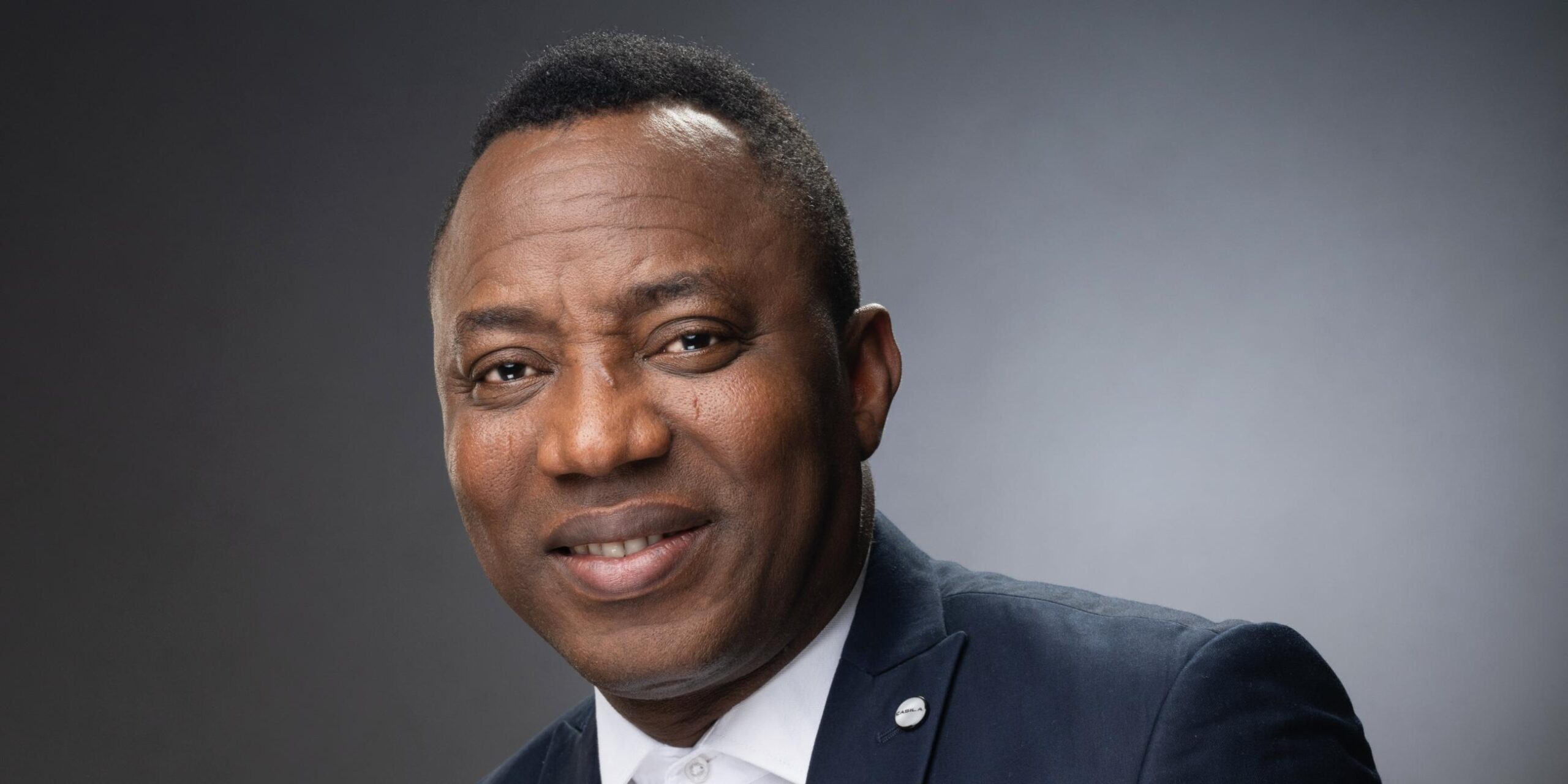
A mild drama unfolded at the Federal High Court in Abuja on Thursday when human rights activist and publisher of Sahara Reporters, Omoyele Sowore, was arrested by armed police officers moments after attending court proceedings in solidarity with detained IPOB leader, Nnamdi Kanu.
Sowore, who arrived at the court earlier in the day to observe Kanu’s trial and express support for his release, was reportedly accosted by security personnel as he made his way out of the courtroom. Eyewitnesses said the policemen surrounded him and informed him that he was wanted at the Federal Capital Territory (FCT) Police Command.
When questioned about the reason for his arrest, one of the officers allegedly told him they were acting “on the direct orders of the Commissioner of Police.”
“The Commissioner said we should bring you to the Command immediately,” one of the officers was quoted as saying.
Sowore Demands Explanation, Insists on Legal Representation
Sources at the scene said Sowore appeared calm but questioned why no formal summons or written invitation had been issued before such an arrest was made. He reportedly insisted that he would not leave the court premises without his lawyer present.
After a brief standoff, the activist was eventually escorted into a police van and taken away under heavy security presence.
Confirming the arrest, human rights lawyer Inibehe Effiong condemned the development in a post on X (formerly Twitter), describing it as “an embarrassment to the rule of law.”
“The arrest of Omoyele Sowore at the Federal High Court in Abuja moments ago is preposterous. The police and the Tinubu-led administration are making a mockery of our judiciary. He should be released immediately,” Effiong wrote.
Backdrop of Protests and Growing Tensions
Thursday’s arrest comes just days after Sowore led a peaceful demonstration in Abuja as part of the ongoing #FreeNnamdiKanu campaign. The movement, which has spread to several parts of the country, demands the immediate release of the IPOB leader, who has been in detention since 2021 on terrorism-related charges.
During Monday’s protest, Sowore was joined by Kanu’s lawyer, Aloy Ejimakor, Kanu’s younger brother Emmanuel Kanu, and several activists. Police officers reportedly dispersed the crowd, arresting at least 12 people, who were later remanded at Kuje Correctional Centre.
According to the First Information Report (FIR) filed before the Chief Magistrates’ Court in Kuje, the police accused the protesters of violating a subsisting court order, inciting public disturbance, and obstructing traffic flow within the FCT.
The FIR read in part:
“That on the 20th day of October 2025, the defendants were arrested by a team of security operatives for engaging in incitement and breach of public peace while chanting war songs and demanding the release of Nnamdi Kanu, who is undergoing lawful trial at the Federal High Court. Their actions disrupted free movement and threatened public order.”
The charges, the police said, contravened Sections 152, 114, and 113 of the Penal Code Law, which deal with criminal conspiracy, incitement, and public disturbance.
Public Outcry and Reactions
News of Sowore’s arrest quickly spread across social media, sparking outrage among civil rights groups and supporters. The Coalition for Civil Society Advocates (CCSA) issued a statement condemning what it called “the continued weaponisation of law enforcement against dissenting voices.”
The statement read:
“Omoyele Sowore’s arrest within a court premises — a sanctuary of justice — is a direct assault on Nigeria’s democratic values. No citizen should be intimidated or punished for peacefully expressing solidarity or calling for justice.”
Similarly, the Take It Back Movement, a group founded by Sowore, called for his “immediate and unconditional release,” warning that continued clampdowns on activists could provoke national unrest.
“This pattern of arbitrary arrests will not silence Nigerians,” the group said. “If the government continues on this path, it risks igniting a larger civil resistance.”
Police Maintain Silence as Tensions Rise
As of press time, the FCT Police Command had yet to issue an official statement on the reason behind Sowore’s detention. Attempts by journalists to obtain clarification were unsuccessful, as officers at the command’s headquarters declined to comment.
However, a senior police source hinted that Sowore’s arrest “may be linked to recent activities and statements considered inflammatory by security agencies.”
Meanwhile, legal experts have criticised the arrest, describing it as “a gross violation of fundamental rights.” Constitutional lawyer Barrister Jide Odumosu told reporters that “arresting anyone without a warrant or clear charge, especially within court premises, undermines judicial integrity.”
“If courts are no longer safe for citizens, then the essence of justice is lost,” he said.
A Familiar Pattern
This is not the first time Sowore, a former presidential candidate and longtime government critic, has been detained by security operatives. In 2019, he was arrested by the Department of State Services (DSS) over the #RevolutionNow protests and held for several months despite multiple court orders granting him bail.
Observers say his latest arrest reflects a troubling trend of intolerance toward activism and dissent in the country.
As of Thursday evening, efforts by his legal team to secure his release were ongoing, even as supporters gathered outside the FCT Police Command demanding to see him.
For now, uncertainty surrounds the activist’s fate — but one thing remains clear: the struggle between Nigeria’s security apparatus and its most vocal critics is far from over.

