

Business Page Writer
By Nonso Agbodi
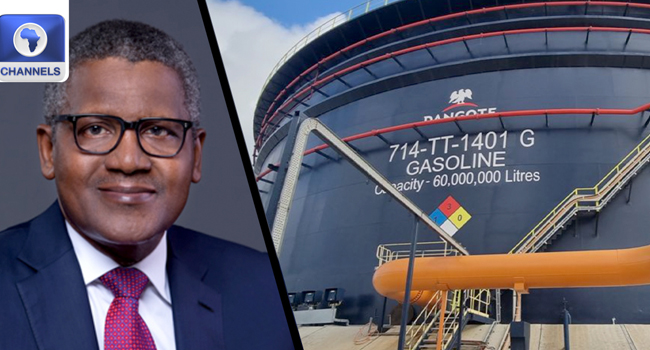
Weeks after a heated industrial dispute between the management of Dangote Refinery and the Petroleum and Natural Gas Senior Staff Association of Nigeria (PENGASSAN), the refinery has quietly reinstated several engineers who were dismissed during the crisis — but with a twist. The re-engaged staff have been redeployed to far-flung project sites across Nigeria, including Borno, Zamfara, Benue, Ebonyi, and Kebbi states.
According to findings, the engineers — many of whom were initially employed as graduate trainees — received letters of “re-engagement” under a new subsidiary, Dangote Projects Limited. However, their new postings have raised fresh concerns among the affected workers, who described the assignments as punitive and unsafe.
“They basically re-employed all of us but sent us to places like coal mines and construction sites in volatile regions. It doesn’t feel like a proper reinstatement,” one of the engineers told reporters on condition of anonymity.
Redeployment Under Dangote Projects Limited
Copies of the new employment letters seen by journalists carried the heading “Offer of Trainee Engagement” and were signed by Femi Adekunle, the Chief General Manager of Human Asset Management. The letters informed the redeployed engineers that they were being assigned to various Dangote Group projects, including:
-
A coal mining site in Okpokwu, Benue State,
-
Concrete road construction projects in Borno and Ebonyi, and
-
Rice processing plants in Kebbi, Niger, Sokoto, and Zamfara.
Each letter instructed the recipients to report at their new work locations within 14 days or risk forfeiting the re-employment offer.
“Your training will involve classroom and hands-on experience at our Coal Project in Benue State. The objective is to impart practical skills and prepare you for future responsibilities within the organisation,” the letter partly read.
While some engineers have already collected their letters from Dangote’s Lagos office, others said PENGASSAN officials advised them to hold off pending further negotiations with management.
Workers Raise Safety and Transparency Concerns
Many of the affected engineers expressed unease about the redeployments, citing insecurity in the northern regions and lack of clarity about their new assignments.
“The letters didn’t specify any physical office address or supervisor’s contact. We checked, and many of these so-called sites don’t exist on Google Maps. How do we report for duty to a non-existent office?” one worker lamented.
According to them, PENGASSAN has cautioned members not to accept the redeployment letters yet, arguing that the process appeared retaliatory and lacked transparency.
“If we sign and can’t report in 14 days, they’ll say we abandoned the job ourselves. That’s a trap,” another worker added.
A senior source within the Dangote Group, however, defended the move, saying it aligns with a broader plan to redistribute staff to other operational units.
“The agreement with the union was to redeploy affected staff to other Dangote businesses — sugar, cement, agriculture, and construction. This is not punishment; it’s internal restructuring,” the source explained.
From Sacking to Settlement: How the Dispute Began
The crisis between PENGASSAN and Dangote Refinery erupted last month after about 800 engineers and technical staff were reportedly dismissed. The union accused the company of targeting workers who had joined PENGASSAN, describing it as an assault on labour rights and union freedom.
In retaliation, PENGASSAN shut down oil and gas operations across several facilities, causing significant disruptions to Nigeria’s energy output and power generation.
Dangote Refinery, however, maintained that only a small group of staff were laid off for “acts of sabotage” and “operational inefficiency,” insisting that the move was part of a routine reorganisation exercise.
Following government intervention, peace talks were held between both parties, resulting in an agreement to reabsorb some of the sacked employees under new terms.
Union Alleges Victimisation, Company Denies
Despite the apparent resolution, tension remains. Some re-engaged workers view their redeployment as a veiled form of punishment for participating in union activities.
“They say we’ve been recalled, but look at where they’re sending us — conflict-prone states and obscure project sites. It’s a message,” one engineer claimed.
PENGASSAN officials have since reiterated that any redeployment must comply with fair labour standards and prioritise worker safety.
“We’re in talks with Dangote Group to ensure that none of our members are victimised under the guise of redeployment,” a union source said.
Meanwhile, Dangote Group executives continue to insist that the reassignment is purely administrative and aimed at optimising its human resources across its expanding portfolio of projects nationwide.
Dangote’s Broader Expansion and Policy Stance
Amid the lingering labour dispute, Alhaji Aliko Dangote, President of the Dangote Group, announced a massive recruitment drive to hire 65,000 additional workers as part of the refinery’s ongoing expansion from 650,000 barrels per day to 1.4 million barrels per day.
Speaking at a recent press briefing, Dangote expressed optimism that the expansion would transform Nigeria’s refining capacity and create thousands of new jobs. He also endorsed the proposed amendment of the Petroleum Industry Act (PIA), saying it would unlock new opportunities for local refining and strengthen the downstream sector.
“Revisiting the PIA will open up the industry and support indigenous refiners like us,” Dangote said. “It’s important to ensure that crude oil suitable for local refining stays in Nigeria rather than being exported under loopholes in the current policy.”
He further revealed that the refinery has begun plans to establish a major fuel tank farm in Namibia, which will serve as a regional export hub for refined products such as petrol, diesel, and aviation fuel to countries including Botswana, Zambia, and South Africa.
Tinubu, Lagos Government Back Expansion
President Bola Ahmed Tinubu, through the Minister of State for Petroleum Resources, Heineken Lokpobiri, pledged full government support for the refinery’s expansion. Speaking at the OTL Africa Downstream Week in Lagos, Tinubu described the project as “a national asset that will serve not only Nigeria but the entire African continent.”
Lagos State Governor Babajide Sanwo-Olu, represented by Commissioner for Energy Biodun Ogunleye, also lauded Dangote’s investment, calling it “a catalyst for Africa’s energy transition and industrial growth.”
“Lagos remains proud to host Africa’s most ambitious energy project,” the governor said.
The Road Ahead
While the Dangote Refinery moves forward with its expansion plans and regional ambitions, the fate of the redeployed engineers remains uncertain. As union negotiations continue and the workers weigh the risks of their new assignments, questions linger about whether the company’s internal restructuring is truly about efficiency — or quiet retribution.
Either way, the unfolding drama between PENGASSAN and Dangote Group underscores the growing tension between corporate ambition and labour rights in Nigeria’s evolving industrial landscape.

