

By John Umeh
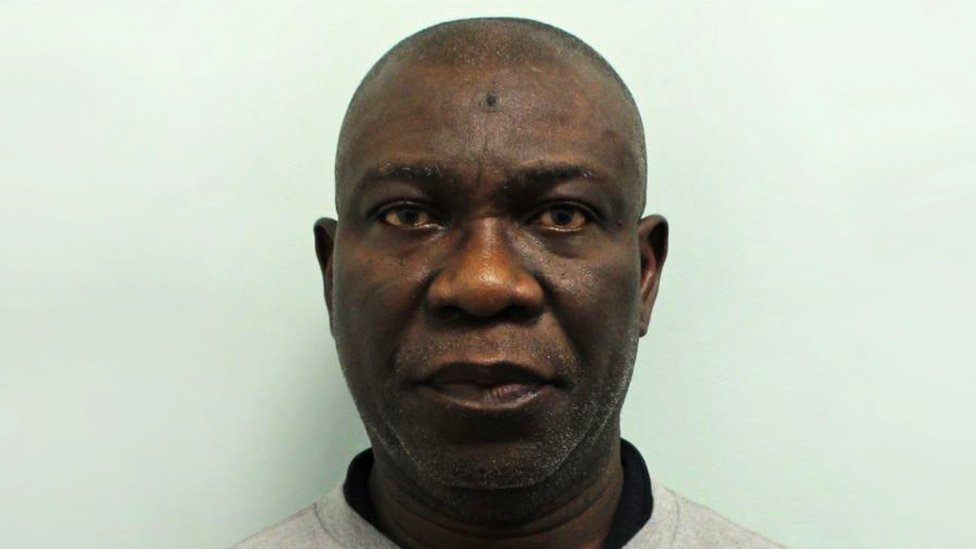
The Federal Government’s renewed effort to have former Deputy Senate President, Senator Ike Ekweremadu, transferred from a United Kingdom prison to a Nigerian correctional facility has triggered a deep divide among major socio-political groups in the South-East.
While some leaders welcome the move as an act of compassion and justice, others argue that the timing—barely two years to the 2027 general elections—suggests a calculated political strategy aimed at boosting President Bola Tinubu’s influence in the region.
Ekweremadu has remained in UK custody after he, his wife, Beatrice, and a medical doctor were convicted in 2023 under Britain’s Modern Slavery Act for attempting to facilitate an illegal kidney transplant for his ailing daughter, Sonia. The UK court sentenced him to nine years and eight months, while his wife received a lesser sentence and has since returned to Nigeria.
FG steps up diplomatic push
In what appears to be the most serious diplomatic push yet, President Tinubu dispatched a high-powered delegation to London led by the Minister of Foreign Affairs, Yusuf Tuggar, and the Attorney General of the Federation, Lateef Fagbemi. They held discussions with the UK Ministry of Justice on a possible prisoner transfer arrangement that would allow Ekweremadu to serve the remainder of his term in Nigeria.
After the meeting, the team visited the Nigerian High Commission in London, where Acting High Commissioner Mohammed Maidugu received them.
South-East groups react: suspicion, support, and sharp divisions
However, the move has elicited sharply contrasting reactions.
President of the Igbo National Council, Chilos Godsent, condemned the initiative, saying Nigerians deserved clarity on the government’s intentions.
He questioned whether Ekweremadu was being brought back to complete his sentence, face fresh charges, or quietly regain freedom—warning that the process appeared politically motivated and suspiciously timed.
Godsent accused previous administrations of failing to protect a sitting senator from foreign prosecution, and cautioned that any attempt to use Ekweremadu’s return as a political bargaining chip for 2027 would be resisted.
Similarly, Prof. Awuzie Unachukwu, President of the Ala-Igbo Development Foundation, asked why the same energy was not being applied to secure the release of detained IPOB leader Nnamdi Kanu. He argued that if the government was acting out of compassion, then Kanu—who in his view committed no crime beyond demanding self-determination—should also be freed.
He added that returning Ekweremadu to Nigeria just to continue his jail term in what he described as “dehumanising prison conditions” would defeat the purpose.
Some groups welcome FG’s intervention
But not all voices in the region are critical.
Deputy President-General of Ohanaeze Ndigbo, Mazi Okechukwu Isiguzoro, dismissed the political-motive argument and praised President Tinubu for taking up Ekweremadu’s case. He described the senator as a major political figure in the South-East and recalled his role in the 2017 release of Nnamdi Kanu.
Isiguzoro said Ohanaeze would resist anyone attempting to sabotage the repatriation, adding that if the move ends up benefiting Tinubu politically in 2027, “the South-East will have no problem supporting it.”
The Abia PDP Chairman, Abraham Amah, took a more balanced view, noting that motives would always be debated but that governance was continuous. He argued that the Buhari administration’s failure to intervene earlier should not stop Tinubu from acting now if doing so aligns with national and humanitarian interests.
President-General of the Coalition of South East Youth Leaders, Goodluck Ibem, also backed the initiative, saying it would reinforce justice and fairness while restoring public confidence in the system.
Reviving a long-abandoned Nigeria–UK transfer treaty
The Ekweremadu case has reopened discussions on the dormant 2014 Nigeria–UK Prisoner Transfer Agreement. The treaty, signed during the Goodluck Jonathan administration, was intended to allow citizens convicted abroad to complete their sentences at home.
A 112-bed prison block funded by the UK government at Kirikiri Correctional Centre was built specifically to support the agreement, yet no prisoner has been transferred under the scheme for over a decade.
Officials said Nigeria now wants the treaty updated to align with the Nigerian Correctional Service Act of 2019, particularly regarding detention standards and transfer procedures.
A Foreign Affairs Ministry spokesperson, Alkasim AbdulKadir, confirmed that the government had formally requested Ekweremadu’s transfer and that consultations with UK authorities were ongoing.
Nigeria’s overcrowded prison system part of the discussion
The renewed push comes as Nigeria struggles with overcrowded prisons, holding more than 70,000 inmates nationwide—many awaiting trial. The Federal Government has responded by constructing new correctional facilities across Abuja, Lagos, Port Harcourt, Kano, and all six geopolitical zones to ease congestion.

