

By Gloria Nosa
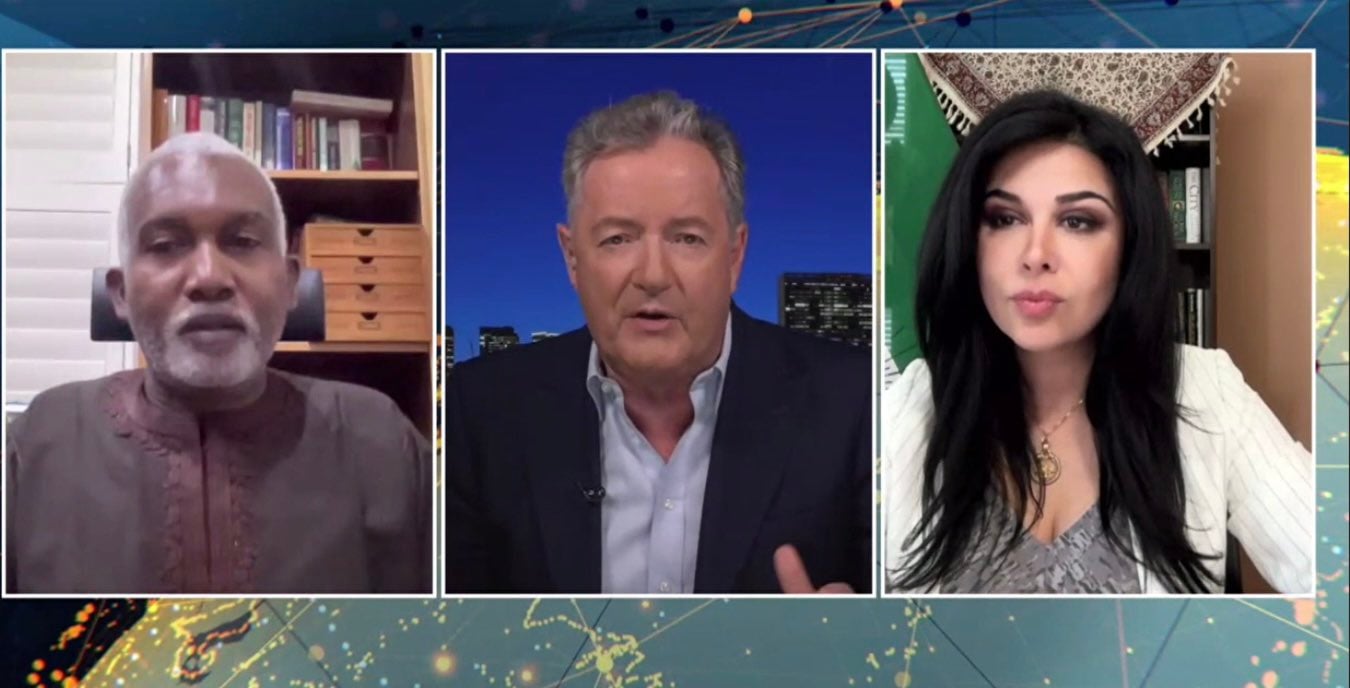
A dramatic and emotionally charged confrontation unfolded on international television as Nigeria’s Minister of Foreign Affairs, Yusuf Tuggar, faced off against former Canadian lawmaker Goldie Ghamari during a tense episode of Piers Morgan Uncensored. The debate, which aired on Tuesday, spiraled into one of the show’s most combative segments yet, centered around mounting foreign claims that Christians are being systematically targeted and killed in Nigeria.
The conversation, intended to explore Nigeria’s broader insecurity, quickly morphed into a global flashpoint, raising questions about data accuracy, geopolitical motives, and the complexities of Nigeria’s internal conflicts.
Piers Morgan Sets the Stage With Explosive Statistics
Host Piers Morgan began the show by citing shocking figures published by the International Society for Civil Liberties and Rule of Law (Intersociety). According to the group, more than 50,000 Christians have been killed since 2009, with over 18,000 churches and religious facilities attacked.
Morgan’s presentation of the figures heightened the tension in the studio, laying the foundation for a fierce debate.
Tuggar, appearing visibly displeased, rejected the numbers outright.
He insisted that the statistics were not only inflated but also misleading, arguing that they paint a distorted picture of Nigeria’s complex security challenges. The minister stressed that Nigeria does not classify killings by religious identity, explaining that victims of terrorism, banditry, and communal violence come from all backgrounds.
When Morgan pressed him for official data, Tuggar countered by quoting government figures indicating that 177 Christians had been killed and 102 churches attacked in the last five years. The discrepancy between these figures and the ones Morgan cited ignited immediate controversy, setting the tone for the fiery exchanges that followed.
Ghamari Joins the Discussion — and the Debate Blows Wide Open
The intensity heightened when Piers Morgan introduced Goldie Ghamari into the conversation. The former Canadian MP, an outspoken critic of the Nigerian government, immediately challenged Tuggar, accusing him of downplaying what she described as “a clear case of religious persecution.”
Ghamari claimed that Nigeria’s ongoing violence amounted to a form of jihad, asserting links between extremist attacks in Nigeria and global Islamist movements. She went as far as drawing parallels with the October 7, 2023, Hamas attack on Israel, a comparison that seemed to irritate the foreign affairs minister.
She further argued that the religious identities of President Bola Tinubu and Vice President Kashim Shettima provided “context” for what she called a tolerant environment for extremist ideology within Nigeria. Tuggar rejected this framing outright, calling it an oversimplification designed to mislead global audiences.
But Ghamari was far from finished. In a series of explosive claims, she alleged covert ties between Nigeria’s government and the Islamic Republic of Iran, citing images of Nigerian schoolchildren holding portraits of Iranian leaders — a claim she framed as evidence of foreign ideological influence.
She accused Tuggar of dishonesty:
“I spent seven years in politics, Piers. I know when someone is dodging the truth. This minister is doing exactly that.”
Her statements quickly shifted the discussion from data accuracy to political and ideological accusations — escalating the stakes of the debate.
Tuggar Hits Back Hard, Shares Personal Loss in Terrorist Attack
The Nigerian foreign minister fired back, visibly angered by what he termed Ghamari’s “dangerous and misinformed rhetoric.”
Tuggar accused her of weaponising Nigeria’s tragedies from thousands of miles away, calling her assertions “reckless, inflammatory, and rooted in ignorance.” He argued that Nigeria’s conflicts stem from a long list of factors — terrorism, economic disparity, weak local governance, porous borders — none of which can be reduced to simple religious narratives.
When Piers Morgan asked him whether he condemned attacks on Christians by extremist groups, Tuggar responded:
“Of course I condemn it. I lost my own father-in-law to Boko Haram. I am a victim myself. My family has suffered — and they were Muslims. Boko Haram attacks anyone who rejects their ideology.”
He stressed that while Christians have undoubtedly suffered, Muslims, traditional believers, and secular Nigerians have also faced mass killings.
Ghamari remained unconvinced. She insisted that despite Muslim casualties, there was a specific pattern of violence targeting Christian communities, describing the situation as “ethnic cleansing.”
Tuggar Delivers a Scathing Final Blow
The debate peaked when Tuggar launched a blistering critique of Ghamari’s interventions:
“People like her ignite wars in countries they barely understand,” he said sharply.
“They sit comfortably overseas, play geopolitical games, and inflame divisions. They did it in Sudan. They want to do it in Nigeria.”
He warned that foreign actors spreading oversimplified narratives pose a threat to Nigeria’s fragile peace.
“Nigeria will not be destabilised to serve anyone’s agenda. Move on to your next project. You’re a disgrace — to your nation and to anyone seeking truthful dialogue.”
The heated exchange left Piers Morgan struggling to maintain control as the two guests continued to exchange accusations long after the main issues had been addressed.
A Reflection of a Bigger Global Conversation
The episode underscored the global scrutiny on Nigeria’s security landscape — and the widening gap between international perceptions and the Nigerian government’s official stance.
It also highlighted how foreign political actors, advocacy groups, and media platforms are increasingly inserting themselves into Nigeria’s domestic debates, often amplifying narratives that Nigerian authorities say distort the realities on the ground.
As the segment ended, one thing was clear: the conversation about alleged Christian persecution in Nigeria is far from over — and the battle over the “true” narrative is only deepening.

