

By Gloria Nosa
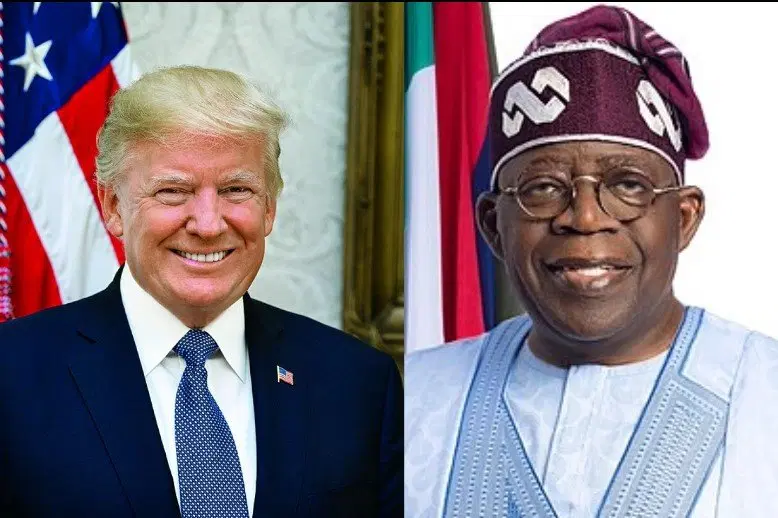
United States lawmakers delivered strong criticisms of Nigeria’s handling of rising insecurity on Wednesday, questioning both the capacity and political resolve of the Tinubu administration to curb targeted attacks, especially against Christian communities in the North.
During a charged congressional hearing reviewing Nigeria’s redesignation as a Country of Particular Concern (CPC), members of the U.S. House Foreign Affairs Committee demanded accountability, deeper cooperation, and a shift in America’s engagement strategy as violence escalates across multiple regions.
Huizenga Accuses Tinubu of ‘Watching from the Sidelines’
Congressman Bill Huizenga delivered one of the most forceful rebukes, accusing President Bola Tinubu’s government of “sitting back” while extremists continue to terrorise communities.
He faulted the Nigerian officials present at the hearing for “downplaying” the scale of atrocities.
“It is outrageous that Christians, moderate Muslims, and entire communities are being terrorised while the Tinubu administration fails to act with urgency,”
Huizenga said.
“I was recently asked by Nigerian television if the government is doing enough. My answer remains: No, it is not.”
Huizenga also criticised media outlets and some U.S. politicians for minimising the crisis, recalling the 2023 Christmas Eve massacre, where more than 200 civilians were killed, as proof that Nigeria’s security situation has not improved.
Olszewski: Nigeria Lacks Capacity — But Also Accountability
Representative Andy Olszewski insisted that Nigeria’s worsening violence requires a comprehensive reassessment of U.S. policy.
Speaking during the hearing on alleged Christian genocide in Nigeria, he argued that while Nigeria struggles with limited capability, leadership failures cannot be excused.
He challenged whether U.S. support has been effective or merely reactive:
“Are we offering real partnership, or are we relying too much on threats of sanctions and airstrikes instead of long-term support, training, and institutional reforms?”
Olszewski pressed the U.S. State Department to assess honestly whether Nigeria can protect vulnerable groups.
In response, Ambassador Jonathan Pratt admitted Nigeria faces a “very serious” and complex security crisis, adding that Washington wants to see more focused Nigerian leadership.
Concerns Over Halted U.S.-Funded Peacebuilding Project
Olszewski also spotlighted the abrupt suspension of the Nigerian Youth Care peacebuilding initiative — a State Department–funded programme fostering Christian-Muslim collaboration in the Northeast.
According to the 2025 USCIRF report, the programme experienced long administrative delays and failed to secure an extension.
The congressman questioned Ambassador Pratt and senior State Department official Jacob McGee on why a no-cost extension was denied.
McGee said the U.S. continues to support early-warning and interfaith efforts but must ensure programmes address the “multilayered drivers of violence”, including extremist ideology and religious persecution.
Barry Moore: ‘Targeted Killings Are Clear. Nigeria Must Act.’
Representative Barry Moore warned that testimonies from religious leaders, NGOs, and victims show a clear pattern of targeted killings of Christians.
He criticised the Nigerian government for failing to request humanitarian support for the Middle Belt despite ongoing mass violence.
Moore also queried why heavily armed Fulani militant groups continue operating freely:
“Nigeria prohibits civilian gun ownership. How then do these groups wield automatic weapons without consequences?”
He urged Abuja to review the case of Sunday Jackson, sentenced to death after killing an armed Fulani attacker in what supporters claim was self-defence. Moore argued that such cases reflect systemic injustice compared to the impunity enjoyed by violent extremists.
Divergent Views: Some U.S. Lawmakers Caution Against Oversimplification
Not all lawmakers agreed with the framing of Nigeria’s crisis as primarily anti-Christian.
Representative Pramila Jayapal warned against narrowing the conflict to a single religious narrative:
“Christians are victims, but so are Muslims and other communities. Reducing the crisis to only Christian persecution is inaccurate and dangerous.”
Congressman Riley Moore added that many Nigerians “no longer trust their government”, calling for deeper U.S.-Nigeria cooperation.
Tinubu Government Rejects Accusations
The Nigerian government firmly denied claims of religious intolerance.
President Bola Ahmed Tinubu stated:
“Nigeria is a democracy that guarantees religious liberty. The portrayal of Nigeria as hostile to Christians or any faith community is false.”
Nigeria was originally designated a CPC in 2020 under President Trump but removed under President Biden.
Civil Society Groups Demand Domestic Reforms, Reject U.S. Trip
The Global Coalition for Freedom of Religion in Nigeria (GCFRN) urged the National Assembly to abandon plans to send a delegation to Washington, insisting lawmakers should first address widespread religious freedom violations at home.
The coalition cited the 2025 USCIRF report, which documents:
-
blasphemy prosecutions in northern states
-
Sharia-based restrictions
-
systemic discrimination against churches
-
repeated targeted killings
-
Boko Haram and ISWAP attacks
-
unresolved abductions, including Leah Sharibu and the Chibok girls
GCFRN recommended sweeping reforms, including repealing blasphemy laws, dismantling Hisbah structures, securing insurgent-held territories and creating a dedicated religious freedom monitoring body under the Human Rights Commission.
A diaspora group, Plateau State Association (PSA-USA), described killings in Plateau and parts of the Middle Belt as a “coordinated and ruthless campaign” to displace Christian communities.
The Christian Social Movement of Nigeria (CSMN) demanded an international investigation, saying evidence suggests violence that “meets the definition of genocide”.
Sara Jacobs Slams Trump’s ‘Illegitimate’ Military Threat
In a separate development, Congresswoman Sara Jacobs criticised President Donald Trump’s alleged threat of unilateral military action against Nigeria over claims of Christian genocide.
She condemned the warning as:
“Reckless, illegal, and based on a simplistic reading of Nigeria’s complex conflict.”
Jacobs said Congress has not authorised any military intervention in Nigeria and urged both countries to prioritise civilian protection for all communities — Christian, Muslim, and others.

