
By John Umeh
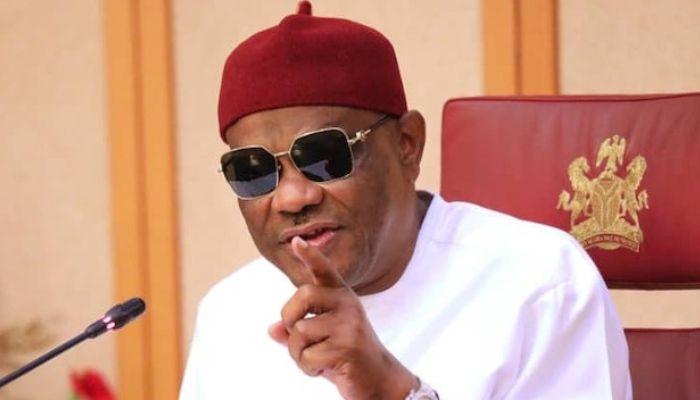
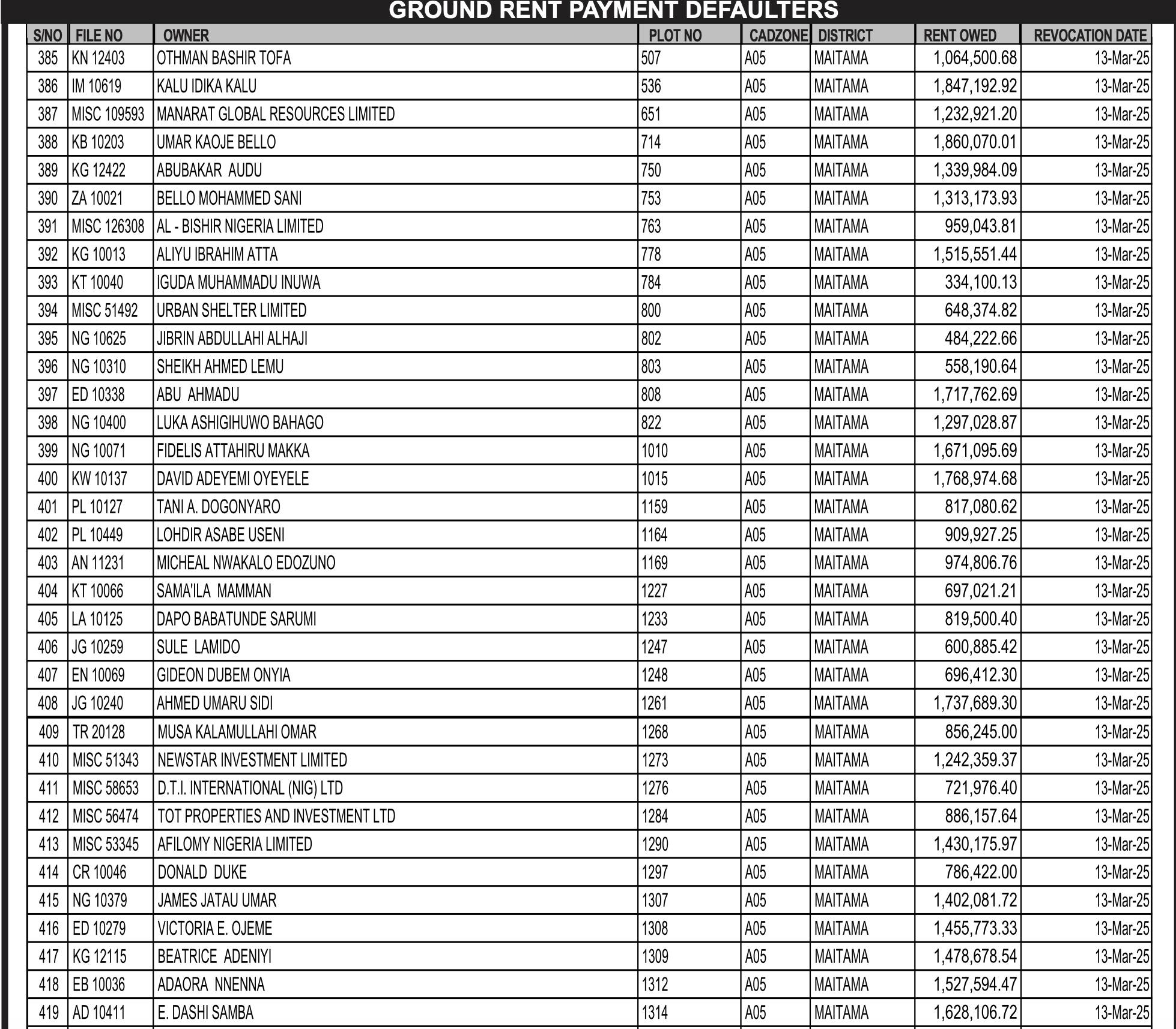
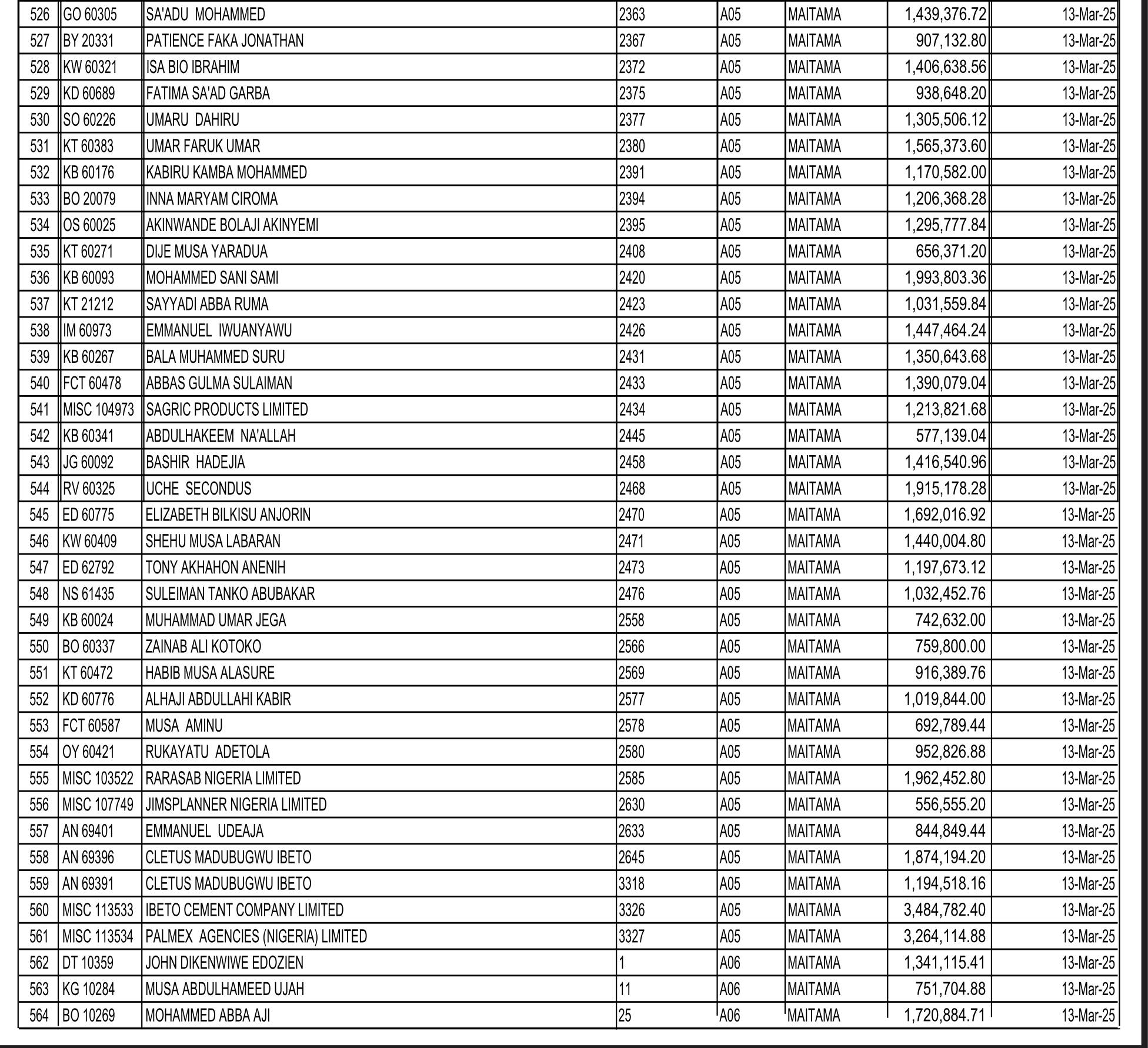
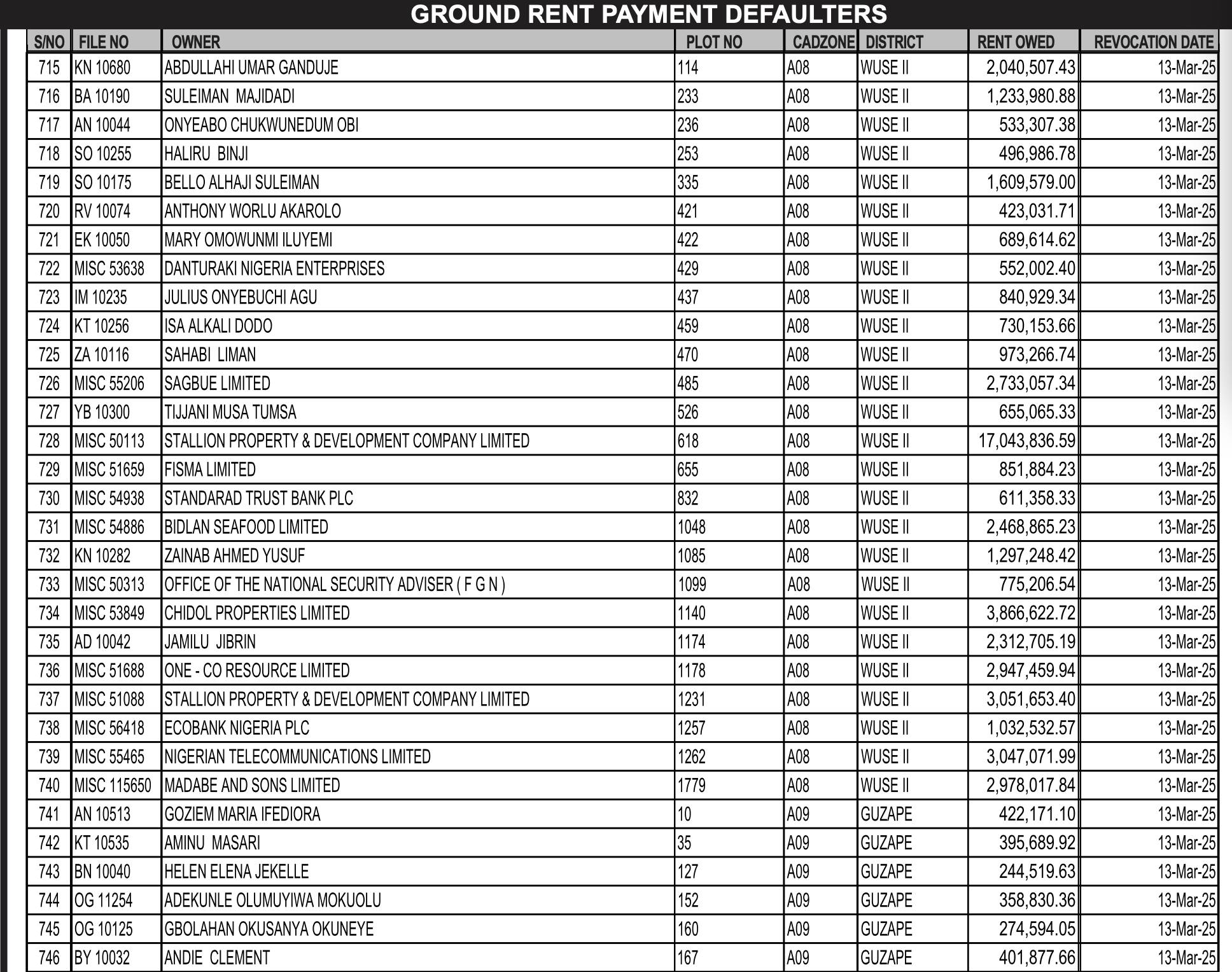
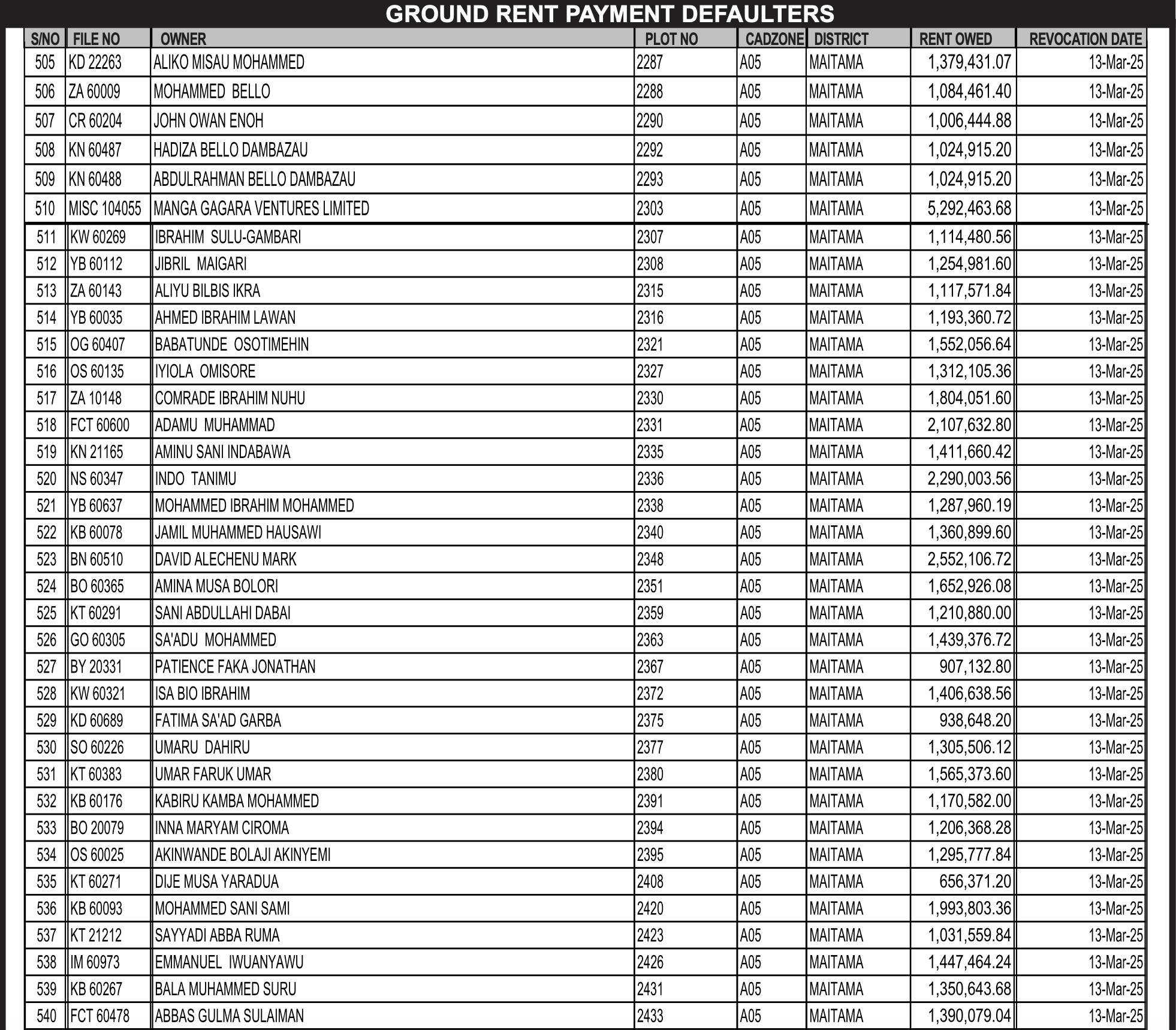
The Federal Capital Territory Administration (FCTA) has officially commenced enforcement procedures on over 1,000 properties whose titles were revoked after owners failed to settle statutory land charges. The sweeping action—one of the most extensive carried out in recent years—has placed several well-known Nigerian political figures and private entities under scrutiny, signalling a renewed commitment to sanitising land administration within Abuja.
The list, released in a public notice signed by the FCTA management, contains 1,095 revoked property titles, marking the culmination of a long-running effort by the administration to recover outstanding dues and restore order to Abuja’s increasingly complex land registry system. With the expiration of a final 14-day grace period on November 25, 2025, the enforcement window has formally opened.
A Breakdown of the Revocations
A closer look at the FCTA document shows that the revocations stem from two major categories of default: failure to pay ground rents and non-compliance with land-use related penalties. According to the administration:
-
835 properties were revoked due to non-payment of ground rents, an obligatory fee required of all land allottees in the nation’s capital.
-
260 properties were sanctioned for failure to pay violation charges and land use conversion fees, both of which arise when property owners alter approved land purposes or contravene planning regulations.
These properties are situated in some of Abuja’s most exclusive neighbourhoods, such as Maitama, Asokoro, Garki, Wuse, Katampe, Guzape, Jahi, and parts of the Central Business District. Many of these districts are known for their multi-billion-naira real estate values, diplomatic residences, and high-end commercial establishments.
An FCTA official, speaking on condition of anonymity, described the crackdown as “long overdue,” stressing that many allottees had ignored repeated notices for several years. “This administration is determined to enforce compliance regardless of the names involved,” the official said. “Abuja cannot function effectively if people feel they can disregard city planning obligations.”
High-Profile Personalities on the List
As expected, attention quickly shifted to the prominent figures included in the notice. While the revocations cut across companies, private developers, and everyday citizens, the presence of influential political figures has generated significant public interest.
Among the notable individuals listed are:
Patience Jonathan
The former First Lady and wife of ex-President Goodluck Jonathan is associated with at least one of the affected properties. Over the years, she has been linked to several high-value real estate assets in Abuja, many of which have faced legal and administrative scrutiny.
Abdullahi Umar Ganduje
The immediate past governor of Kano State appears on the FCTA list as the owner of a revoked property. Ganduje, a key political player and former national chairman of the ruling party, is not new to public controversy, making this revocation another addition to his long media timeline.
Donald Duke
The former governor of Cross River State, celebrated for his legacy in tourism and urban development, is also among the affected individuals. The listing has surprised many of his supporters, who often describe him as meticulous in managing administrative processes.
David Mark
The former Senate President, a political heavyweight who once dominated the National Assembly for eight years, appears in the category of property title defaulters. Mark has maintained a significant presence in Abuja’s real estate circuit, making his inclusion particularly noteworthy.
Iyiola Omisore
The former deputy governor of Osun State and seasoned politician is also listed as defaulting on statutory land payments. His involvement adds to the growing list of influential figures caught in the FCTA’s enforcement dragnet.
Although the FCTA did not specify the exact nature of the default for each individual property, the administration emphasised that every listed allottee had been issued multiple reminders and had exceeded all grace periods.
Understanding the Enforcement Phase
With the revocations now active, enforcement actions will begin in stages. These actions may include:
-
Sealing off affected properties
-
Marking plots for repossession
-
Reallocating land to new applicants
-
Taking legal steps to recover outstanding fees
-
Engaging security reinforcement where necessary
The FCTA assured the public that enforcement teams will follow due process and operate transparently to avoid exposing innocent tenants to undue hardship. However, tenants currently occupying revoked properties may face uncertainty if their landlords were the defaulting parties.
The administration also maintained that owners who believe their properties were wrongfully listed still have an opportunity to file complaints or present payment evidence. But such appeals will only be considered after penalties and applicable charges have been settled.
Why the Crackdown Matters
Beyond revenue recovery, the large-scale revocation aligns with the FCTA’s renewed effort to curb irregular land speculation, speculative hoarding, and widespread abuse of the Abuja Master Plan. In recent years, city planners have raised alarms over illegal conversions—such as turning residential plots into hotels or lounges—and the refusal of many property owners to update their records.
As Abuja continues to grow rapidly, these issues have strained infrastructure, created planning conflicts, and affected security operations in the capital. The latest enforcement drive is therefore seen as a corrective step aimed at re-establishing order.
Urban development experts have also pointed out that the administration could generate billions of naira from recovered rents and reallocated plots, strengthening the FCT’s internally generated revenue and improving funding for public services.
A New Era of Accountability?
With influential names on the list, many analysts believe the enforcement marks a shift in Abuja’s governance approach—one that places compliance above political power. The FCTA’s resolve to proceed despite the status of the individuals involved is already sparking public debate, with some praising the move while others question its timing and breadth.
Regardless, the administration insists the exercise is purely administrative, not political.
As the enforcement continues, Abuja residents will be watching closely to see how strictly and uniformly the rules are applied. For now, the message is unmistakable: no one, regardless of status, is exempt from the obligations that come with owning land in Nigeria’s capital city.