

By John Umeh
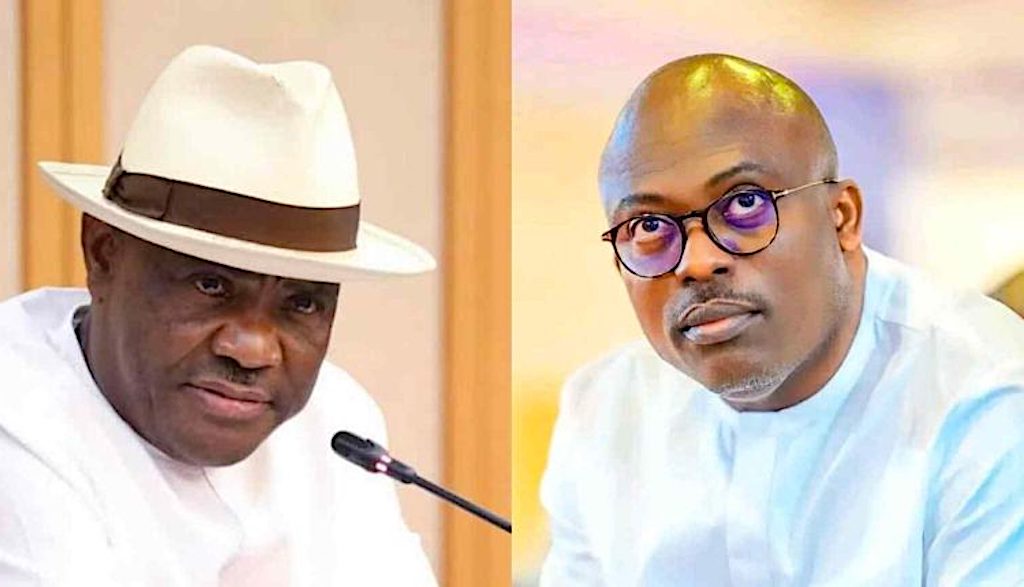
Fresh signals of de-escalation have emerged in the prolonged political crisis rocking Rivers State, as Governor Siminalayi Fubara and Minister of the Federal Capital Territory, Nyesom Wike, separately met with a high-powered reconciliation committee amid renewed efforts to halt impeachment proceedings against the governor and his deputy, Prof. Ngozi Odu.
Multiple sources confirmed that the Pan Niger Delta Elders Forum (PANDEF)-backed peace initiative, chaired by former Attorney-General of the Federation Chief Kanu Agabi (SAN), has made significant progress after holding strategic meetings with key actors on both sides of the divide.
Behind Closed Doors: Peace Talks Gain Momentum
The seven-member committee reportedly held an initial meeting with Wike in Abuja before engaging Governor Fubara in a three-hour closed-door session in Port Harcourt. The panel also consulted senior elders and political leaders aligned with both camps, raising optimism that a workable compromise may finally be within reach.
A source close to the talks described the engagements as “constructive and hopeful,” noting that the willingness of both Wike and Fubara to meet the committee marked a major breakthrough.
“At this stage, the signs are encouraging. Rivers people trust this committee, and that trust is key. There is renewed hope that reason will prevail,” the source said.
The committee is expected to submit its findings and recommendations within two weeks, potentially paving the way for an end to months of political paralysis.
Why Lawmakers Hit the Brakes
Meanwhile, fresh insights have emerged on why members of the Rivers State House of Assembly appeared to soften their stance after initially pushing hard for impeachment. Investigations indicate that the lawmakers’ central demand is not rooted in alleged misconduct but in political survival.
According to insiders, the legislators are seeking firm assurances from Governor Fubara regarding their return tickets ahead of the 2027 general elections.
“There is no real issue of gross misconduct,” a key political actor disclosed. “What they want is certainty—assurance that they won’t be politically sidelined.”
The source further alleged that the impeachment pressure intensified after Fubara’s reported defection to the APC, a move that could guarantee him an automatic ticket but leave current lawmakers uncertain of their political futures.
Power Calculations and Presidential Stakes
The crisis is also said to intersect with broader national political calculations. Wike, according to sources, is keen on securing continued relevance at the federal level and is reportedly seeking guarantees regarding his ministerial future.
“If Fubara secures a second term and Wike loses his federal appointment, that’s political extinction,” the source claimed, adding that the Assembly has become a bargaining tool in the broader power contest.
Despite the posturing, insiders believe the impeachment process may not progress beyond its current stage.
APC Warns Chief Judge
As tensions simmer, the All Progressives Congress (APC) in Rivers State has urged the Chief Judge, Justice Simeon Amadi, to comply strictly with a High Court order restraining him from acting on any impeachment-related correspondence from the Assembly.
The party accused lawmakers, including APC members, of engaging in a “dangerous legislative overreach” that could damage the party’s standing in the state.
In a statement signed by spokesman Darlington Nwauju, the APC warned that proceeding with impeachment despite a subsisting court order would undermine public confidence and threaten internal party cohesion.
Ethnic Undercurrents and Rising Stakes
Adding another layer to the crisis, leaders of Ijaw socio-political groups disclosed that tens of thousands of Ijaw voters across the Niger Delta have allegedly transferred their voting units to Rivers State ahead of the 2027 governorship election.
President of the Ijaw Youth Council, Dr. Alaye Theophilus, said the move was a show of solidarity with Governor Fubara.
“He is our son, and he must be protected. Over 50,000 Ijaw voters have transferred their units. Nobody wants to take chances,” he said.
Similarly, Ijaw National Congress President Prof. Benjamin Okaba warned that any successful impeachment would be viewed as a betrayal of the Ijaw nation, with grave implications for democracy and regional stability.
How the Crisis Began
The Fubara–Wike fallout traces back to a fierce struggle for political control shortly after Fubara assumed office in 2023. Despite Wike’s pivotal role in his emergence, disagreements over governance, legislative loyalty, and power-sharing quickly escalated into open confrontation.
Since then, the state has witnessed repeated impeachment threats, court battles, and legislative standoffs, severely disrupting governance.
Tinubu’s Interventions
President Bola Tinubu has intervened multiple times to stabilize the state, including the controversial six-month state of emergency declared in March 2025, which temporarily suspended democratic structures. The emergency rule was lifted in September 2025 after Tinubu said conditions had improved enough to restore constitutional order.
Despite these efforts, tensions have continued to resurface—making the current PANDEF-led reconciliation perhaps the most critical attempt yet to restore lasting peace.
What Next?
With peace talks advancing, court orders in place, and political calculations shifting, Rivers State now stands at a delicate crossroads. Whether the fragile calm holds will depend largely on the sincerity of the parties involved—and their willingness to place stability above personal ambition.

