

Society News
Dire Olofijana
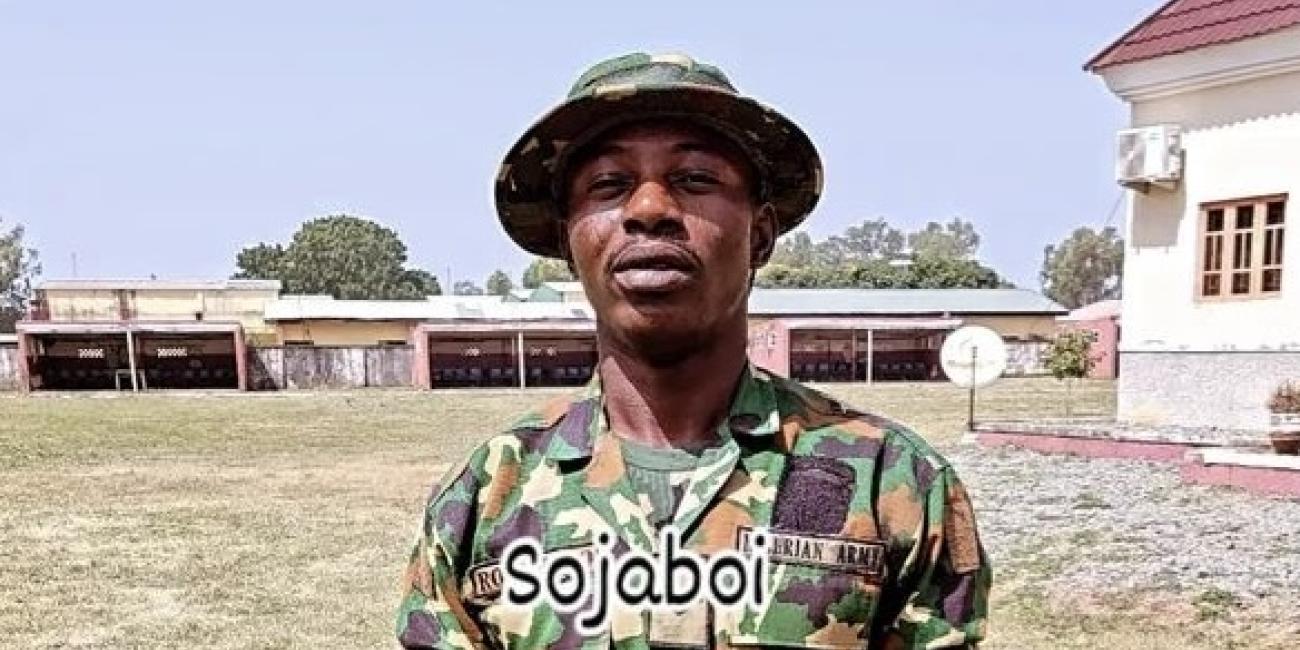
A former Nigerian soldier, Rotimi Olamilekan, widely known as Soja Boi, has intensified his dispute with the Nigerian Army by releasing what he described as evidence of his earnings while in service. The dismissed lance corporal also called on the military authorities to publicly disclose their payroll, insisting that his claims about poor welfare for soldiers are accurate.
Olamilekan made the fresh remarks in a video posted on Tuesday, shortly after the Nigerian Army dismissed his earlier allegations as misleading. In the recording, he displayed bank transaction alerts which he said reflected his salary and allowances during his time in the military.
According to him, one of the alerts dated February 2, 2026, showed a payment of N112,061.59, which he identified as his monthly salary. Another alert dated February 4, 2026, showed a credit of N20,000, which he described as a “grumbling allowance.” He also presented a third alert dated November 4, 2025, reflecting a N45,000 payment, which he claimed was an operational allowance paid to soldiers deployed to conflict zones such as Maiduguri.
The former soldier further explained that the operational allowance was not paid regularly, noting that only personnel actively involved in operations received it. He added that there was also a security allowance of about N6,000 but stressed that soldiers stationed in barracks usually received only their salary and the smaller allowance.
While presenting the alerts, Olamilekan maintained that he was not attempting to tarnish the reputation of the Nigerian Army. Instead, he said he was speaking out to shed light on what he described as the realities faced by soldiers.
“I am not trying to damage the image of the Nigerian Army. I am only telling the truth, and I am showing evidence,” he stated in the video.
He also repeated his earlier claims that some soldiers are forced to purchase essential protective equipment themselves, including helmets and fragmentation jackets. He encouraged Nigerians with relatives in the military to verify the claims directly from them.
“Many soldiers want to speak but cannot. Call your relatives in the Army and ask them,” he urged.
Olamilekan further challenged the Army to release its payroll publicly to clarify the matter.
“If they say I am lying, they should release their payroll and show Nigerians what soldiers earn,” he added.
However, the authenticity of the payment alerts could not be independently verified. While one of the alerts referenced “NIC-ARMY AC,” the others did not clearly identify the Nigerian Army or any government agency as the source of payment. Additionally, the alerts did not contain official payroll documentation.
Earlier, the Nigerian Army rejected Olamilekan’s claims, describing them as unfounded. In a statement issued by the Acting Director of Army Public Relations, Appolonia Anaele, the Army maintained that personnel were adequately equipped and provided with necessary uniforms, weapons, and protective gear before deployment.
The military also explained that soldiers receive consolidated monthly salaries along with additional allowances, including uniform and operational allowances, which are paid directly into their accounts. The Army acknowledged that some personnel may choose to purchase additional gear but described such actions as voluntary.
Olamilekan first gained widespread attention in February 2026 after a video surfaced online in which he urged political leaders to encourage their children to enlist in the military. Following the viral clip, he was arrested, detained, and later dismissed from service.
The Nigerian Army stated that his dismissal was due to repeated acts of indiscipline, including violations of the Armed Forces’ social media policy and unauthorized media engagements, and not because of the content of his public statements.

