Science new Correspondent
Bosun Jaiyesimi

Recent scientific advancements have brought us closer to confirming the presence of liquid water on Mars, a discovery that could have profound implications for our understanding of the Red Planet’s history and its potential to support life.
Unveiling Mars’ Hidden Reservoirs
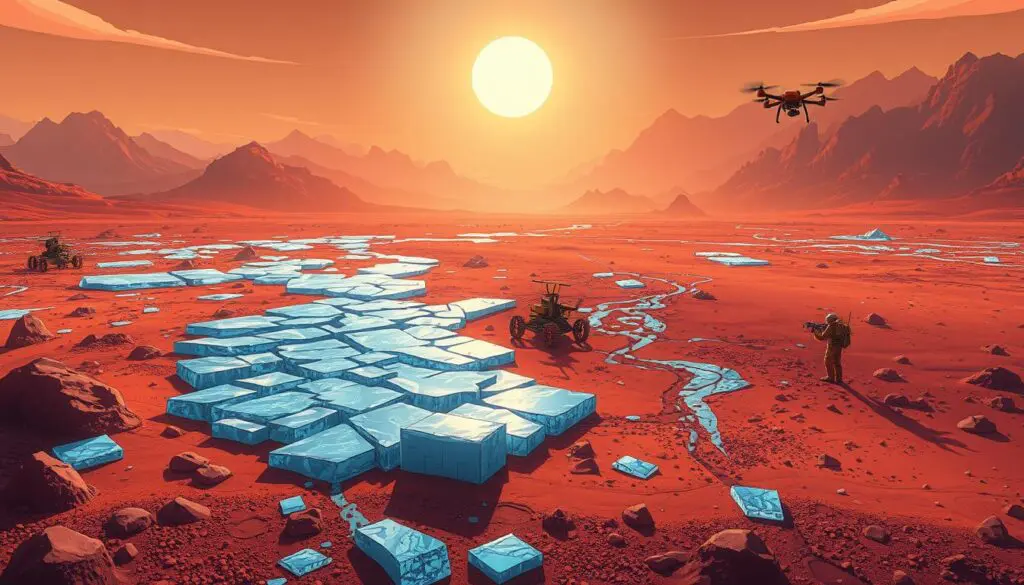
Data from NASA’s InSight lander, which operated from 2018 to 2022, has provided compelling evidence of substantial liquid water deep beneath Mars’ surface. Seismic readings indicate a porous, water-saturated layer located between 11.5 and 20 kilometers below the crust. This underground reservoir could contain enough water to envelop the entire planet in an ocean up to 2 kilometers deep, surpassing estimates of ancient Martian surface oceans .
These findings suggest that a significant portion of Mars’ ancient water did not escape into space but instead migrated underground, becoming trapped within the planet’s crust. This challenges previous assumptions and offers new insights into Mars’ geological and climatic evolution .
Implications for Life and Exploration
The existence of liquid water beneath Mars’ surface raises the possibility of microbial life, akin to extremophiles found in Earth’s deep subsurface environments. Such habitats could have provided refuge for life forms during periods when surface conditions were inhospitable .
For future human missions, these subterranean water sources could be invaluable. They may serve as potential supplies for drinking water, oxygen production, and even rocket fuel, making sustained human presence on Mars more feasible. However, accessing water at such depths presents significant technical challenges, necessitating further research and development.
A Planet Richer in Water Than Imagined
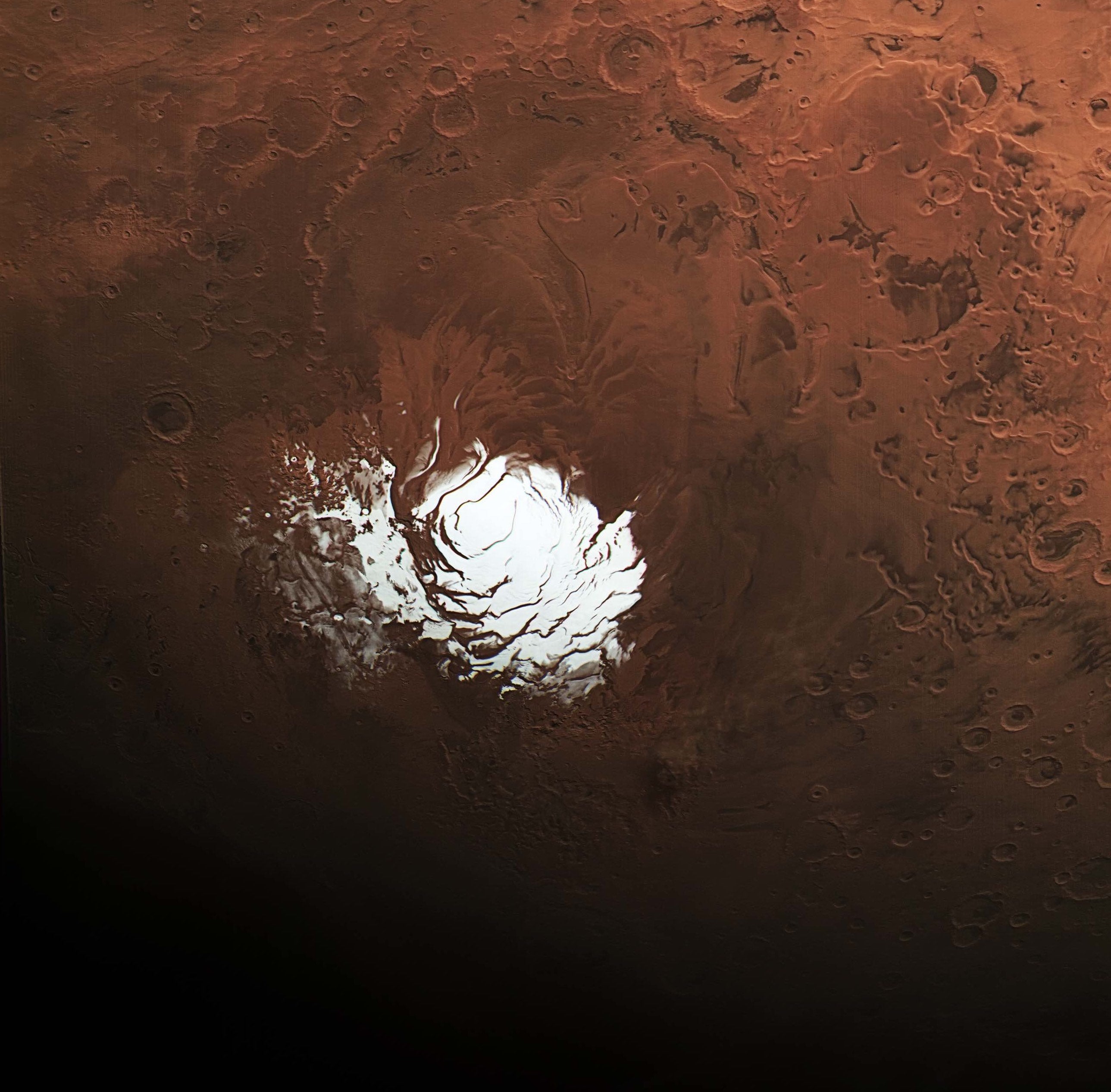
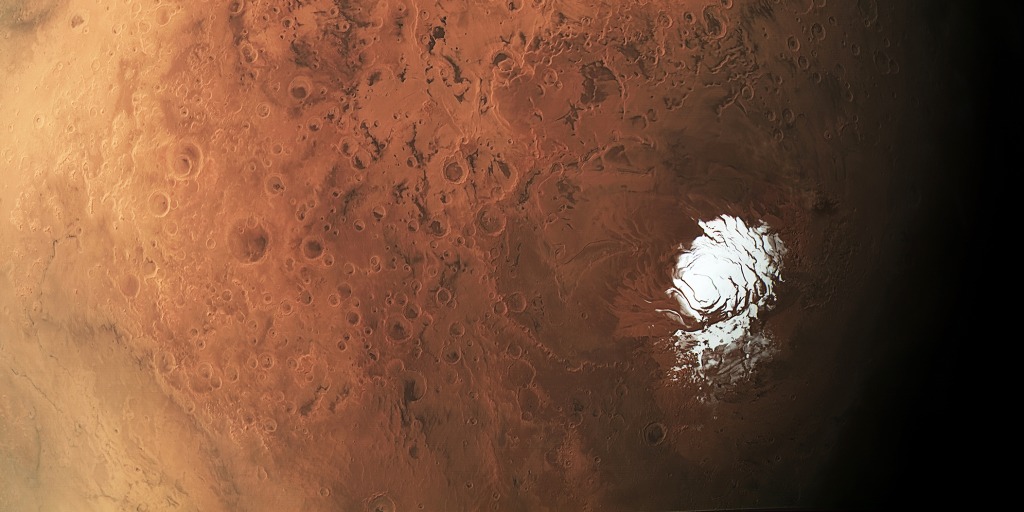
Beyond the deep reservoirs, studies have identified potential subglacial lakes beneath Mars’ south polar ice cap. Radar data from the European Space Agency’s Mars Express mission revealed bright reflections indicative of liquid water, possibly maintained in a liquid state by dissolved salts like perchlorates, which lower the freezing point of water .
These discoveries collectively suggest that Mars harbors more water than previously believed, both in its ancient past and potentially in its present state. This enhances the planet’s profile as a candidate for past or present life and underscores its significance in the search for extraterrestrial life.
Looking Ahead
The confirmation of liquid water on Mars marks a pivotal moment in planetary science. It not only reshapes our understanding of the Red Planet’s history but also opens new avenues for exploration and the search for life beyond Earth. As technology advances, future missions may delve deeper into Mars’ subsurface, bringing us closer to answering the age-old question: Are we alone in the universe?