

By John Umeh
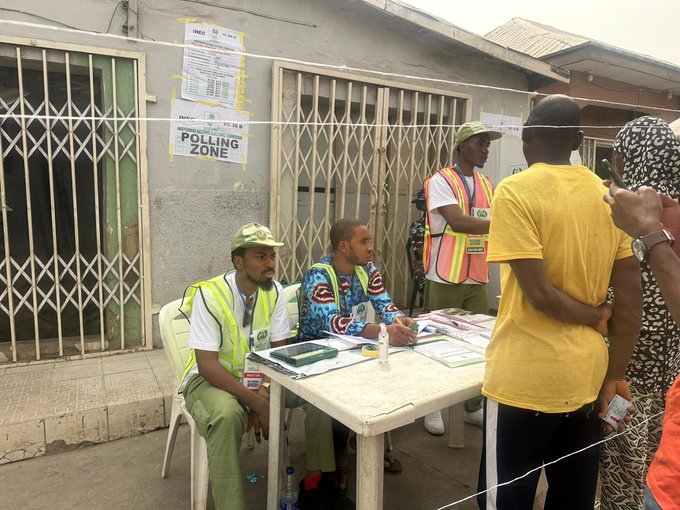

The Nigeria Civil Society Situation Room has alleged widespread vote buying during Saturday’s 2026 Federal Capital Territory (FCT) Area Council elections, claiming that ballots were sold for as much as ₦10,000 in some polling units.
Addressing journalists in Abuja, co-convener of the group, Celestine Odo, said that although the elections were largely peaceful, observers documented incidents of open and discreet vote trading across parts of the territory.
According to him, reports from observers indicated that in some polling units in Abuja Municipal Area Council (AMAC), particularly in Gidan Mangoro Ward, votes were openly exchanged for up to ₦10,000 each. He added that while the practice was blatant in certain locations, it was more subtle but still evident in others.
Late Opening of Polls
Odo also raised concerns about delays in the commencement of voting in several polling units. He stated that polls opened at an average time of 9:15 a.m., attributing the delays to the late arrival of officials and materials from the Independent National Electoral Commission.
While he acknowledged that voting started on time in some areas, including parts of Kwali Area Council, he noted that many polling units across the FCT experienced late openings.
Mixed Voter Turnout
On voter participation, the Situation Room observed low turnout in the early hours in parts of AMAC, where many residents reportedly went about their routine activities. However, turnout improved later in the day in Kuje, Kwali, Gwagwalada, and Abaji Area Councils as queues began to build up.
The group also reported that some voters had difficulty locating their polling units due to last-minute relocations, despite text message notifications from INEC prior to the election.
BVAS Performance and Security
The Bimodal Voter Accreditation System (BVAS) was said to have functioned efficiently in most polling units, with accreditation taking approximately one minute on average. Nonetheless, isolated cases of malfunction were reported in parts of Gwagwalada and Abuja city centre.
Security presence across polling locations was described as strong, with police and other security personnel largely professional in conduct. Odo, however, acknowledged isolated incidents of intimidation and disorder in Kuje, Abaji, and Gwagwalada, which he said were promptly contained.
Despite the noted challenges, the Situation Room commended the INEC FCT Help Desk for responding swiftly to issues raised by observers and urged stakeholders to remain calm as voting concluded and collation commenced.
The 2026 FCT Area Council elections feature 637 candidates from 17 political parties contesting 68 elective positions — 62 councillorship seats and six area council chairmanships — for an electorate of 1,680,315 registered voters across the territory.

