

By John Umeh
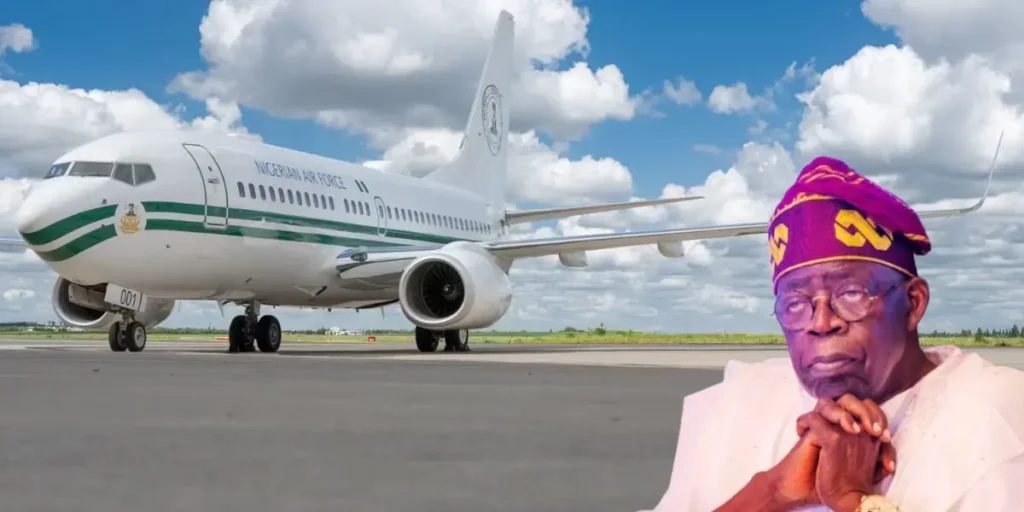
In a bold move toward cost-cutting and transparency, the Federal Government of Nigeria has officially put up one of its aging presidential aircraft—the Boeing 737-700 Business Jet (BBJ)—for sale. The jet, originally purchased in 2005 during the administration of President Olusegun Obasanjo, is being offloaded as part of ongoing efforts to reduce the size and cost of maintaining the Presidential Air Fleet (PAF).
The announcement was made today by the Presidency, confirming that the aircraft has already been listed for sale with authorized international brokers in Switzerland. The sale is aimed at trimming the bloated fleet and eliminating redundant or costly assets amid growing public demand for fiscal discipline.
The Boeing 737-700 BBJ, a customized luxury aircraft designed for heads of state and VIP travel, has served multiple administrations over the past two decades. It once symbolized Nigeria’s commitment to executive mobility and prestige. Today, however, it stands as a symbol of excess in a time when the country faces economic headwinds.
Photos released show the aircraft in its current state, featuring plush interiors, conference rooms, private quarters, and presidential seating. While still functional, aviation experts say the aircraft is no longer cost-effective to maintain.
Why the Boeing 737-700 BBJ Is Being Sold
Government sources say the decision to sell the jet stems from a need to improve efficiency and eliminate unnecessary financial burdens. The aircraft, now nearly 20 years old, has become expensive to operate and maintain due to its age and the specialized nature of its parts and servicing requirements.
According to sources within the Presidential Air Fleet, the BBJ consumes a substantial portion of the fleet’s annual ₦8–10 billion operational budget. In recent years, the cost of maintaining older aircraft has increased significantly due to global inflation and declining availability of spare parts.
“This sale is part of a strategic rationalization process,” a top PAF official told reporters. “The aircraft no longer meets the standards for efficient operation, and continuing to maintain it would be fiscally irresponsible.”
The Federal Government also emphasized that the sale aligns with President Bola Tinubu’s pledge to cut wasteful spending and adopt more sustainable governance practices.
The Bureau of Public Procurement (BPP) and relevant aviation authorities have been tasked with ensuring transparency in the bidding process. The Federal Government assured that the aircraft sale will follow all due processes and that proceeds will be accounted for in the national treasury.
Reactions from the Public and Stakeholders
The sale of the presidential jet has sparked widespread reactions across political, economic, and civil society circles. While many Nigerians have welcomed the decision as a step in the right direction, others are calling for more comprehensive reforms in public asset management.
Civil society organizations praised the move but urged the government to publish full details of the bidding process, buyer identity, and final sale value. According to Auwal Musa Rafsanjani, Executive Director of the Civil Society Legislative Advocacy Centre (CISLAC), “Selling off old government assets is good, but Nigerians must not be kept in the dark about how the sale was conducted and where the money goes.”
Meanwhile, economists have described the sale as largely symbolic, noting that while the proceeds may not significantly impact national revenue, it signals a shift toward leaner government. “It’s more about the message than the money,” said financial analyst Kemi Ajayi. “The jet sale shows the government is at least responding to public pressure.”
On social media, reactions have been equally mixed. While some users applauded the government for showing restraint, others demanded more drastic actions, including reducing the number of aides, motorcades, and overseas travel expenses for government officials.
What Happens Next – Fiscal Responsibility or Political Optics?
The sale of the Boeing 737-700 BBJ is a visible and high-profile gesture by the Tinubu administration to signal its commitment to austerity and public accountability. But analysts say the true test will be how the proceeds are used and whether other costly, underused government assets will follow suit.
According to the Presidency, the funds from the sale will be rechanneled into key infrastructure and social development projects, although specifics were not disclosed. Citizens and watchdog groups have already called on the government to ensure that the proceeds are used transparently and tracked through the annual budget process.
Observers also say the move may pave the way for further reforms within the Presidential Air Fleet, which includes at least 10 aircraft, ranging from helicopters to jets, many of which are underutilized but require significant upkeep.
As Nigeria continues to battle inflation, rising debt servicing, and urgent needs in sectors like education and healthcare, reducing non-essential spending will remain a core demand from citizens.
For now, one chapter of Nigeria’s executive aviation history is coming to a close, as the jet that once flew dignitaries, presidents, and top government officials is now bound for a new owner. Whether this marks a turning point in governance—or merely a symbolic gesture—will depend on what the government does next.

