


Possible Side Effects
- Horseradish has a pungent flavor and may therefore irritate the digestive tract of individuals with condition such as stomach or intestinal ulcer, inflammatory bowel disease, and others. Individuals with any digestive condition should take horseradish with caution.
Quantity Recommendation
- About one tablespoonful or 15 grams of horseradish is ideal in a day. It should never be overused because of the likelihood of irritation. Horseradish is useful as a spice in food.
Perspective from Madison Shaw
Possible Side Effects
- There is limited allergen information related to horseradish, because it is very pungent, if used in large amounts may cause irritation to the mouth, nose, or stomach.
Quantity Recommendation
- Horseradish is most commonly used as a condiment, because of the multiple health benefits it could provide as well as it being a low calorie condiment it is a great option to add to a balanced diet.
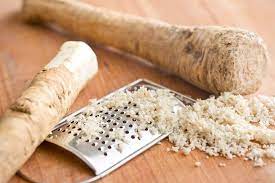
What Is Horseradish? Everything You Need to Know
We include products we think are useful for our readers. If you buy through links on this page, we may earn a small commission. Here’s our process.
Horseradish is a root vegetable known for its pungent taste and odor.
It has been used worldwide for thousands of years, typically as a condiment but also for medicinal purposes.
This root contains multiple compounds that may provide health benefits, including antibacterial and anticancer effects (1).
This article tells you everything you need to know about horseradish, including its nutrients, benefits, uses, and side effects.

Horseradish is believed to have originated in Eastern Europe. It’s a cruciferous vegetable, alongside mustard, wasabi, cabbage, broccoli, and kale (2).
It has a long, white root and green leaves. When the root is cut, an enzyme breaks down a compound called sinigrin into a mustard oil (3).
This oil, known as allyl isothiocyanate, gives horseradish its telltale odor and taste and may irritate your eyes, nose, and throat.
The root is typically grated and preserved in vinegar, salt, and sugar for use as a condiment. This is known as prepared horseradish.
Horseradish sauce, which adds mayonnaise or sour cream to the mix, is also popular.
Horseradish is often confused with wasabi, another pungent condiment that’s common in Japanese cooking. This is because the “wasabi” you get at most Japanese restaurants is really horseradish paste mixed with green food coloring.
True wasabi (Wasabia japonica) comes from an entirely different plant and is said to have an earthy taste. Additionally, it’s green in color instead of white.
SUMMARYHorseradish is a white root vegetable that’s closely related to mustard and wasabi. Its pungent taste and odor lend a spicy kick to any dish.

