

By Society Assistant Editor
Ninolowo Gbamboye
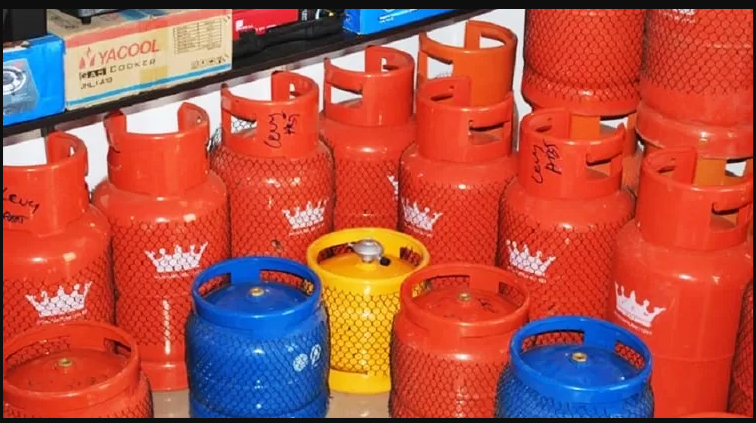
Households across Nigeria are grappling with an acute shortage of cooking gas as prices for the essential commodity skyrocket to record highs. Across major cities, gas stations have either run out of stock or are selling at exorbitant prices, leaving millions of families frustrated and struggling to cook daily meals.
Reports from Lagos, Abuja, Port Harcourt, and other urban centres show that long queues have formed at filling stations still dispensing Liquefied Petroleum Gas (LPG), while others remain completely shut due to lack of supply.
Prices Skyrocket as Supply Falters
The price of refilling a standard 12.5kg cylinder has surged to ₦25,000, up from ₦17,500 just last week — a staggering increase of over 40%. Meanwhile, the price of 1kg of LPG now ranges between ₦1,500 and ₦2,000, depending on the location.
Retailers and consumers alike blame the sharp hike on a recent disruption in supply chains, which has thrown Nigeria’s already fragile gas market into disarray.
PENGASSAN Strike Disrupted Distribution
According to Bassey Essien, the Executive Secretary of the Nigerian Association of Liquefied Petroleum Gas Marketers (NALPGAM), the shortage is directly linked to the recent strike by the Petroleum and Natural Gas Senior Staff Association of Nigeria (PENGASSAN).
He explained that the industrial action disrupted operations at key terminals and refineries, including the Dangote Petroleum Refinery, currently Nigeria’s largest local supplier of LPG.
“The crisis involving PENGASSAN scuttled distribution. Many dealers could not replenish their stocks during the period,” Essien told Vanguard.
“What we are witnessing is a function of demand and supply. In practice, the demand for cooking gas is higher than supply. But supply would likely stabilise in the coming days, following resolution of the conflict.”
Demand Outstrips Supply
Industry observers note that Nigeria’s cooking gas market has been struggling with demand outpacing supply for years. Despite the country’s large natural gas reserves, local bottling and distribution infrastructure remain inadequate, making the market highly vulnerable to even short-term disruptions.
The recent strike merely exposed how fragile the system is, as dealers quickly ran out of stock while retailers hiked prices for the limited gas still available.
Consumers Turn to Alternatives Amid Soaring Costs
With prices soaring and supply dwindling, many households have begun switching to alternative fuels, including charcoal, kerosene, and even firewood. Some Lagos residents say they’ve had to ration their gas usage, cooking only once a day to conserve what little they have left.
“This is becoming unbearable,” said a mother of three at a gas depot in Surulere. “Last week, I paid ₦18,000 to refill my cylinder. Today, it’s ₦25,000. How are families supposed to survive?”
Hopes for Stabilisation
Despite the crisis, NALPGAM has assured Nigerians that the situation will stabilise soon. With PENGASSAN’s strike now resolved, suppliers are expected to resume full-scale operations, allowing distributors to replenish stocks and gradually ease prices.
However, experts warn that without long-term investments in local LPG infrastructure and stronger regulatory oversight, Nigeria will continue to face periodic shortages and price spikes — especially as demand rises with urbanisation and population growth.
For now, Nigerians remain hopeful that relief is around the corner. But until supply chains are fully restored, the ₦25,000 price tag on a 12.5kg cylinder of gas will remain a painful reminder of the country’s energy supply challenges and the heavy burden they place on ordinary households.

