

By JohNn Umeh
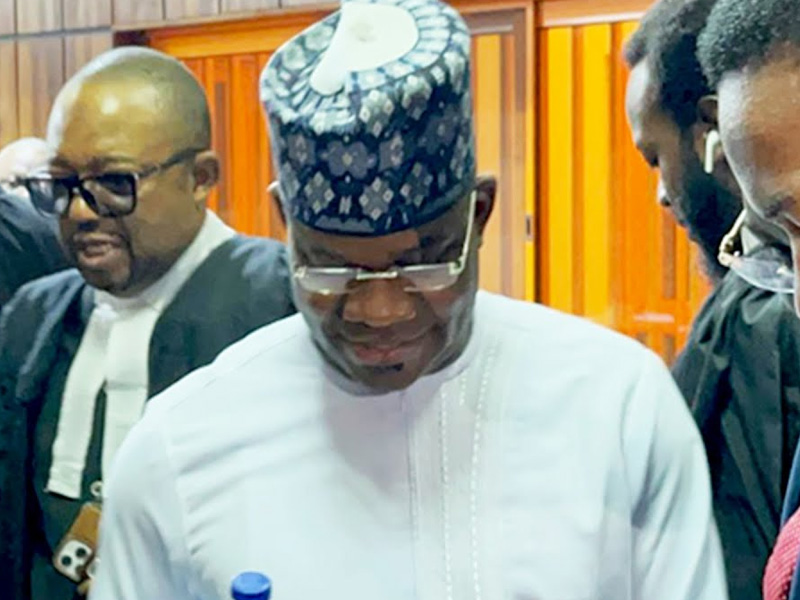
Former Kogi State Governor, Yahaya Bello, has sparked widespread outrage after a congratulatory letter he wrote to the newly appointed Chief of Army Staff, Lieutenant General Waidi Shaibu, surfaced online — printed on the official Kogi State Government letterhead, despite his exit from office months ago.
The letter, which bore the Kogi State coat of arms and Bello’s familiar signature as “Executive Governor,” was shared on his verified social media accounts before it was hastily deleted following a wave of criticism from Nigerians on social media and civic groups.
In the now-deleted message, Bello congratulated the Army Chief and wrote, “It gives me renewed hope that my worthy successor, His Excellency, Governor Ahmed Usman Ododo, will now have you in his corner as he continues to tackle insecurity in his domain.”
That single line, observers say, ignited the storm — as critics accused Bello of attempting to insert himself into the machinery of government, suggesting that the Chief of Army Staff could somehow “belong” in a governor’s corner, an idea completely inconsistent with the military’s federal command structure.
Public Outcry and Political Fallout
The civic accountability platform @Kogi_Xcommunity was the first to flag the issue. In a viral post, the group wrote:
“Yahaya Adoza Bello, former Governor of Kogi State, has deleted his personally signed letter to the new Chief of Army Staff after facing backlash from netizens. Despite no longer being in office, he continues to use the official Kogi State Governor’s letterhead bearing the state coat of arms — sparking concerns.”
The post immediately gained traction, prompting an avalanche of reactions from Nigerians online.
@EmmanuelO_K wrote: “Even after leaving office, Yahaya Bello still writes like a sitting governor. It’s embarrassing how some people just can’t let go of power.”
@KogiWatchdog added: “Using state letterhead as a private citizen is a breach of protocol. It shows how Bello still sees Kogi as his property.”
Another user, @AyoolaWrites, remarked: “Leadership is not just about power — it’s about knowing when to let it go.”
While some supporters of the former governor defended him, suggesting the letterhead may have been used by oversight, the majority of public opinion viewed the incident as a clear case of lingering attachment to authority.
Analysts Weigh In: “A Case Study in Power Hangover”
Public affairs analyst Yusuf M. A. described the letter as “a case study in power hangover,” arguing that Bello’s tone and choice of stationery reflected a lingering sense of ownership over the office he once held.
“The Chief of Army Staff reports only to the President, not to any governor,” he explained. “To imply that the COAS could be ‘in a governor’s corner’ is institutionally wrong and politically dangerous.”
He also pointed out that Bello’s reference to Governor Ododo as “my worthy successor” reinforced the perception of a godfather complex, suggesting that the former governor continues to exert political influence behind the scenes.
Political communication expert Dr. Ladi Olatunde added that the incident underscores the importance of optics in governance.
“Public trust thrives on perception. When a former governor uses an official letterhead, it sends a message that the office and the individual are inseparable. That erodes institutional credibility,” she said.
Timeline of the Controversy
-
Friday, 24 October: Yahaya Bello posts a congratulatory letter to the new Army Chief using official Kogi Government stationery.
-
Saturday, 25 October: Civic group @Kogi_Xcommunity highlights the irregularity, triggering widespread debate.
-
Saturday night: Screenshots of the letter trend on social media with hashtags #YahayaBello and #PowerHangover.
-
Sunday morning: Bello deletes the post without explanation, but public commentary continues to grow.
By Sunday afternoon, commentators and media analysts were still dissecting the implications, calling on the Kogi State Government to issue a clarification on the use of state insignia by former officeholders.
“Deleting the post doesn’t erase the optics,” Yusuf noted. “If anything, it confirms that Bello recognised his misstep — after the damage was done.”
Broader Implications
For many Nigerians, the controversy reflects a recurring theme in national politics — the inability of some leaders to separate personal identity from public office.
“Statesmanship begins when the title ends,” Dr. Olatunde observed. “But for Bello, the trappings of power seem harder to shed than the office itself.”
Though the letter is gone, the debate lingers, serving as a reminder that in an age of digital transparency, every public act — even a simple congratulatory note — can shape a leader’s legacy and raise enduring questions about power, protocol, and propriety.

