

Tech News
Oluwapelumi debo
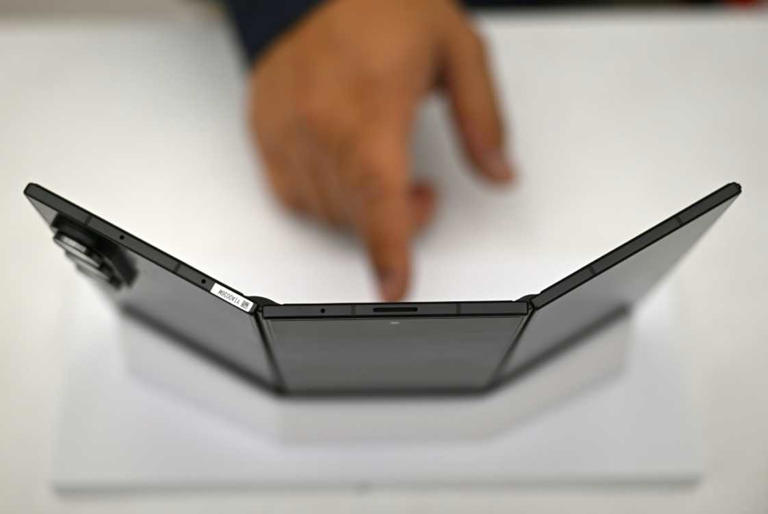
Samsung has officially stepped into a new era of mobile innovation with the unveiling of the Galaxy Z TriFold — its first-ever triple-folding smartphone and one of the most luxurious devices the tech industry has ever seen. Scheduled for release on December 12, the device is already generating global buzz, not just for its futuristic engineering, but for its jaw-dropping price tag: $2,443, more than double the cost of Apple’s latest iPhone 17.
Described by Samsung as a “special-edition product,” the Galaxy Z TriFold is not aimed at the mass market. Instead, it is a statement device — a symbol of where foldable technology is headed and an aggressive play in an increasingly competitive global smartphone landscape.
A Device That Bends the Rules — Literally
The Galaxy Z TriFold stands out for one major reason: its tri-fold design. When fully unfolded, it expands into a 10-inch display, offering the convenience of a tablet and the portability of a phone.
Samsung describes this expanded display as a tool for “increased possibilities for creating and working,” suggesting the device is targeted toward power users, professionals on the move, and tech enthusiasts who demand maximum versatility.
The phone is exceptionally thin at its narrowest point — less than 0.2 inches — and weighs 309 grams, maintaining a sleek profile despite its complex hinge system. The outer shell is offered exclusively in a deep black finish, reinforcing its status as a premium, limited-run device.
Although the tri-fold concept is groundbreaking for Samsung, the company is not the first to venture into this territory. Huawei released a similar phone last year, but its debut came with a similarly astronomical price tag and limited availability.
AI at the Core of the Experience
In keeping with industry trends, the Galaxy Z TriFold integrates advanced generative artificial intelligence features. Samsung says the AI system can provide real-time support through screen sharing, camera-assisted tasks, and collaborative tools designed for productivity.
These features appear to be part of Samsung’s broader strategy to embrace AI-enhanced devices, aligning with global market competition where AI integration has become a major differentiator between flagship models.
The tech giant was quick to admit that the TriFold is “not intended for mass sales” — a rare acknowledgment for a new product line. Kim Seong-eun, Executive Vice President at Samsung Electronics, confirmed that the TriFold is a special-edition device, tailored more for innovation bragging rights than for volume-driven revenue.
A High-Stakes Launch as Apple Gains Ground
Samsung’s unveiling of the Galaxy Z TriFold comes at a time when the global smartphone landscape is shifting dramatically. Recent market forecasts suggest that Apple is set to surpass Samsung as the world’s top smartphone maker for the first time in 14 years, with projections extending through 2029.
Research from Counterpoint indicates that by 2025, Apple’s shipment share may reach 19.4%, while Samsung’s could fall slightly to 18.7% — a symbolic shift that marks the end of Samsung’s long dominance.
Adding to the competition is the persistent rumor that Apple is preparing to launch its first foldable iPhone, possibly as early as next year. If true, this could reshape the foldable device market and further challenge Samsung’s leadership position.
Foldables were once regarded as a niche experimental concept, but with growing consumer interest and rapid technological improvements, they are fast becoming a battleground for the world’s biggest smartphone brands.
Where Does the TriFold Fit Into the Future of Mobile Tech?
The Galaxy Z TriFold may not be built for the everyday smartphone user — its price tag makes that clear — but its symbolic impact is far-reaching. Samsung’s move shows an unwavering commitment to pushing the boundaries of what smartphones can be, even if only a small fraction of consumers will ever own such a device.
In an industry struggling with plateauing growth and shrinking margins, eye-catching innovations are becoming essential. Companies must now create experiences, not just hardware. And Samsung seems to understand that better than most.
The TriFold might never become a mainstream product, but its existence signals a future where the lines between smartphones, tablets, and laptops continue to blur.
Samsung has taken a bold leap — and now the world waits to see how Apple, Huawei, and the rest of the industry will respond.

