

By Gloria Nosa
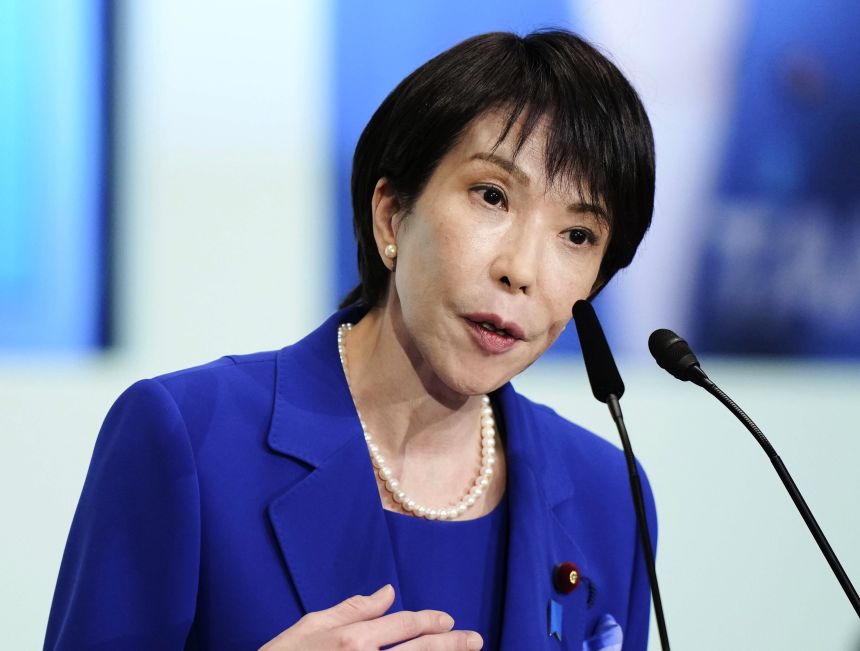
Japan has shattered a decades-old political glass ceiling as Sanae Takaichi, a staunch conservative and long-time ally of the late Shinzo Abe, was elected the nation’s first female prime minister on Tuesday, October 21.
The 64-year-old leader of the ruling Liberal Democratic Party (LDP) secured victory in a tense parliamentary vote, defeating opposition leader Yoshihiko Noda of the Constitutional Democratic Party by 237 to 149 votes in the lower house. She also won a subsequent upper house vote by 125 to 46, cementing her historic ascent to the country’s top office.
A Historic Moment in a Male-Dominated Political Landscape
Takaichi’s rise marks a turning point in a country where women occupy less than 10 percent of parliamentary seats and where leadership positions remain overwhelmingly male-dominated.
Her election has drawn both celebration and criticism — hailed as a breakthrough for gender representation but questioned for her nationalist views and conservative agenda.
“She represents both progress and continuity,” said Professor Yuki Tanaka of Keio University. “Her victory breaks a symbolic barrier, but politically, she stands firmly within Japan’s conservative mainstream.”
Abe’s Protégé and the Face of Japan’s New Right
A protégé of former Prime Minister Shinzo Abe, Takaichi has long championed Abe’s doctrine of a “strong Japan.” She supports amending the country’s post-war pacifist constitution, expanding the role of the Self-Defense Forces, and tightening immigration policies — positions that have endeared her to nationalists but alarmed liberal voters.
Before her election, Takaichi held several key cabinet roles, including Minister for Economic Security, Minister of Internal Affairs, and Minister for Gender Equality. Known for her discipline and hardline views, she once described herself as “a patriot who refuses to apologize for Japan’s history.”
A Fragile Coalition and Mounting Challenges
Takaichi assumes power amid deep political turbulence. The LDP has been weakened by recent corruption scandals and voter disillusionment over inflation and stagnant wages. The defection of the centrist Komeito Party, a long-time coalition ally, nearly derailed her path to office.
To secure parliamentary backing, the LDP forged a last-minute alliance with the Japan Innovation Party (Ishin) — a move analysts say will push her administration further to the right.
“She enters office already constrained,” said Jeff Kingston, professor of Asian studies at Temple University’s Japan campus. “Takaichi starts her premiership without a strong mandate, facing economic discontent, a divided Diet, and an uneasy coalition.”
Diplomatic Tests Ahead
Takaichi’s first major diplomatic challenge comes almost immediately, with U.S. President Donald Trump scheduled to visit Tokyo next week. The visit, part of Trump’s first tour of Asia since returning to office, will include discussions on defense, trade, and regional stability.
Trump has previously praised Takaichi’s “toughness,” but their meeting could prove tense given Trump’s demands for Japan to increase its defense spending and reduce trade barriers.
“She doesn’t have much time to prepare for a wave of diplomatic activity,” Kingston noted. “But her top priority will still be the domestic economy — she must convince the Japanese public she can deliver stability in uncertain times.”
A Balancing Act Between Tradition and Transformation
For many Japanese women, Takaichi’s election carries symbolic weight, even if her policies are far from feminist. “It’s complicated,” said Aya Nakamura, a Tokyo-based policy analyst. “We are proud to see a woman lead Japan, but we also know she doesn’t represent progressive change. Her leadership is historic, but her politics are traditional.”
Still, few doubt her resilience. After two failed bids for LDP leadership in 2021 and 2024, Takaichi’s eventual triumph reflects both persistence and political acumen.
Now, as she takes up residence in the Prime Minister’s Office, Takaichi faces the challenge of proving that her government can do more than make history — it must also make progress.

