

By John nUmeh
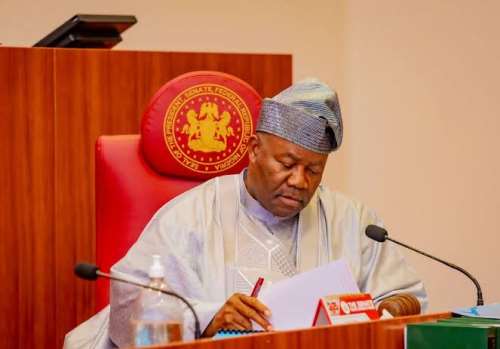
Nigeria’s Senate has approved President Bola Ahmed Tinubu’s request to secure fresh external loans amounting to $6 billion to support government spending and fund major infrastructure projects.
The approval followed the submission of a report by the Senate Committee on Local and Foreign Debts, chaired by Aliyu Wamakko, representing Sokoto North. Lawmakers considered and adopted the committee’s recommendations shortly after the President formally sought legislative approval.
In a letter addressed to Senate President Godswill Akpabio and read during plenary, Tinubu requested permission to obtain a $5 billion loan from Abu Dhabi Bank. According to the President, the facility is intended to bridge budget shortfalls and meet existing financial commitments.
In a separate correspondence, the President also sought approval for an additional $1 billion loan from UK Export Finance, to be accessed through Citibank in London. The funds, he explained, would be used to rehabilitate key port facilities across the country.
Tinubu stated that the projects would focus on upgrading the Lagos Port Complex and Tin Can Island Port, both of which have long faced operational and infrastructure challenges. He noted that the improvements are expected to enhance efficiency, strengthen safety standards, encourage non-oil exports, and position Nigeria as a stronger regional trade hub.
Following the presentation of the requests, Akpabio directed the Senate Committee on Local and Foreign Debts to fast-track its review. The committee complied and returned its report within hours, paving the way for the Senate’s approval on Tuesday.
The latest borrowing move comes as the Federal Government continues to rely on a mix of domestic and foreign loans to finance budget deficits and infrastructure development.
Just four months earlier, the National Assembly approved the Federal Government’s plan to raise N1.15 trillion from the domestic market to fund the 2025 budget gap, completing the administration’s financing strategy for the fiscal year.
Lawmakers also noted that the 2025 budget stands at N59.99 trillion—an increase from the N54.74 trillion initially proposed by the Executive—highlighting a widening fiscal deficit and the government’s continued dependence on borrowing to support spending priorities.

