

By John Umeh

A Brewing Storm Over a Governor’s Death
Nearly seven months after the passing of former Ondo State Governor Oluwarotimi Akeredolu, controversy has engulfed the state following a renewed push to investigate the circumstances surrounding his death. The late governor, a Senior Advocate of Nigeria (SAN), died on December 27, 2023, in a German hospital after battling leukemia. While his demise was initially received with national mourning, a new political storm is now gathering — one that has not only reopened old wounds but dragged his widow, Betty Anyanwu-Akeredolu, into the eye of a bitter and sensitive controversy.
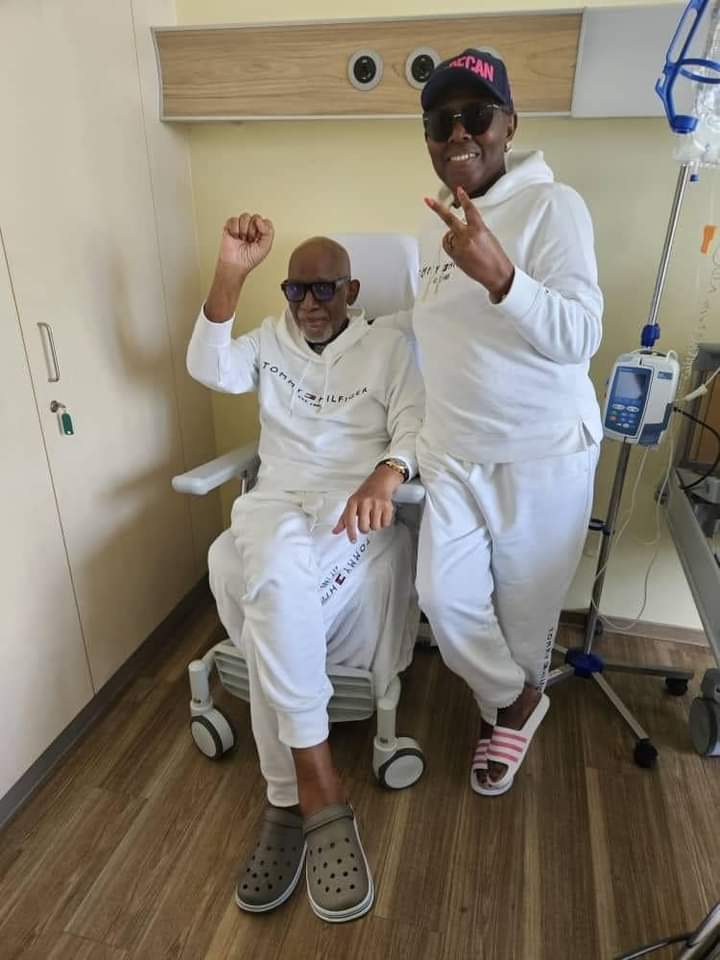
At the heart of the turmoil is a motion recently introduced by some members of the Ondo State House of Assembly, calling for a formal inquiry into the events leading to the governor’s death. These lawmakers allege that there may have been deliberate negligence, political manipulation, and possibly personal betrayal that accelerated the decline of the late governor’s health. The most explosive element of the call, however, is the allegation — whispered previously in political circles and now boldly suggested by some insiders — that Betty Akeredolu may have contributed to or hastened her husband’s demise.
Supporters of the late governor’s inner circle are now demanding full transparency, pointing to what they describe as “suspicious control” exerted by Betty during Akeredolu’s final months. She is accused of restricting access to her ailing husband, allegedly barring key aides, relatives, and political allies from reaching him. Some reports even claim she interfered with treatment decisions, dismissed competent medical advice, and pushed for political outcomes that suited her personal ambitions — rather than her husband’s well-being.

The Allegations Against Betty Akeredolu
The allegations leveled against Betty Akeredolu are as serious as they are controversial. Her critics argue that from the moment her husband fell ill, she assumed an overwhelming influence over state matters, despite not holding any official position. Sources close to the Government House in Akure allege that Betty controlled communication, filtered who could speak to the governor, and insisted on making medical and even political decisions during a time when her husband was heavily sedated or unresponsive.
A now-viral letter, supposedly from an anonymous high-ranking government official, claims that “the governor was practically held hostage by his own wife” in the months before his death. According to the letter, key members of Akeredolu’s cabinet, including his former Chief of Staff and political associates, were denied access to him, leaving a dangerous vacuum in state leadership.
Critics further claim that Betty Akeredolu prevented her husband from seeking urgent care earlier in his illness and pushed him to remain in office long after he was medically unfit — allegedly to maintain control over political appointments and protect her influence in Ondo’s power structure.
Moreover, several lawmakers argue that Governor Aiyedatiwa, who was deputy at the time, was intentionally painted as a usurper by Betty and her supporters — a move that prolonged internal crisis and ultimately destabilized governance during a critical period for the state.
However, it’s important to note that these allegations remain unproven. Betty Akeredolu has not publicly responded to the renewed accusations, though sources close to her describe the claims as “slanderous, wicked, and politically motivated.”
Politics, Power, and the Battle Over Legacy
The intersection of grief, governance, and politics in Ondo has created an explosive mix. While the call for an inquiry is ostensibly about accountability, many political observers believe it is also a proxy war over Akeredolu’s legacy and the control of the APC structure in the state.
Governor Lucky Aiyedatiwa, now firmly in charge, appears to be walking a tightrope. While he has distanced himself from directly accusing Betty Akeredolu or her loyalists, he has not stopped the legislature from proceeding with its motion, raising suspicions that the probe may enjoy executive backing.
Political insiders argue that the inquiry — especially if it points fingers at Betty — could serve to discredit the late governor’s camp, neutralize their influence, and allow Aiyedatiwa to consolidate power ahead of the 2025 elections. Others, however, believe that truth and justice must prevail, no matter how powerful or connected those involved may be.
In the midst of the tension, some groups are calling for caution. The Nigerian Bar Association, of which Akeredolu was once president, has urged for “dignified remembrance” rather than “public spectacle”. Traditional rulers and civil society groups in Ondo have also warned against weaponizing grief for political gain.
But for many grieving citizens, the unresolved questions remain: Why was the governor rarely seen or heard from during his illness? Why were official updates so limited? Who controlled the flow of information? And most importantly, was Betty Akeredolu acting in the best interest of her husband — or her own?
A Call for Truth or a Witch Hunt?
As tensions escalate, the proposed inquiry risks becoming more of a political witch hunt than a genuine search for truth. While some argue it could uncover legitimate abuses of power or even medical negligence, others see it as a dangerous attempt to rewrite history and vilify the widow of a revered leader.
Supporters of Betty Akeredolu have strongly defended her, describing her as a devoted wife who stood by her husband during his darkest days. They claim that she became the target of hatred simply because she was protective and refused to allow political vultures to circle a dying man. “She was strong for him when others abandoned him,” one close family friend stated. “Now that he is gone, they want to crucify her.”
The truth may lie somewhere between. While the idea of probing the circumstances of Akeredolu’s passing may be justified in the interest of transparency, the process must be handled with sensitivity, fairness, and legal prudence. Otherwise, it could tear Ondo’s fragile political structure apart.
Whether or not Betty Akeredolu is guilty of any wrongdoing is for an independent, unbiased panel to determine — not the court of public opinion or political opportunism. For the people of Ondo, what matters now is closure, unity, and the preservation of the late governor’s legacy without descending into chaos or cruelty.
As the House of Assembly moves forward with its inquiry, all eyes will be on how the proceedings are handled. Will it be a sincere effort to uncover the truth? Or will it deepen the fault lines in an already fractured political landscape? The answer to that question may define Ondo State politics for years to come.
There is no verified evidence or official investigation report that confirms Betty Anyanwu-Akeredolu did anything criminal, harmful, or conspiratorial to her late husband, Governor Oluwarotimi Akeredolu, before his death. However, a number of allegations, suspicions, and political narratives have emerged — largely speculative — which have fueled public perception and controversy, especially in the wake of recent calls for an official probe into his death.
Here’s a breakdown of the major claims and suspicions that have been circulated, mostly by political opponents, critics, or anonymous insiders — none of which have been proven in court or backed by official records:
1. Alleged Isolation of Akeredolu During His Illness
Critics allege that Betty deliberately isolated her husband from close associates, political allies, and even some members of his family during his illness.
-
It is claimed that key figures in government, including cabinet members, lawmakers, and traditional leaders, were barred from visiting or speaking to the governor during his treatment in Germany and Ibadan.
-
This fueled suspicions that she was controlling access and possibly filtering information for her own agenda.
2. Claims of Medical Interference
There were unverified reports that Betty dismissed or ignored medical advice from trusted doctors and allegedly insisted on alternative care plans, which some claim worsened his condition.
-
Allegedly, she had more say than even the medical professionals during the governor’s final days.
-
Some also claimed she delayed critical medical evacuation or resisted bringing in certain specialists.
3. Political Manipulation Allegations
Some accused her of interfering in state affairs and pushing for specific appointments and decisions while her husband was incapacitated.
-
It was rumored that Betty wanted her husband to remain in power at all costs, possibly to protect her political and financial interests, and allegedly opposed calls for a formal handover to Deputy Governor Lucky Aiyedatiwa.
-
This period saw power struggles in Ondo APC, with her reportedly backing loyalists to resist any transition of power.
4. Rumored Attempts to Undermine the Deputy Governor
Political insiders claimed that Betty painted Deputy Governor Aiyedatiwa as a usurper, fueling distrust and division.
-
Some allege she pressured Akeredolu not to officially hand over power even when he was clearly incapacitated, leading to weeks of confusion in the state.
5. Speculation About Personal Ambition
There were whispers (never substantiated) that Betty had political ambitions of her own, and thus acted to maintain control over the governor’s network and decisions behind his back.
-
These rumors implied that her actions may have been motivated by self-preservation and political continuity.
Important Notes:
-
None of these allegations have been officially proven or corroborated by medical reports, court records, or investigative panels.
-
Betty Akeredolu has not been formally accused or indicted by any legal or governmental body.
-
Many of the stories have originated from political camps hostile to the Akeredolus, and may reflect internal rivalries rather than factual wrongdoing.
At present, Betty Akeredolu remains a subject of controversy — not a convicted figure. The current push for an investigation into her husband’s death might provide clarity, but it could also be driven by political vendettas or internal power struggles. Until an impartial and credible inquiry is conducted, these claims remain allegations, not facts.

Facts on Such Autopsies One Year after the Death of the Deceased.
Technically, , an autopsy can be performed over a year after death, but the feasibility and accuracy depend heavily on several critical factors, including how and where the body was buried, the preservation of remains, and legal/ethical procedures.
Here’s a breakdown:
1. Legal Possibility of a Posthumous Autopsy
-
In Nigeria, an autopsy can legally be conducted even after burial if there is a court order authorizing exhumation for investigative or legal reasons.
-
Such requests are usually made by:
-
Law enforcement agencies (e.g., police or DSS)
-
Government panels of inquiry
-
Families or parties with a credible suspicion of foul play
-
Courts or prosecutors during a criminal investigation
-
2. Condition of the Body Matters
-
Over a year after burial, especially in tropical climates like Nigeria’s, the body would likely be in an advanced state of decomposition unless special preservation methods were used (e.g., embalming in a sealed casket, cold vault burial).
-
In such cases:
-
Soft tissues may be gone, but bones, hair, and some internal organs may still provide useful evidence.
-
Forensic pathologists can still assess trauma (e.g., fractures, bullet wounds, poison traces in bone or teeth) or signs of disease (e.g., cancer metastases to bones).
-
Toxicology tests may be limited or inconclusive if tissues are severely degraded.
-
3. What Can Still Be Determined
A late autopsy might still determine:
-
Signs of violence or trauma
-
Certain types of poisoning (like heavy metals or some chemicals that bind to bones)
-
Underlying illnesses like advanced cancers, if traces remain on skeletal structures
-
Whether the cause of death is inconsistent with official reports
But it is much harder to prove soft-tissue issues (like internal bleeding or organ failure) over a year later.
4. Ethical and Cultural Considerations
-
Exhumation is highly sensitive, especially for a prominent figure like Akeredolu.
-
It could face resistance from family members, religious bodies, or traditional institutions, unless there’s overwhelming public interest or compelling evidence of foul play.
-
It may also trigger political backlash, especially if seen as motivated by rivalry or vendetta.
An autopsy can be done on Akeredolu over a year after death — but:
-
It would require a court order and possibly family consent.
-
Medical findings might be limited by decomposition.
-
The process would be politically and emotionally charged.

