
By Geradine Ohonba
Health Editor/Columnist
AI vs. Traditional Screening: Who Catches More
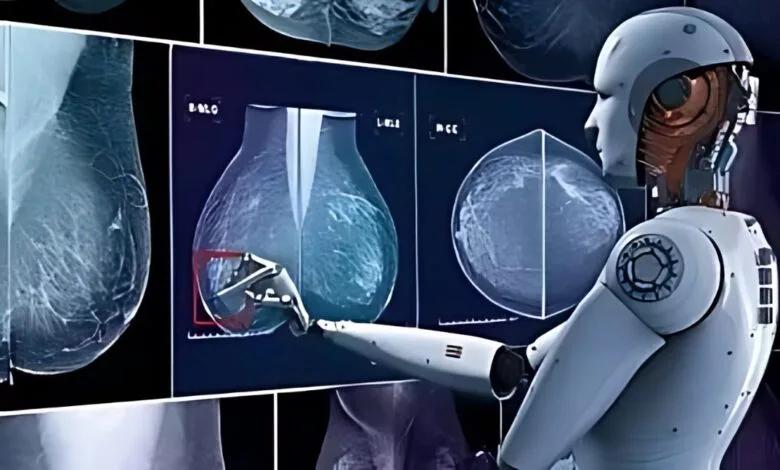
Breast cancer remains one of the most common cancers affecting women worldwide, and early detection is critical to improving survival rates. Mammography, the standard screening method, has been instrumental in detecting breast cancers at early stages. However, some breast cancers are notoriously difficult to detect on mammograms due to their subtle presentation or dense breast tissue that obscures tumors. Enter artificial intelligence (AI) — a technology that promises to transform breast cancer detection by identifying these elusive cancers with greater accuracy and speed.
Understanding the Challenge of Detecting Elusive Breast Cancers
Breast cancers that are hard to detect on mammograms often present several challenges. Tumors may be small, have indistinct edges, or blend into dense breast tissue, making them less visible. Dense breasts, which contain more glandular and connective tissue than fatty tissue, reduce the sensitivity of mammograms, leading to a higher risk of missed diagnoses. Additionally, the interpretation of mammograms heavily relies on the radiologist’s experience and can be subject to human error, including oversight or fatigue.
These limitations highlight the need for supplementary tools that can assist radiologists by enhancing image analysis and reducing diagnostic errors. AI offers a promising solution by leveraging advanced algorithms to detect patterns that may be imperceptible to the human eye.
How AI Enhances Mammogram Interpretation
Artificial intelligence, particularly machine learning and deep learning, uses large datasets of mammogram images to ‘learn’ what breast cancer looks like, including the subtle signs that indicate early-stage or difficult-to-see tumors. By training on thousands or even millions of annotated images, AI systems develop the ability to analyze new mammograms with impressive precision.
Key capabilities of AI in mammography include:
-
Pattern Recognition: AI can detect minute changes in tissue density, texture, and structure that may indicate cancer.
-
Quantitative Analysis: AI algorithms can measure and compare suspicious areas across multiple images and time points, identifying growth or changes that may signal malignancy.
-
Reducing False Negatives and Positives: By providing a second opinion, AI helps reduce missed cancers (false negatives) and unnecessary biopsies (false positives), improving overall diagnostic accuracy.
-
Workflow Optimization: AI systems can prioritize high-risk cases for radiologist review, reducing workload and improving efficiency in screening programs.
Evidence Supporting AI’s Effectiveness
Numerous studies have demonstrated AI’s potential in enhancing breast cancer detection. In some clinical trials, AI systems matched or even surpassed the diagnostic accuracy of experienced radiologists, particularly in detecting small, early-stage tumors. For instance, a 2023 study published in a leading medical journal showed that AI assistance reduced the rate of missed cancers by up to 20% compared to radiologists working unaided.
Moreover, AI has shown promise in evaluating mammograms from women with dense breast tissue, where traditional imaging is less effective. By improving sensitivity in these cases, AI could help reduce disparities in breast cancer outcomes related to breast density.
Integration of AI into Clinical Practice
While the promise of AI is substantial, integrating these technologies into routine clinical workflows requires careful consideration. AI should not replace radiologists but rather serve as an adjunct tool that enhances human expertise. Successful implementation involves:
-
Validation and Regulation: AI systems must undergo rigorous clinical validation to ensure safety and effectiveness. Regulatory bodies like the FDA provide guidelines and approvals for AI in medical imaging.
-
Training and Acceptance: Radiologists and healthcare providers need training to interpret AI results and integrate them into decision-making.
-
Ethical and Privacy Considerations: Protecting patient data and addressing biases in AI algorithms are critical to ethical deployment.
Hospitals and diagnostic centers are increasingly adopting AI-powered mammogram analysis systems, reflecting growing confidence in the technology’s value.
Future Directions and Challenges
The future of AI in breast cancer detection is promising but also presents challenges. As AI algorithms become more sophisticated, integrating data from multiple imaging modalities (such as MRI and ultrasound) alongside mammograms could further improve detection rates.
Challenges include ensuring AI systems are equitable across diverse populations and that they can adapt to varying imaging equipment and protocols worldwide. Additionally, maintaining transparency in AI decision-making — often referred to as explainability — is important to build trust among clinicians and patients.
Artificial intelligence holds tremendous promise in revolutionizing the detection of elusive breast cancers that traditional mammography may miss. By enhancing image analysis, reducing diagnostic errors, and supporting radiologists in making informed decisions, AI has the potential to improve early detection rates and ultimately save lives.
As AI technology continues to advance and become integrated into clinical practice, it offers hope for more accurate, efficient, and personalized breast cancer screening. This progress represents a significant step toward a future where breast cancer can be detected earlier and treated more effectively, giving patients a better chance at long-term survival.