

By John Umeh
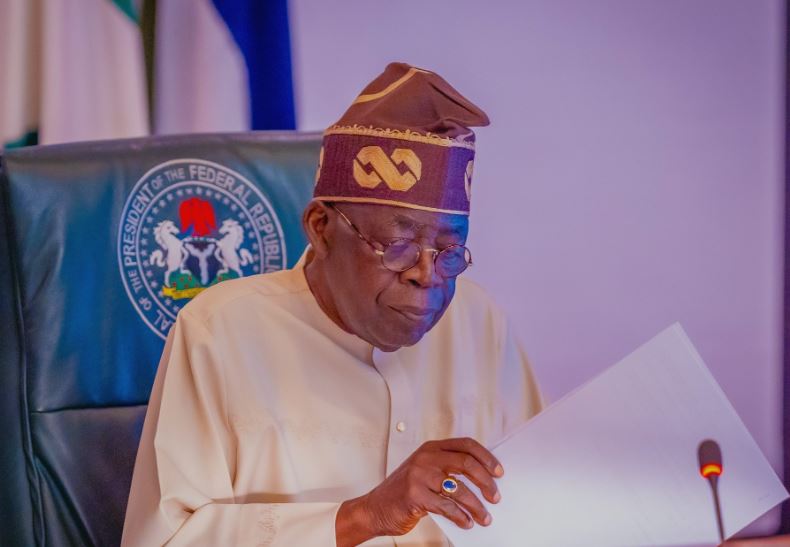
President Bola Ahmed Tinubu has assured Nigerians that 2026 will usher in stronger economic momentum and improved security, insisting that the reforms implemented over the past year are beginning to deliver measurable gains, despite criticism from opposition parties.
In his New Year address, the President said Nigeria exited 2025 with improving macroeconomic indicators, citing stabilising inflation, firmer exchange-rate conditions, growing investor interest, and sustained economic expansion.
Economic Signals ‘Turning Positive’
According to Tinubu, Nigeria recorded consistent quarterly growth throughout 2025, with full-year Gross Domestic Product projected to exceed 4 per cent. He said inflation trended downward during the year, falling below 15 per cent, while trade balances remained positive.
The President also highlighted the performance of the Nigerian stock market, which he said delivered double-digit returns, reflecting renewed confidence among domestic and foreign investors. External reserves, he added, closed the year at $45.4 billion, strengthening the country’s buffer against global shocks and supporting currency stability.
Foreign investment inflows, Tinubu noted, responded favourably to the reform environment, rising sharply in the third quarter of 2025 after subdued inflows earlier in the year. He attributed the rebound to fiscal reforms, policy clarity, and improved credit ratings from international agencies.
Tax Reforms, Infrastructure, Social Investment
Looking ahead, Tinubu said his administration would intensify tax reforms to expand government revenue without overburdening citizens, while eliminating multiple taxation across federal, state, and local levels.
He explained that moderating inflation and interest rates would create additional fiscal room to fund infrastructure, education, healthcare, and social investment programmes. The President reaffirmed his commitment to the 2026 budget proposals currently before the National Assembly, urging patience and national unity as reforms mature.
A major social intervention outlined by the President is the Renewed Hope Ward Development Programme, which aims to integrate at least 10 million Nigerians into productive economic activity by empowering residents across the country’s 8,809 wards, with emphasis on agriculture, trade, processing, and mining.
Security Push to Continue
On national security, Tinubu acknowledged persistent threats from terrorism, banditry, and organised crime, but said security agencies had intensified operations, including coordinated actions with international partners in late December.
He pledged stronger intelligence sharing, deeper regional cooperation, and support for decentralised policing models, complemented by properly regulated forest guards, as part of a broader strategy to restore peace and stability nationwide.
Lawmakers Back Reform Agenda
The National Assembly described 2025 as a pivotal year, arguing that major legislative reforms had laid the groundwork for economic recovery in 2026.
Senate Leader Opeyemi Bamidele said landmark measures, including the Tax Reforms Act, constitutional amendments, and electoral reforms, were designed to modernise governance and improve service delivery. He noted that the new tax framework, effective January 2026, would harmonise taxation and reduce long-standing fiscal inefficiencies.
Legislators also reported progress on constitutional review, electoral law amendments, and preparations for a National Security Summit scheduled for early 2026.
Opposition Paints a Starkly Different Picture
Opposition parties, however, offered a sharply contrasting assessment of 2025.
The African Democratic Congress (ADC) described the year as one of worsening hardship, arguing that government policies deepened poverty and made essentials such as food, medicine, and transport unaffordable for many Nigerians.
ADC chairman David Mark accused the ruling party of imposing new taxes at a time when households and small businesses were already under severe pressure, renewing calls for opposition unity ahead of the 2027 elections.
Former Vice President Atiku Abubakar was even more scathing, labelling 2025 “a punishing year” marked by economic distress, rising insecurity, job losses, and what he described as governance without empathy.
In a New Year statement, Atiku accused the administration of fiscal recklessness, weak democratic tolerance, and failing to protect citizens from worsening insecurity and economic decline.
A Divided National Mood
As Nigeria enters 2026, the government projects optimism built on reform-driven recovery, while opposition figures warn that ordinary Nigerians have yet to feel meaningful relief. The coming months are expected to test whether promised gains translate into tangible improvements in livelihoods, security, and public trust.

