

By Deji Osas
Redefining Automotive Safety with Artificial Intelligence
Volvo, long hailed as a pioneer in car safety, has once again pushed the boundaries of innovation with the introduction of its latest advancement: AI-powered seatbelt technology. This groundbreaking system aims not just to protect but to predict, analyze, and adapt to each passenger’s unique physiological and situational data in real time.
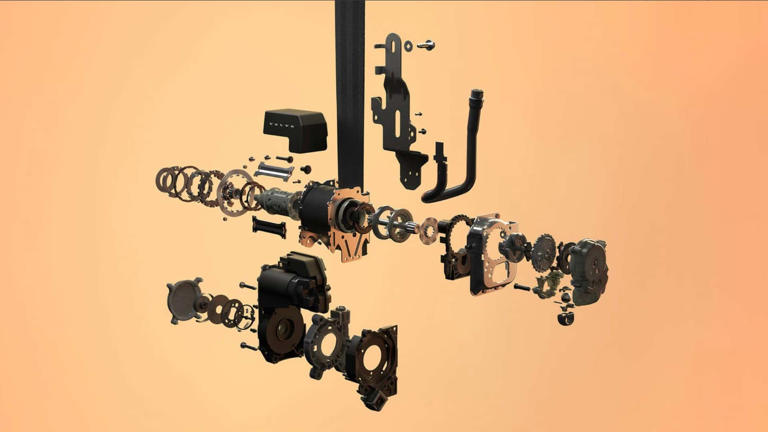
The new seatbelt system, unveiled at a recent automotive tech conference in Gothenburg, Sweden, integrates artificial intelligence, biometric sensors, and adaptive tensioning mechanisms. Unlike traditional seatbelts that provide a one-size-fits-all restraint system, this technology customizes the restraint level based on factors such as the passenger’s weight, posture, heart rate, and even the likelihood of a crash based on vehicle behavior and environment.
Volvo’s engineers claim the system is designed to work proactively rather than reactively. Using a combination of interior cameras, machine learning algorithms, and environmental sensors, the AI seatbelt evaluates risk levels and automatically adjusts to offer optimal protection. For instance, if the AI detects that a passenger is sleeping or slouching, it adjusts the seatbelt to ensure maximum coverage and security. In high-risk scenarios — such as sudden deceleration, wet roads, or reckless lane changes by nearby vehicles — the seatbelt can tighten slightly before a potential impact occurs.
This innovation fits perfectly with Volvo’s long-standing vision of creating a future with zero road fatalities. Since introducing the three-point seatbelt in 1959 — a design still used globally today — Volvo has maintained its reputation as a safety-first automaker. The AI-powered seatbelt continues this legacy while aligning with 21st-century advancements in artificial intelligence and machine learning.
How the Technology Works and What It Means for Drivers
The AI seatbelt system is embedded with biosensors and haptic feedback modules capable of reading real-time physiological data such as pulse rate, muscle tension, and body temperature. These readings are processed by a central AI system, which correlates passenger conditions with the external driving environment to calculate the best restraint strategy.
Additionally, the seatbelt can communicate with other vehicle systems. If the onboard AI detects driver fatigue or elevated stress levels, it can alert the driver or suggest breaks. For passengers, it can alert the emergency response system if vital signs are abnormal during or after a crash — an especially critical feature in the event the occupants are unresponsive.
Volvo has also integrated the system with its cloud-based safety data platform, which collects and analyzes anonymized driving data from other Volvo vehicles worldwide. This enables continuous learning and software updates, allowing the AI seatbelt system to evolve and respond to new types of road threats. Over time, the technology will become smarter, potentially recognizing patterns specific to regional driving styles or crash frequencies.
This invention is not only about saving lives during major accidents. It’s also about improving safety in everyday driving scenarios. For example, minor whiplash injuries caused by hard braking or abrupt maneuvers can be reduced by dynamically adjusting seatbelt tension in advance.
Volvo has emphasized that data privacy will be strictly maintained. All biometric data collected will be encrypted, anonymized, and stored only for the purpose of improving safety features. Customers will also have the option to disable certain monitoring features if they choose.
Future Implications and Industry Reactions
The announcement has generated considerable buzz across the automotive industry. While some competitors view it as the next logical step in passive safety innovation, others are skeptical about how receptive consumers will be to a system that monitors physiological signals, even in the name of safety.
Safety advocacy groups, however, have praised Volvo for once again leading by example. “This isn’t just a seatbelt — it’s a safety ecosystem,” said Dr. Helena Marklund, an automotive safety expert. “It represents a monumental shift in how we think about in-car protection. Rather than waiting for a crash to happen, we are now looking at predictive and preemptive safety systems.”
Volvo has confirmed that the AI-powered seatbelt will first be rolled out in its flagship EX90 electric SUV in late 2025, with plans to integrate the system across its entire lineup by 2027. The company is also exploring collaborations with other carmakers and regulators to establish new safety standards that reflect the capabilities of AI-enhanced restraint systems.
Looking forward, Volvo sees this innovation as part of a broader movement toward autonomous and intelligent vehicles. As cars become more capable of driving themselves, safety systems must evolve to become equally intelligent — not just responding to commands but understanding and protecting the people inside them.
In a world of rising road fatalities and increasing traffic congestion, Volvo’s AI-powered seatbelt is a powerful reminder of what’s possible when cutting-edge technology is harnessed for human well-being. It’s not just about mobility — it’s about safety, personalization, and a future where lives are not just protected but proactively preserved.


