By Gloria Nosa
Introduction
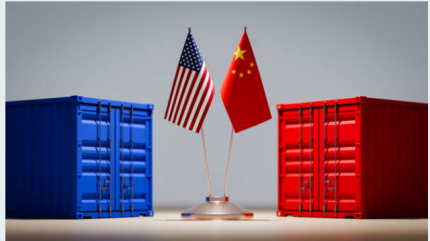
In the world of global trade, uncertainty is the only certainty. This has never been more evident than during the U.S.-China trade war, a prolonged economic standoff that has had ripple effects across industries and nations. Despite a recent temporary reprieve in tariffs between the United States and China, U.S. businesses are far from breathing easy. Although the announcement of tariff relief was seen as a win for American firms, many remain on edge, unsure of what the future holds. This sense of unease is not without reason. In this article, we explore why U.S. firms are still in a state of anxiety, despite temporary tariff relief, focusing on the broader economic impacts, supply chain disruptions, unpredictable trade policies, and long-term concerns that persist even amid short-term gains.
The Lingering Impact of Tariffs on U.S. Businesses
The trade conflict between the U.S. and China, which started in 2018, has created a wave of uncertainty that many businesses are still struggling to recover from. Tariffs, which are taxes imposed on imported goods, were part of a strategy to pressure China into trade concessions. While the tariff reprieve may have provided a temporary sense of relief for U.S. firms, the underlying issues have not been resolved, leading to ongoing uncertainty.
For U.S. firms, the threat of tariffs on Chinese goods has had several consequences, including:
-
Increased Costs: Tariffs directly raised the cost of goods imported from China, which affected many U.S. companies that rely on Chinese products, ranging from electronics to clothing. Despite the relief, some of these increased costs are still being felt, and firms must navigate ongoing price volatility.
-
Pricing Strategies: Many U.S. firms have had to adjust their pricing models in response to tariffs. This includes either absorbing the increased costs, passing them onto consumers, or finding alternative suppliers. While the tariff reprieve has momentarily alleviated some pressure, firms are still adjusting to price shifts that have been in motion for years.
-
Supply Chain Redundancy: For U.S. companies, the imposition of tariffs led to an urgent need to reassess and diversify supply chains. While some firms found new suppliers or moved production elsewhere, others continue to face challenges related to supply chain dependency on China. The disruption in global supply chains caused by the trade war continues to affect operations, even if the tariff reprieve is seen as a temporary fix.
The Uncertainty of Future Trade Policies
Despite the temporary nature of tariff relief, U.S. firms are wary of the future due to the unpredictable nature of trade policies. The Trump administration’s approach to tariffs was erratic and volatile, and although there has been some stabilization, U.S. companies continue to fear the possibility of sudden changes in trade relations. This uncertainty undermines long-term business planning and complicates investment decisions.
Several factors contribute to this uncertainty:
-
Evolving Trade Negotiations: Trade agreements are often fluid, with the possibility of renegotiations and changes at any given time. A temporary relief in tariffs could easily be reversed, leading to further disruptions in global trade dynamics. U.S. businesses, particularly those with significant dealings in China, must stay alert for sudden changes.
-
Policy Shifts with Political Change: With every change in the political landscape, trade policies can change as well. The outcome of future elections, either in the U.S. or China, could drastically alter the trade environment, creating a constant state of flux. Businesses cannot afford to assume that tariff reprieve will last, and that unpredictability keeps them on edge.
-
China’s Retaliation: Although the U.S. may have agreed to a temporary tariff reprieve, China could choose to retaliate with tariffs or other economic measures in the future, adding another layer of uncertainty to the situation. This back-and-forth unpredictability increases the level of risk for U.S. firms that rely on China for trade.
Supply Chain Disruptions and Adaptation Challenges
The trade war and the resulting tariffs had a significant impact on the global supply chain, and while some companies have adapted to these changes, the process has been far from smooth. Supply chains that were once streamlined and efficient became tangled, and many companies have spent significant time and resources finding alternative suppliers or moving production to other countries.
Despite temporary tariff relief, U.S. companies are still grappling with:
-
Finding New Suppliers: Shifting away from Chinese suppliers or manufacturers has been a complicated and costly process. For many industries, China was the most cost-effective and efficient source of raw materials and finished goods. While companies have turned to other countries, such as Vietnam, India, and Mexico, to source products, finding reliable alternatives is not always easy. This challenge remains a source of anxiety, as businesses fear being caught off-guard by sudden policy changes.
-
Increased Lead Times and Logistics Costs: As U.S. companies search for new suppliers and reconfigure their supply chains, lead times and logistics costs have increased. Goods no longer flow as efficiently, and longer delivery times can disrupt production schedules. The tariff reprieve might offer short-term relief, but the costs of retooling supply chains will continue to impact businesses in the long run.
-
Capacity Constraints: Even as companies seek to diversify their supply chains, there are limitations on the availability and capacity of alternate suppliers. Countries that have been identified as alternative manufacturing hubs may not have the same production capacity or expertise that China has. This limits the ability of U.S. businesses to fully recover from supply chain disruptions, further adding to their ongoing anxiety.

The Long-Term Economic Effects of Trade Tensions
While the immediate effects of tariff reprieve might seem favorable to U.S. firms, the broader economic ramifications of the trade war are still being felt. The trade conflict has had deep and lasting effects on consumer behavior, market confidence, and global trade relations. U.S. businesses remain concerned about the following long-term economic factors:
-
Global Trade Slowdown: The trade war has contributed to a slowdown in global economic growth, affecting not only the U.S. but also other nations. The uncertainty surrounding trade policies has led to reduced investment, increased costs, and a general sense of instability in the global marketplace. Even if tariffs are temporarily lifted, the economic environment remains challenging for companies that rely on international trade.
-
Consumer Confidence and Spending: The uncertainty caused by the trade war has also affected consumer confidence. As businesses face increased costs due to tariffs, these costs are often passed on to consumers in the form of higher prices. When prices rise, consumer spending may decrease, which can hurt business revenues, particularly in industries that depend on consumer demand. The ongoing fear of price hikes or more tariffs could lead to further reluctance among consumers to spend freely.
-
The Risk of Decoupling from China: One of the most significant long-term concerns is the possibility of a permanent economic decoupling between the U.S. and China. A prolonged trade conflict could result in a strategic realignment, where the U.S. reduces its economic ties with China, affecting everything from technology to manufacturing. U.S. companies are concerned that this decoupling could limit access to one of the world’s largest and most lucrative markets.
Conclusion
Despite the temporary tariff relief, U.S. businesses remain on edge due to the unpredictable nature of trade policies, the lingering effects of supply chain disruptions, and the long-term economic consequences of the U.S.-China trade war. While the reprieve offers short-term comfort, it does not solve the underlying issues that have plagued businesses for years. The future of U.S.-China trade relations remains uncertain, and companies must navigate an ever-changing landscape of tariffs, regulations, and global economic shifts. Until there is a permanent resolution to the trade conflict, U.S. firms will likely continue to operate in a state of caution, always preparing for the next wave of uncertainty.