By Gloria Nosa

In a surprising hot mic moment, Chinese President Xi Jinping and Russian President Vladimir Putin were overheard discussing the possibility of humans living to 150. Xi reportedly said, “Predictions are, this century, there is also a chance of living to 150.” The casual exchange has sparked renewed interest in longevity science, a field that is rapidly gaining traction both in China and across the world.
Their remarks echo the historic quest of China’s first Emperor, Qin Shi Huang, who famously spent much of his reign searching for an elixir of immortality. Unfortunately, his attempts to cheat death—most famously consuming mercury—are believed to have contributed to his demise. Yet, the allure of living longer, healthier lives continues to captivate scientists, entrepreneurs, and policymakers alike.
Modern anti-aging research in China is thriving. Chief Technology Officer Lyu Qinghua of Lonvi Biosciences, one of the country’s leading anti-aging firms, told the New York Times, “Living to 150 is definitely realistic. In a few years, this will be the reality.” Unlike past approaches steeped in myth or superstition, today’s science is based on genetics, stem cell research, and biotechnology.
Scientific Breakthroughs in Longevity
The scientific community has made remarkable strides in extending lifespan and improving the quality of life in older age. In 2021, researchers in Beijing reported that a new gene therapy successfully reversed some effects of aging in mice, increasing their lifespans by up to 25 percent. Professor Qu Jing from the Institute of Zoology at the Chinese Academy of Sciences explained, “In the end, we hope that we can find a way to delay aging even by a very minor percentage in the future.”
More recently, Chinese scientists achieved a breakthrough in primate research. Elderly monkeys injected with specially engineered super stem cells showed signs of organ rejuvenation, a development published in the prestigious journal Cell. These advancements demonstrate the growing potential of anti-aging therapies to improve health outcomes, not just extend years.
The Business of Longevity
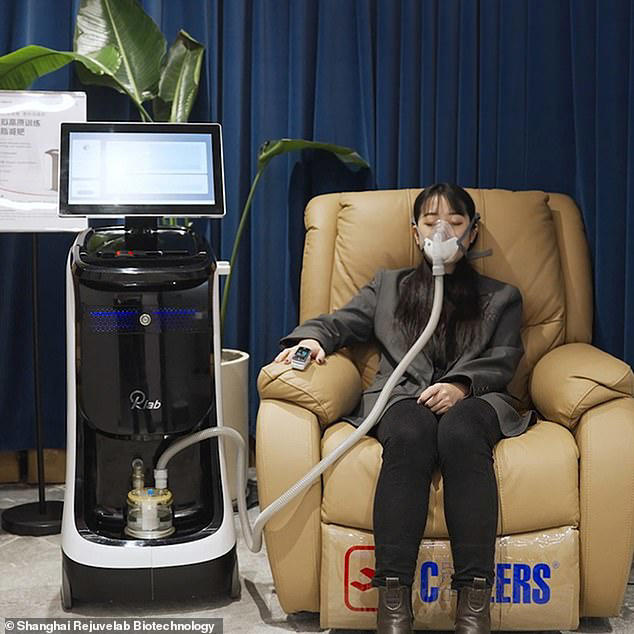
China’s longevity industry is more than just science—it’s a rapidly growing business. Shanghai-based companies such as Time Pie began with anti-aging supplements but now host conferences and workshops on longevity research. Shanghai Revitalize High Technology Co. offers cutting-edge devices, including oxygen chambers and red-light therapy equipment, claiming to slow down the effects of aging.
Specialist hospitals are also entering the field. Both public and private institutions are opening dedicated anti-aging departments, providing patients with comprehensive health assessments and personalized longevity plans. These programs include tailored medical treatments, dietary recommendations, and lifestyle modifications, underscoring that anti-aging is a long-term, continuous process rather than a quick fix. Huihai International Medical Center explained, “Longevity medicine involves long-term, continuous support for clients, not just a one-off service.”
A National Priority
China’s investment in longevity is partly driven by demographics. The nation has more than 300 million people over the age of 60, with birth rates declining steadily. As the population ages, both citizens and policymakers are motivated to explore ways to live longer, healthier lives. Longevity has become a focus not only for the elderly but increasingly for younger generations, who are keen on maintaining vitality and youthfulness.
The Chinese anti-aging movement is also having global implications. Earlier this year, US healthcare company Kenvue opened a joint “anti-aging” lab with Peking University in Beijing. In May, AccurEdit Therapeutics became the first Chinese firm to receive approval for a gene-editing treatment in the United States. The flow of knowledge, research, and innovation from China is shaping a global conversation about how humans can extend lifespan.
Lonvi Biosciences’ Quest for a Pill
Among the many approaches to anti-aging, Lonvi Biosciences is pursuing a single “holy grail” pill. CEO Yip Tszho explained that the company turned to Traditional Chinese Medicine (TCM), using herbal extracts such as grapeseed to target harmful “zombie” cells—cells that accumulate over time and contribute to aging. The company claims their pill can help humans live well past 100, potentially revolutionizing longevity medicine.
Unlike treatments that require constant monitoring or long-term hospital visits, the promise of a single pill is alluring. However, experts caution that anti-aging remains a complex challenge. Genetics, lifestyle, environment, and healthcare access all play crucial roles. Still, the potential for a breakthrough in human longevity is becoming increasingly tangible.
Looking Ahead
While the dream of immortality remains out of reach, recent advancements suggest that extreme longevity may no longer be purely science fiction. China’s blend of modern biotechnology, gene therapy, and centuries-old medicinal practices represents a bold attempt to push the boundaries of human life.
The conversation between Xi and Putin serves as a reminder that the quest for longevity is now a topic not just for scientists and entrepreneurs, but also for world leaders. With billions invested in research, clinical trials, and technology, the next decades may see humans living healthier lives well beyond what was previously imaginable. For now, the vision of living to 150 is no longer confined to myth or legend—it is entering the realm of possibility.