

By Owie Aideyan
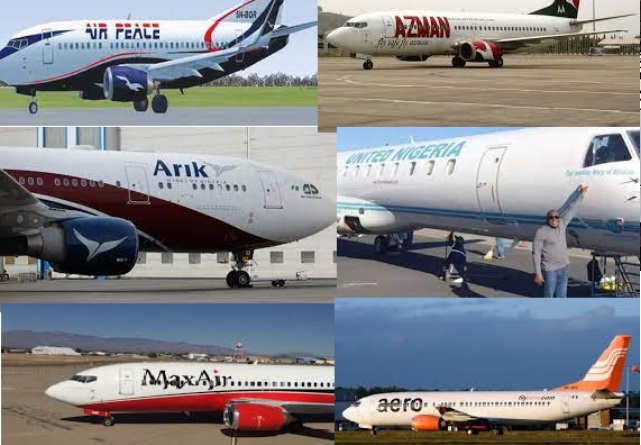
There are moments when an entire industry holds its breath — and for Nigeria’s aviation sector, this was one of them.
A looming nationwide shutdown by domestic airlines has been shelved, at least temporarily, after intense pressure from the Federal Government and last-minute intervention by aviation authorities. The decision brought a brief sigh of relief to passengers, businesses, and a travel-dependent economy already stretched by rising costs.
At the center of the storm is the soaring price of aviation fuel, Jet A1, which airline operators say has surged by as much as 300 percent. For carriers already battling thin margins, the increase was more than pressure — it was a breaking point.
The Airline Operators of Nigeria (AON) had initially planned to ground flights nationwide in protest. But after an emergency meeting and a direct appeal from the government, they stepped back — not out of resolution, but out of caution.
Their decision, they said, is “concessionary but conditional.”
Behind the calm wording lies a deeper tension: an industry struggling to survive while waiting for solutions that feel increasingly delayed.
The Federal Government, through the Minister of Aviation and Aerospace Development, Festus Keyamo, urged restraint, warning that a shutdown would trigger wider economic disruption. Air travel, after all, is not just about passengers — it is about trade, logistics, medical emergencies, and national connectivity.
He acknowledged the pressure facing airlines, especially in a global environment shaken by geopolitical tensions and rising operational costs, but insisted that dialogue remains the only path forward.
A high-level emergency meeting has now been scheduled, where regulators and operators are expected to search for a long-term solution to the crisis threatening the sector.
Yet even as the political and economic negotiations unfold, another concern has been quietly escalating in the background — safety in the skies.
In a troubling development, United Nigeria Airlines (UNA) reported its third bird strike incident in just 48 hours, grounding multiple aircraft and raising alarm across the aviation community. The airline confirmed that the repeated incidents have now affected several aircraft this year, forcing strict safety checks and operational disruptions.
Bird strikes — often underestimated by passengers — can cause serious damage to aircraft systems, especially during take-off and landing. The airline has called on aviation authorities to urgently strengthen wildlife hazard management at airports, warning that the frequency of incidents is becoming unacceptable.
Together, the fuel crisis and safety concerns paint a picture of an aviation sector under pressure from multiple directions — economic, operational, and infrastructural.
For passengers, it means uncertainty. For airlines, it means survival. For regulators, it means urgency.
And for Nigeria’s aviation industry, it is a reminder that keeping the skies open requires more than aircraft and ambition — it demands stability, coordination, and trust.
For now, the shutdown has been avoided.
But the turbulence is far from over.

