

By Gloria Nosa
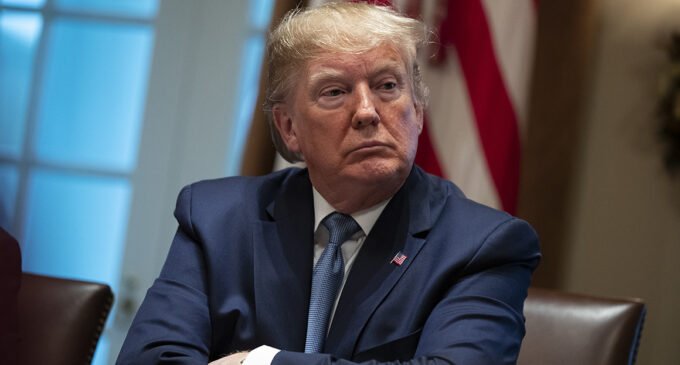
US President Donald Trump has sharply criticised NATO allies following the reopening of the Strait of Hormuz, declaring that Iran will no longer use the crucial waterway as a bargaining tool.
Speaking after tensions in the region eased under a temporary ceasefire, Trump claimed he had advised allied nations to avoid involvement in the standoff, accusing them of failing to act decisively during the crisis.
“I told them to stay away unless they just wanted to fill their ships with oil,” Trump said, describing NATO as “ineffective” and a “paper tiger” when decisive action was required.
His remarks came shortly after Iran confirmed that the Strait of Hormuz had been reopened to commercial shipping for the duration of the ceasefire, a move expected to ease concerns about global oil supply disruptions.
Iran’s Foreign Minister, Abbas Aragchi, announced that commercial vessels would be allowed to transit the waterway, provided they adhere to designated shipping routes. However, Iranian officials indicated that military vessels would remain restricted.
Despite the reopening, Trump said the United States would maintain its naval blockade targeting Iranian-linked vessels. He explained that the measure would remain until negotiations aimed at securing a long-term peace agreement were fully completed.
“The blockade will stay in place regarding Iran until our transaction is 100 percent finished,” Trump said, referring to ongoing diplomatic efforts between Washington and Tehran.
According to US officials, the blockade applies to Iranian ships, vessels that have previously docked at Iranian ports, and those carrying sanctioned oil. Meanwhile, non-Iranian commercial shipping is expected to resume gradually, with operators exercising caution.
Trump also claimed that Iran, with support from the United States, had begun clearing sea mines from the strait, describing the development as a key step toward restoring safe navigation. He hailed the reopening as a major breakthrough, calling it “a great and brilliant day for the world,” and insisted that Iran had agreed not to use the strait as leverage again.
Elsewhere, UK Prime Minister Keir Starmer and French President Emmanuel Macron have reportedly discussed launching a joint defensive mission to safeguard shipping routes through the strait. The proposal includes potential mine-clearing operations to enhance maritime security.
Although the reopening has improved global sentiment, shipping companies remain cautious after weeks of heightened tension and disruption in the region.
Trump, however, expressed optimism that a broader agreement between the United States and Iran could be reached soon, noting that “most of the key issues have already been negotiated” and that talks were progressing quickly.
The Strait of Hormuz remains one of the world’s most vital oil transit routes, and recent developments surrounding its closure and reopening have had significant implications for global energy markets and international trade.

